Energy and Water Minister says his ministry cannot change electricity prices, but is seeking backup fuel sources.
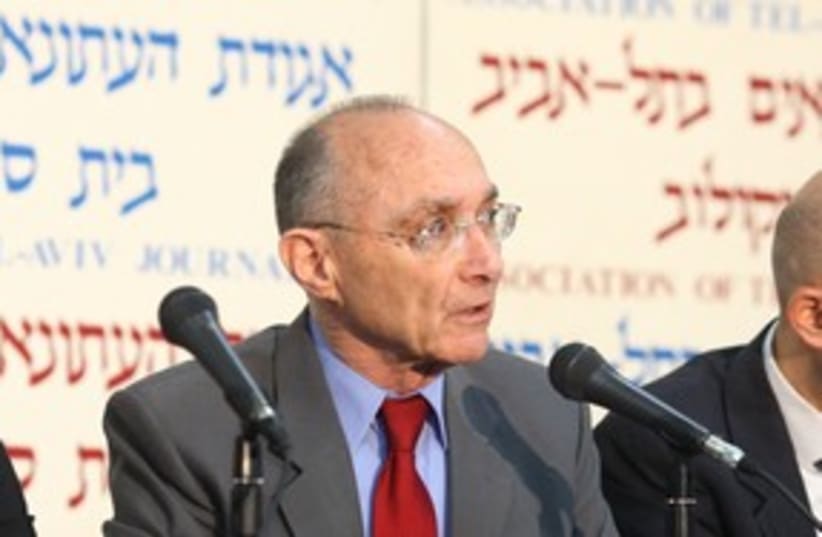
By SHARON UDASINNational Infrastructures Minister Uzi Landau_311(photo credit: Courtesy National Infrastructures Ministry)
Energy and Water Minister Uzi Landau stressed on Tuesday that his ministry cannot intervene to change electricity tariffs, as such actions are solely the responsibility of the Finance Ministry and the Public Utility Authority.Landau discussed electricity prices while touring the site of Israel’s largest private power plant, which is now under construction by the Dorad Energy company, south of Ashkelon. The plant will have a capacity of about 800 megawatts – equivalent to about 7 percent of the country’s total consumption – and is slated to begin running during the fourth quarter of 2013, according to the Energy and Water Ministry.“The Dorad power station will increase the electricity reserves and the reliability of electricity supply to residents of the State of Israel,” Landau said in a statement released by his office. “To visit here and to see the establishment of the station and the many advancements that have been achieved lately is a triumph of determination over bureaucracy.”Landau added that he hoped the Dorad power plant would begin filling in energy gaps by the summer of 2013.Just the day before, the minister had met with other relevant officials to discuss the need for backup fuel sources and significant reductions in public electricity consumption for this coming summer – in the wake of a dwindling natural gas supply.Landau met on Monday morning with the inter-ministerial steering committee that handles all elements of the energy market, and includes senior officials from his ministry, the Environmental Protection Ministry, the Finance Ministry, the Public Utility Authority, the Natural Gas Authority, Israel Electric Corporation, Petroleum and Energy Infrastructures and Israel Natural Gas Lines. The committee is chaired by Dr. Yehuda Niv, head of the Energy and Water Ministry’s Electricity Administration, and meets once every two weeks to discussion solutions for the anticipated electricity shortage.At the Monday meeting, the group discussed the necessity to employ backup fuels this summer in order to supplement natural gas, something that will require the Environmental Protection Ministry’s approval, according to the Energy and Water Ministry. They also spoke about the use of mobile gas turbines, which could be used in emergencies and on an as-needed basis, as well as the use of private power sources. Emphasizing the importance of overall demand reduction, the officials also discussed the possibility of creating incentives for people to reduce consumption during peak hours – such as instituting lower electricity tariffs during lower usage periods, the ministry said.Similarly, on Sunday night, Landau had met with four former energy and water ministers in order to discuss the same problem – the electricity supply shortages expected to occur this summer. The ministers were unanimous about the reasons for the drought, concluding that bad government decisions – and sometimes the lack thereof – were responsible for the present problem, according to the ministry.
if(catID != 151){
var cont = `Take Israel home with the new Jerusalem Post Store