2008-2009 figure rose over 5 percent from the previous year, according to Central Bureau of Statistics.
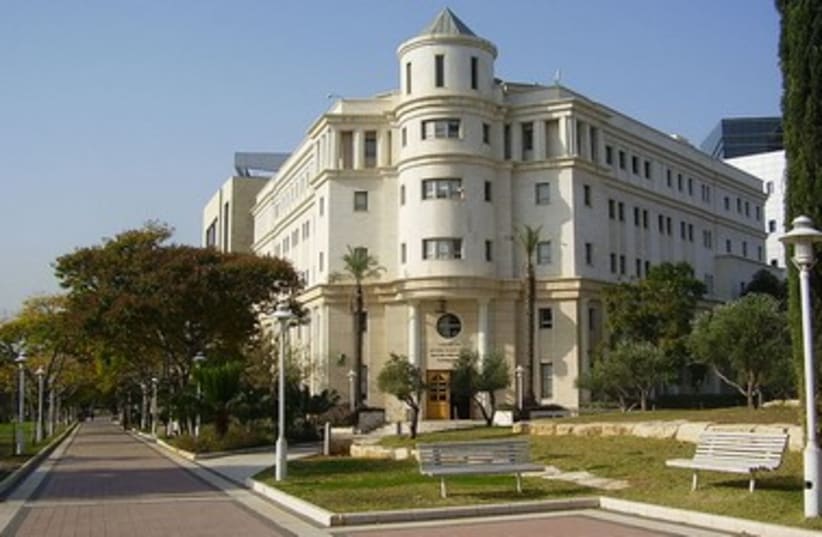
By JUDY SIEGEL-ITZKOVICHPsychology building in Bar-Ilan University 390(photo credit: Avishai Teicher via the PikiWiki - Israel free ima)
Research expenditures at the universities granted by outside sources and intra-university grants – excluding funding from the universities’ budgets – totaled NIS 1.5 billion shekels during the last recorded 2008-2009 academic year, according to the Central Bureau of Statistics.The CBS relied on data from the Science and Technology Minister’s National Council for Research and Development.Announced on Tuesday, the figure rose over 5 percent from the previous year, in which research using “special financing” reached NIS 1.45 billion. The external funding constituted 13% of all civilian R&D in the country in 2008-2009.According to the ministry, 63% of the funds were allocated for research in the fields of mathematics, natural sciences and medicine; 16% for social sciences and law; 16% for engineering and architecture; 3% for agriculture; and the remainder in undefined fields.Between 2007 and 2009, slight changes occurred in the allocation of funds. Biological research declined from 30% to 27%, physical sciences rose from 18% to 20%; and engineering and architecture rose from 14% to 16%. The medical field remained unchanged.Almost 60% of the special funding originated in Israel, with the rest from abroad.Israeli funding was especially large in the fields of humanities and law, social sciences and agriculture. The public sector paid for 36% of special funding. While 30% originates in foundation money, the business sector provided only 9%. The natural sciences recorded a relatively large share of public funding from abroad.National Research and Development Council chairman Prof. Yitzhak Ben-Yisrael said that the high figure for funding from abroad shows the “quality, competitive ability and the international nature of university research in Israel.” He added that 40% of the university research is collaborative with foreign institutions. “The data show that Israeli universities network well with those abroad,” he said.Prof. Ehud Gazit, the ministry’s new chief scientist, said that Israeli research institutions are well known for their ability to attract competitive funding among thousands of universities around the world. Recently, four Israeli universities have been ranked among the 50 best in getting competitive financing for their research, Gazit said.The Hebrew University of Jerusalem has the best record, receiving NIS 397 million for research in 2009 from special funding. Tel Aviv University’s funds totaled NIS 318 m. The Weizmann Institute of Science in Rehovot received NIS 243 m.from abroad, followed by Haifa’s Technion-Institute of Technology with NIS 225 m.and Ben-Gurion University of the Negev in Beersheba with NIS 192 m. Bar-Ilan University in Ramat Gan came next with NIS 88 m. and the University of Haifa garnered NIS 59 m.
if(catID != 151){
var cont = `Take Israel home with the new Jerusalem Post Store