BGU’s first Jordanian PhD student discusses his work in desalinization and a road to regional peace via science.
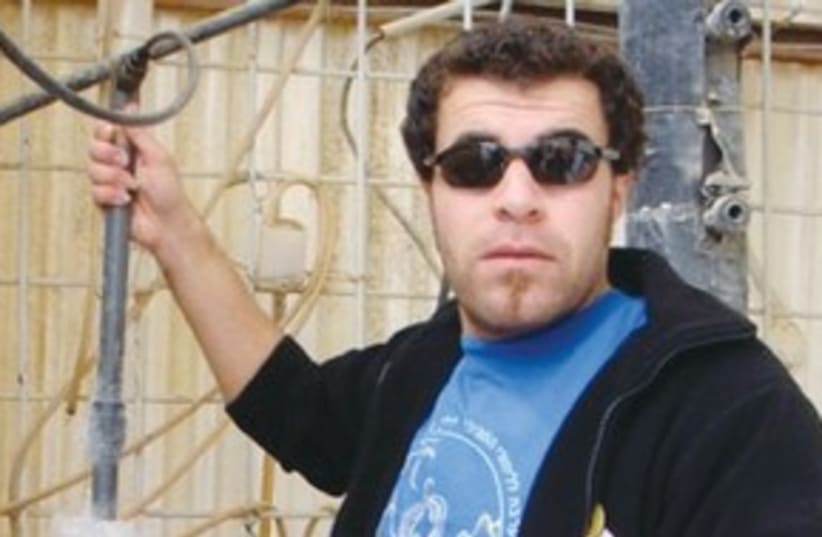
By SHARON UDASINAmer Sweity 311(photo credit: Courtesy )
It was a rather difficult decision for Amer Sweity to come from his hometown of Amman, Jordan, to complete a master’s degree and then PhD at Ben-Gurion University of the Negev. But now he is planning to bring the expertise he has gained on Middle East water issues back to Jordan and other Arab countries in the region at the conclusion of his studies.“We are all suffering from water issues – Israelis, Jordanians, Palestinians,” said Sweity, stressing the idea that “nature knows no borders” and that water can be used to “bridge the gap between Arabs and Israelis” in the future. “Besides developing the whole region, you can promote peace in an indirect way. Water is a humanistic issue – it’s not something you can keep and hide or avoid people from. It’s one of the precious commodities that we have. You bring experts from this side to the other side, and you create a method of communications between the people despite the conflict going on.”RELATED:Israel got only 70% of average precipitation this year Israel a model for global water management, experts say Shamir Drilling - Water For Future Generations Sweity, a 30-year-old practicing Muslim, is BGU’s first Jordanian PhD student, according to the university.He first arrived in Israel in 2007 for a one-year program at the Arava Institute for Environmental Studies, after having completed his bachelor’s degree at Hashemite University in Zarqa, Jordan.From there, he went on to earn his master’s degree at the Zuckerberg Institute for Water Research, of the Jacob Blaustein Institute for Desert Research on BGU’s Sde Boker campus, moving directly afterward into the PhD program there. During his master’s degree, he developed a membrane bioreactor for treating wastewater; his PhD focuses on the desalinization of seawater and brackish water.Sweity is working for his PhD in the laboratory of Prof.Moshe Herzberg, where he is researching ways to “soften” salt water for more efficient passage through the desalinizing membrane. They use a tool called an “antiscalant” to make the water softer, because the so-called “hard” water – water with high mineral content – causes salt residue to back up the membrane, reducing efficiency.But because antiscalants often promote an attractive medium for microorganism growth, they prompt the accumulation of unwanted “biofilm” on the membranes – which in turn also clog the membrane and make it difficult for water to pass through, Sweity explained.So it’s his lab’s job to develop an antiscalant that won’t cause so much biofilm development.“We are trying to find the best antiscalant we can use to make the water softer and also to decrease the growth of biofilm on the membranes,” Sweity said.Sweity is confident that as far as water scarcity in the region goes, desalinization is the best solution today.“Desalinization is the answer right now – the technology is getting cheaper and cheaper,” he said, adding that by 2013 or 2014, Israel would get 35 percent of its water through this process. “It decreases the pressure on other resources – for example, the Kinneret. If they’re going to use it forever, it isn’t enough.”Sweity would like to use the knowledge that he gains in his three more years at BGU to directly improve the processes of desalinization throughout the Middle East.“My dream is to work in the field of desalinization, not to be stuck in an office,” Sweity said, noting that at the moment he saw himself probably working in Saudi Arabia, Qatar or the United Arab Emirates. “We [in Jordan] don’t have running desalinization facilities, but if in future we have something, I would for sure be there.”Jordan, he explained, doesn’t currently have the capacity to treat all of its wastewater, and while a desalinization plant is in future plans, it has not yet been built. The country is still collecting the majority of its water from aquifers and dams and is not yet using the most up-to-date technologies, though “irrigation systems and Israeli tech is being introduced,” he said.Despite his initial apprehensions about coming to Israel – Sweity admitted that he used to be against making peace with Israel – after seeing many of his friends coming here for research opportunities, he finally decided to do the same.“I have suffered back home in Jordan because of the peace issues – I was against being peaceful,” Sweity said.“But I changed my mind because I wanted to see who’s right and who’s wrong and decide for myself.”He recalled that “when I was doing my first degree back in Jordan, at that time, the second intifada was at its beginnings. Every day there were people killing each other – we were doing demonstrations in university.I had a hard time dealing with these issues. But after I finished university, some of my friends in Jordan were studying in Israel at the Arava Institute of Environmental Studies. They said, why don’t you come here?” And so he did – despite his family’s disapproval, which, he said, decreased significantly once they saw how often he was easily able to cross the border and come home to visit Amman.Sweity said he was enjoying his time here and had taught himself to speak Hebrew, but he didn’t see staying here long-term as a realistic possibility.“It’s not bad at all,” he said, but added, “I don’t see my future being here forever. This is something temporary, but not forever.”Still, he maintains that water is a great conduit for peace in the region.“Working together, creating this kind of atmosphere of a lovely environment – that can put pressure on the politicians, and they can see that our scientists are working together,” Sweity said.“The problem in what’s happening right now in the region is that there’s no trust at all between our leaders – but between our scientists there is trust.”
if(catID != 151){
var cont = `Take Israel home with the new Jerusalem Post Store