The Top Environment story of 2011, according to JPost reader votes.
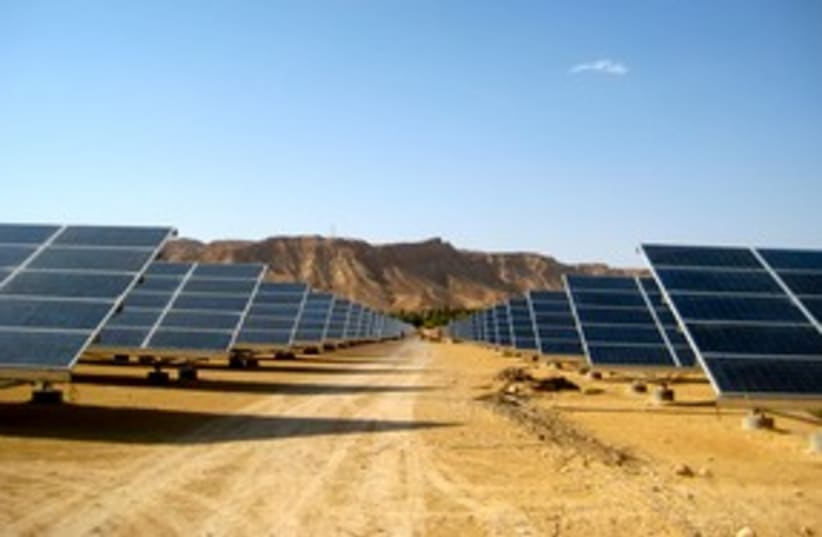
By SHARON UDASINArava Solar Field 311(photo credit: Sharon Udasin)The results are in: Over 60 percent of readers voted Israel's first medium sized solar field as the biggest environment story of 2011. In second place Israel's natural gas supply, with almost 20% of the vote.When I first saw the sea of blue panels amid the scorched desert sands, driving along Highway 90 this June, I knew that Ketura Sun was a crucial – albeit late-coming – addition to the uniform landscape of the Arava.At 4.95 megawatts, the medium-sized solar field was the first of its kind in sunny Israel. The field is capable of powering a supply equivalent to seven percent of Eilat’s energy needs and aims to fulfill one of David Ben-Gurion's original visions, Arava Power Company president, Yosef Abramowitz, had told me during a Jerusalem Post visit to his company's field. The visionaries behind the gleaming field – which is made up of 18,500 photovoltaic panels from Chinese company Suntech – were, along with Abramowitz, Ketura resident Ed Hofland and US businessman David Rosenblatt.But it took way too long – and quite a great struggle on the part of Arava Power – to get this field going, leaving Israel trailing far behind cloudy Germany and several other European nations in its efforts to harness the sun's light, and transform it into usable, clean energy. Abramowitz, dubbed “Captain Sunshine” by kibbutz residents, and his partners fought a five-year, uphill battle with 24 government offices to get the permits necessary to start building the field. Yet despite the ever-present bureaucratic challenges, the company plans to press on with its solar ventures.Next in Arava Power's plans is to construct Israel's first large-sized solar field, at 40 megawatts, directly across Highway 90 from the current photovoltaic oasis.And with the government's July decision to approve a widespread increase in renewable energy allocations – with specifically 460 megawatts for large solar fields, in addition to the 300 megawatts total available for medium fields – it is the hope of clean energy entrepreneurs that more fields like Ketura Sun will be popping up across the country's deserts sooner, rather than later. The hope among industry experts is that solar energy and other renewable sources, combined with natural gas, will eventually be able to power the country and minimize its reliance on “dirty” sources, like coal, jet fuel oil and diesel.Arava solar field groundbreaking ceremonyOn winning the Post's poll for top environmental story of the year, Arava Power echoed these sentiments.“Arava Power is gratified to share the excitement of The Jerusalem Post readers in naming the launch of Ketura Sun, Israel’s first commercial solar field, the most important environmental story of the year,” said Rosenblatt, co-founder and vice chair of the Arava Power board. “Ketura Sun is both proof of concept and a down payment on the solar revolution that is expected in Israel in 2012 and in which Arava Power expects to continue to play a meaningful role.”Rosenblatt emphasized his hope that the successful launch of Ketura Sun would be a catalyst for similar such ventures all over the country.“Hopefully next year, Jerusalem Post readers will have to make the tough choice for top environmental story of the year between launch of first Beduin commercial solar field, the groundbreaking on Israel’s first large field (40 megawatts at Ketura) or increasing Israel’s renewable target by 2020 from a low 10 percent to the European Union standard of 20%,” he added.
Related Tagsarava
if(catID != 151){
var cont = `Take Israel home with the new Jerusalem Post Store