The Jerusalem Post
Jpost search icon google-icon iphone
  Set as Homepage
Sat, May 25, 2013   16 Sivan, 5773
newspapers magazines
 
    • Breaking News
    • Diplomacy & Politics
    • Defense
    • National
    • Mideast
    • Syria
    • Iran
    • World
    • Business
    • Sports
    • Health & Science
    • Environment
  • Video
  • Opinion
    • Columnists
    • Editorials
    • Op-Eds
    • Letters
  • Jewish World
  • Lifestyle
    • Arts & Culture
    • Food & Wine
    • Travel
  • Features
    • Insights & Features
    • Week in review
    • On the Web
    • Shalva Superheroes
    • Obama in Israel
  • Blogs
    • In the news
    • Judaism
    • From the Middle East
    • Lifestyle
    • Aliya
    • Science and Technology
  • JPost Apps
    • iPhone app
    • iPad app
    • Android app
    • Twitter
    • Facebook
    • RSS feeds
    • JPost Toolbar
    • JPost Newsletter
    • JPost Alert
  • Premium Zone
    • The Jerusalem Report
    • The Experts
    • 20 Questions
    • e-paper
    • Ivrit
    • Christian Edition
    • Dash
    • Magazine
    • Metro
    • In Jerusalem
  • French
    • Politique & Social
    • Affaires Palestiniennes
    • Diplomatie & Monde
    • Art & Culture
    • Israel
  • Green Israel
JPost Learn Hebrew  
Advertise with us  
Nefesh Guided Aliyah  
Eldan  
AFMDA  
Africa Israel Group  
Isram Group  
Kupat Ha  
JPost Twitter  
JPost Facebook  
Classifieds  


Breaking News
 
 
  • JPost.com
  • Travel
  • Around Israel
 

Temple Mount: The ordinary made holy

By WAYNE STILES
11/12/2012 14:33
Tweet

The most important religious site was for centuries a mere elevated hill where farmers threshed wheat.

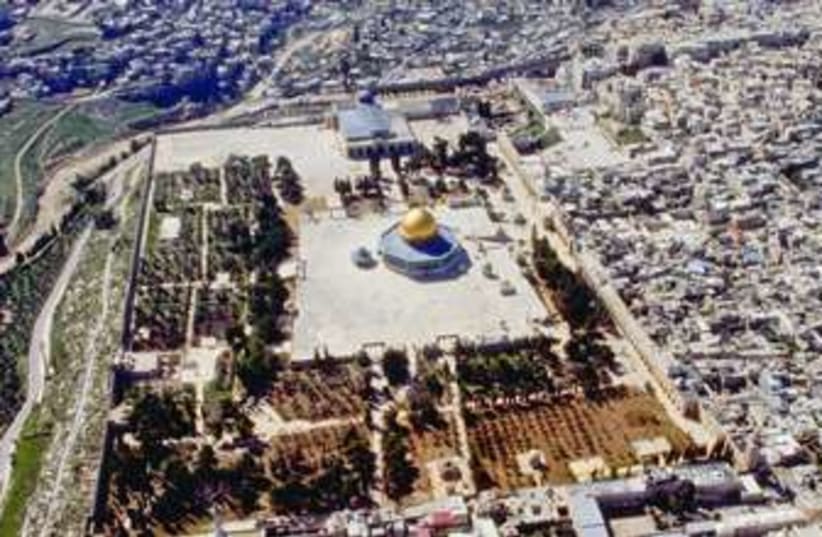
Temple Mount aerial from north
Temple Mount aerial from north Photo: BiblePlaces.com
Wayne Stiles has never recovered from his travels in the Holy Land. Follow him on Twitter (@WayneStiles) or on his blog at www.waynestiles.com.

Abraham saw the acreage. David bought the lot. Solomon built the house. Nebuchadnezzar tore it town. Zerubbabel rebuilt it. Herod the Great expanded it. Titus flattened it again.

Before these temples stood on Mount Moriah, it was nothing but a hill used for threshing wheat. Hardly worth noticing. But today, the Temple Mount remains the most precious piece of real estate in the world. And the golden shrine that graces its crest has become an icon for the Holy City of Jerusalem itself.

After Abraham, it took 1,000 years for the second domino to fall—for David to build. But the dominoes have not stopped falling yet.

Abraham saw the acreage

The site of the Temple Mount first appeared on the scene when God told Abraham to go to the land of Moriah and sacrifice Isaac there (Genesis 22:2).

The Binding of Isaac climaxed with the Lord providing a ram for Abraham to sacrifice in the place of his only son. Thus the saying began: “In the mount of the Lord it will be provided” (Genesis 22:14).

David bought the lot and Solomon built the house

One millennium after Abraham, King David purchased the threshing floor of Araunah the Jebusite as a site to offer sacrifices after his David’s sinful census (2 Samuel 24:18-25).
In the same area where Abraham came to offer Isaac, and on the very hill where David offered burnt offerings for his sin, Solomon began to build the First Temple on Mount Moriah in 966 BC (1 Kings 6:1; 2 Chronicles 3:1).

Temple Mount aerial (Bibleplaces.com)

The original size of the Temple Mount was smaller than the outline we see today, which is Herodian. Leen Ritmeyer has convincingly argued in his excellent volume, The Quest, that the Mishna’s measurements of a 500-cubit square Temple Mount fit with the archaeological evidence.

•    At the bottom of a staircase to the northwest of the Dome of the Rock lies a large step precisely 500 cubits (750 feet) from the eastern wall. Ritmeyer points to this step as the top of the pre-Herodian western wall.  The step since has been covered over with new pavement.

•    Along the outside of the eastern wall of the Temple Mount, a seam in the wall clearly joins two sections of wall built at different eras. If the older part of this seam forms the pre-Herodian corner of the 500-cubit square Temple Mount, then the Dome of the Rock covers the spot where the Temple stood—including, of course, the Holy of Holies.

Nebuchadnezzar tore it down and Zerubbabel rebuilt it

The Babylonians under King Nebuchadnezzar tore down the First Temple on the 9th of Av in 586 BC. It had stood for 380 years.

The exiled Jews returned to their land after 70 years when Cyrus the Great allowed them to rebuild the Temple. The structure Zerubbabel erected seemed modest in comparison to Solomon’s magnificent edifice. Following the first Maccabean triumphs, the Jews improved it even more.

Herod the Great expanded it and Titus flattened it again

The most elaborate reconstruction and renovation occurred when Herod the Great began his extensive building project that would crown the Second Temple.

Herod expanded the Temple Mount north, west, and south to its present dimensions of thirty-five acres. After Herod the Great expanded the hill, its topography lay hidden beneath acres of backfill and retaining walls. The construction of Herod’s marvelous temple began in 20 BC and continued for 83 years.

Ritmeyer

This was the Temple Jesus knew, whose destruction he predicted (Matthew 24:1-2). The Southern Steps of the Temple Mount where pilgrims walk today would have felt Jesus’ sandals too.

In AD 70 Titus rolled in his Roman legions and destroyed in a matter of days what had taken decades to construct. Stones from the Second Temple still lay in the first-century street where archaeologists found them.

The rest is history

The Muslim ruler Abd el-Malik built the shrine called the Dome of the Rock on the Temple Mount between AD 688-691. Its golden veneer is a 20th-century addition.

The Central Valley and the Kidron Valley have risen in elevation due to centuries of debris from wars and renovations. What’s more, Muslims forbid any archaeology on the Temple Mount today.

Temple Mount seam (BiblePlaces.com)

As a result, archeologists and historians do their best to piece together history from the plentiful remains surrounding the Temple Mount. In addition, after years of sifting through tons of bulldozed rubble from the Temple Mount—that was dumped in the Kidron Valley—the Temple Mount Sifting Project has discovered finds from the Second Temple period including arrowheads, paving tiles, ancient seals, coins, combs, jewelry, game pieces, weights—and more.

The Holy Land and the Holy City owe their designations to a hill where the Holy of Holies resided for centuries. The Temple Mount remains the most photographed spot in Jerusalem and the goal of many pilgrimages—even to today.

It’s amazing that the most important religious site in the world was for centuries a mere elevated hill north of Jebus where farmers threshed wheat. The ordinary was made holy.

Wayne Stiles has never recovered from his travels in the Holy Land. Follow him on Twitter (@WayneStiles) or on his blog at www.waynestiles.com.
  • Send
  • Large
  • Small
  • Print
  • Share
This article is by :
Wayne Stiles

Follow @WayneStiles
Recent stories:
  • Sites and Insights: Capernaum with a vie...
  • Sites and Insights: Where history meets ...
  • Sites and Insights: Hanging gardens of G...
  • Sites and Insights: Bastions, burials an...
Most Viewed in
1
Formula 1, UEFA, Maccabiah all on way to Jerusalem
2
Santa Barbara’s sunny blend of sand and culture
3
Voices of Jerusalem: The man behind the Old City
4
AJC: Pakistan wants Israeli aid
JPost Community
Tweet
Jerusalem Temple Mount Mount Moriah travel David Roman
Share this article
Tweet
Share
Send
Your comment must be approved by a moderator before being published on JPost.com. Disqus users can post comments automatically.

Comments must adhere to our Talkback policy. If you believe that a comment has breached the Talkback policy, please press the flag icon to bring it to the attention of our moderation team.
JPost Services
conferenceConference
newsletterNewsletter
iphoneMobile Apps
kotelcamKotel Cam
kolboJPost Alert
premiumPremium
JPost TV News  
Mobile Apps  
Bank Hapoalim  
Meir Panim  
Yad Ezra  
Rambam Hospital  
TourLuxe  
Zev Goldstein PLLC  
Penrose Gallery  
JPost Premium Zone  
JPost kotel Camera  
         
 
Israel Focus
JPost TV News
Coming soon to a screen near you!  
Nefesh B'Nefesh Guided Aliyah
Already living in Israel? Enjoy the Benefits of Aliyah!  
Give "Freedom" this Passover
to needy Israeli families. Donate now  
War Threatens
Protect the People of Northern Israel  
China Suppliers
 
Intelligence Squared
The international debate forum, announces it is coming to Israel  
Bank Hapoalim
Israeli's number one bank  
Jerusalem Post Lite
Lite Edition of the Jerusalem Post for English improvement  
Learn Hebrew with us
Get 10 minutes free personal coaching in Hebrew through phone or Skype  
JPost newspapers
Sign up for the JPost newspapers and receive one month free subscription  
Kosher English Magazine
English language weekly magazine - especially for religious people  
JReport Kindle Edition
Now you can get the Jerusalem Report directly to your Kindle  
JPost Premium Edition
The very best articles are available only in our Premium edition  
Lifestyle Magazine
 
 
Real Estate
Don't Look For a House!
In Israel, our website will do it for you!  
 
Travel
Eldan Rent a Car
20% off all Car Rental Reservations in Israel  
Hertz Car Rental
Special Online Discounts!  
The King David Jerusalem Hotel
One of the world's truly iconic hotels, and a Jerusalem landmark  


Sites Of Interest:

Jerusalem Hotels
KKL-JNF
Poalim Online
BreitBart.com
Our Friends
Jerusalem Attractions
Jerusalem Tours
itraveljerusalem.com

JPost sites:

Learn Hebrew
The Jerusalem Report
Our Magazines
JPost Edition Francaise
Green Israel
Christian World
Jerusalem Post Lite

Services:

JPost Mobile Apps
JPost Premium
JPost Newsletter
JPost Toolbar
JPost News Ticker
JPost RSS feeds
JPost Archives
JPost Alert
JPost Kotel Cam

JPost Conferences:

NYC Conference
Diplomatic Conference

Information:

About Us
Feedback
Staff E-mails
Copyright
Sitemap
News Partners
Advertise with Us
Statistics
Ad Specs
Terms Of Service
Jpost.com, the online edition of the Jerusalem Post Newspaper - the most read and best-selling English-language newspaper in Israel. For analysis and opinion from Israel, the Jewish World and the Middle East. Jpost.com offers expert and in-depth reporting from Israel, the Jewish World and the Middle East, including diplomacy and defense, the Palestinian-Israeli conflict, the Arab Spring, the Mideast peace process, politics in Israel, life in Jerusalem, Israel's international affairs, Iran and its nuclear program, Syria and the Syrian civil war, Lebanon, the Palestinian Authority, the West Bank and Gaza Strip, Israel's world of business and finance, and Jewish life in Israel and the Diaspora.
 
About Us | Advertise with Us | Subscribe | Premium | Newsletter | RSS | Contact Us
 
All rights reserved © The Jerusalem Post 1995 - 2012