Off the Beaten Track: Walk through an old-new land, Pt 3
Travel expert Joe Yudin introduces "the road less traveled" as well as some new discoveries at more well-known sites.
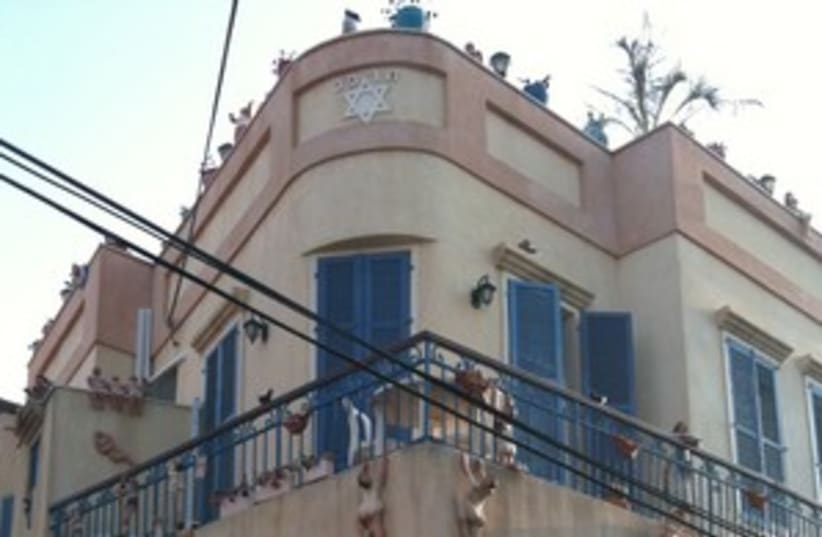
By JOE YUDINNeve Tzedek 311(photo credit: Joe Yudin)Joe Yudin owns Touring Israel, a company that specializes in “Lifestyle” tours of Israel.I used to wander around Neve Tzedek in the early 1990’s. The buildings were falling apart, the roads were riddled with potholes, but it still had that cultural feeling of the immigrants and the artists who had settled there in the 50’s and 60’s.It was a charming, but rundown neighborhood. There were a couple of great bohemian bars, a few funky struggling galleries and some pretty cool flea market type thrift shops. It seemed that there was a “For Sale” sign on every other dilapidated building, and I was positive that this neighborhood would be the next big deal in Tel Aviv.Luckily for all of us, there were those people who could see past the grime and neglect of these buildings, some older than 100 years. They didn't just renovate them, but fought with city hall and developers from knocking them down and replacing them with skyscrapers. A compromise was reached and room was made for a few modern apartment complexes and many of the original buildings have been restored to their 19th century grandeur.Today Neve Tzedek is a very happening place. You can visit top notch galleries, museums, restaurants, bars, boutique hotels, and stores that sell top Israeli designer jewelry, clothing and accessories. The asphalt on the roads and alleyways has recently been torn up and replaced with newfangled cobblestone. Lastly, the buildings, both residential and business, are undergoing massive renovation and restoration and the neighborhood has never looked better. A great place to start a tour is at the Suzanne Dellal Centre. You should do this tour with a map.In 1869 the Ottoman authorities paved the first road between Jaffa and Jerusalem. A prominent Jewish family from Jerusalem, the Rokah family, secured the rights for tolls on the road. In 1870 the Alliance Israélite Universelle was established along the newly paved road just southeast of what would become Tel Aviv and the agricultural school of Mikve Yisrael was born.It was created in order to help bring French-Jewish culture and agricultural know how into the Land of Israel for the early pioneers. He created two societies which aided Jewish settlement outside of the confines of Jaffa: B’nei Zion & Ezrat Yisrael. In 1892, as the railway opened nearby, the Alliance constructed both a boys and girls school during the Second Aliyah.Many artists, writers and even a prominent newspaper established themselves in Neve Tzedek during this period. The houses built had a French-European feel to them with courtyards for cooking and laundry. They built one attached to the other so the buildings themselves would act as a fortress against Bedouin marauders. During the Arab Revolt of 1936 to 1939 this was a dangerous place, wedged between the Arab city of Jaffa and Jewish Tel Aviv and most of Neve Tzedek’s population relocated to Tel Aviv proper.Standing in the middle of the square at the Suzanne Dellal Center you will see dozens of citrus tress interspersed with small canals of water feeding them. This is symbolic of the Jaffa orange groves planted outside of the city walls which became a symbol of the Labour Zionist pioneer movement, shedding off the old world Jewish stereotypes and refashioning the Jewish image into the farmer-laborer.The exit from this square to the west will take you out to the French style restaurant Suzanna, one of my favorites, on Shabazi Street. This street is the main drag of Neve Tzedek and home to bars, shops and restaurants. On the northern side of the square is a beautiful mural to which the likes of Aaron Chelouche, Shimon Rokah, Joseph Brenner, S.Y. Agnon and 19th century Zionist Rabbi Avraham Kook are painted. Also check out the depictions of the railway, Chelouche Bridge, Jaffa orange orchards and other early Neve Tzedek personalities and events.These two buildings, which now house dance companies, including the world famous Bethsheva Dance Troupe were once secret Haganah and Irgun training grounds after World War II. Behind the Girls School to the east is a well where Menachem Begin launched a retaliatory attack on Jaffa in April of 1948, leading to the flight of most of Jaffa’s Arab population and the incorporation of Jaffa into the State of Israel.Go back to the square between the old school buildings to the mural and exit Yehieli Street there between the ice cream palor and pottery shops. Notice the small little park as you turn right on Chelouche and the second left onto Rokah. Walk up this road to house number 36 on your right which was Shimon Rokah’s house. Rokah is the one who bought this land from Chelouch. Rokah would always be the first one in the morning to begin work on the new Jewish suburb and he would fill up 100 sandbags himself each day in order to level off the sand dunes. This unique house was slated for demolition in the late 1970’s until Rokach’s great-grand daughter and famous Israeli-feminist sculptor, Lea Majaro- Mintz, stepped in to restore it and turn it into a museum.Joe Yudin became a licensed tour guide in 1999. He completed his Master’s degree at the University of Haifa in the Land of Israel Studies and is currently studying toward a PhD
if(catID != 151){
var cont = `Take Israel home with the new Jerusalem Post Store