
While the strategic conditions of a conflict in the Taiwan Strait might differ from the Gulf War, Taiwan hopes to preserve the status quo with China while preparing for an escalation by aligning itself with Israel and the US from both value and strategic considerations.
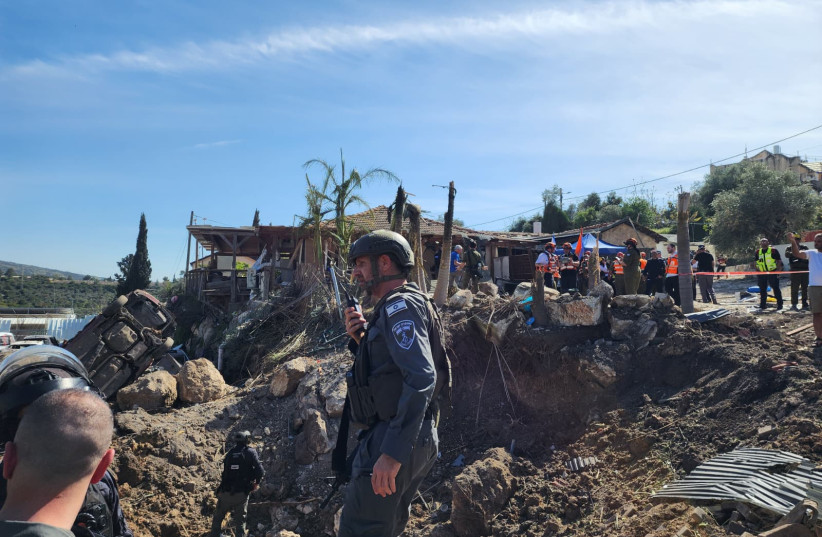
The joint US-Israel military campaign against Iran marked a continuation in Taiwan’s relations with the Middle East and the Jewish state. In October 2023, Taiwan strategically aligned itself with Israel. Now, Taiwan has demonstrated swift support for Operation Roaring Lion, aka Epic Fury, emphasizing the importance of freeing the Iranian people from the tyrannical regime of the mullahs. It has donated NIS 640,000 (around $180,000-$200,000) as humanitarian aid to the city of Beit Shemesh following a hit by an Iranian missile.
Yet Taiwan’s condemnation of the brutal terror attacks by Hamas or Iran’s regional aggression does not only reflect a moral, value-based approach: It presents a strategic imperative, crucial for the island nation’s national security. The goal is clear: Taiwan wants to learn from Israel’s national security policy and to align itself with the United States.
The evolving nature of Israel-Taiwan relations
Taiwan’s approach stems from Israel’s inspiration. The two states are conceived as small, free, pro-Western, and democratic. Despite struggling against constant regional threats, they have both become global technological, innovative, and thriving powerhouses.
But mostly, Taiwan is aligning itself with Israel because of its concern that if Israel is defeated, it will signal the message that Taiwan might also be destroyed. Therefore, Taiwan hopes that Israel will follow suit in a potential conflict with China.
During the Cold War and beyond, however, Taiwan and Israel had maintained a mixed relationship. Only recently, following Hamas’s attack in 2023, did their relations begin to change following developments over recent decades. For Taiwan, the eruption of the regional Middle East war, as well as Russia’s war against Ukraine, served as a wake-up call.
Thus, Taiwan’s leaders quickly concluded that their country might be the next victim of an offensive launched by an undemocratic, giant neighbor, and thus it should prepare accordingly. Quietly, Taipei, according to reports, began to cooperate with Israel on how to modernize its national defense policy.
It is not only that Taiwan seeks to acquire indigenous, modern, dense, sophisticated air-defense systems (“T-Dome”), as Israel successfully did, in an effort to potentially curb China’s aggression, and develop cheap, autonomous tools, such as drones driven by artificial intelligence (AI) technologies that improve intelligence collection and targeting in real-time. These tools can compensate for its qualitative and quantitative disadvantages vis-à-vis China. Embracing Israel’s proven cybersecurity model is another component that Taiwan may want to l emulate.
But more importantly, as the Taiwanese population seemingly prefers to preserve the current status quo in the Taiwan Strait, while a scenario of military conflict cannot be ruled out, there is a growing understanding that a shift must also occur within society.
As Taiwan’s government has, in recent years, extended its military service from four months to one year and aims to expand the defense budget to five percent of GDP, its leaders may want to mimic Israel’s conscription model, relying mostly on hundreds of thousands of reserve forces, including combatant women.
Another component that is likelybeing watched by Taiwan is the ability of Israel’s critical infrastructure and society to function despite the enduring war, and more importantly, its citizens’ discipline in remaining in safe rooms when sirens are heard warning of missile attacks. This goes hand-in-hand with Israel’s government and military capacity to effectively communicate with the public during wartime. While Taiwan has not experienced a military conflict since 1949, it aims to maintain civilian resilience – a crucial component that Israel was forced to develop under constant threat
The role of the US and the importance of alliances in the Indo-Pacific theater
Israel’s security, like Taiwan's, is first and foremost dependent on its alliance with the United States, which dates back to 1954 and persists despite the termination of the security alliance in 1979.
However, the context of a military escalation may differ between the Gulf and the Taiwan Strait: China is a recognized global nuclear, military, and technological power, whereas Iran is not. Taiwan will also have to focus on defending its sovereignty rather than bombing China’s mainland, in contrast to the nature of the joint US-Israel offensive against Iran.
Nevertheless, Taiwan may be satisfied with the US’s projection of military and technological dominance in the Gulf, and specifically against Iran, which is equipped with Chinese and Russian weapons and tools that may be used against Taiwan. The Taiwanese also appear to hope that the US’s determination in launching a large-scale aerial and maritime campaign against the Iranian regime (and previously against Venezuela) could signal to China to renounce its desire to confront the US and its allies over Taiwan.
This assumption persists despite the concern that America would not be able to act in multiple arenas simultaneously (Ukraine, the Middle East, and Asia) or would be lacking in military equipment and ammunition as a result of its recent campaigns. Against this backdrop, according to reports, just days before the US and Israel launched Operation Epic Fury, the Chinese People's Liberation Army (PLA) halted its military activity around Taiwan.
Taiwan may also draw insights from the coordination between the US and Israel at the operational and strategic levels. Taiwan may therefore conclude that, although it is a small nation without official relations with Washington, it could still, like Israel, affect the decision-making process of the US administration.
Taiwan may also conclude that by deepening its relations with Israel, it could gain access to the White House. However, the US is still adhering to the “ambiguity policy” in the Taiwan Strait, albeit Trump’s recent statements may imply that he considers departing from it.
While the US’ global leadership and reliability may be viewed as unstable and declining, it still cooperates with its major allies, such as Japan and Germany, to stabilize increasing gas prices following the disruptions of energy shipments and trade in the Gulf and the Strait of Hormuz. This is a good sign for Taiwan, which is also expected to experience energy shortages in an escalation in the Taiwan Strait.
Consequently, Taiwan and its regional allies, first and foremost Japan – which, under its right-wing Prime Minister Sanae Takaichi is modernizing its military and procuring new weaponry, may act to reinforce the regional architecture as a response to China’s aggression.
This logic also applies to other states that may be experiencing disruptions of energetic, technological, and commercial supply chains crucial to their economies. For instance, the Philippines and South Korea (which is a global technological hub) would want to coordinate closely, as well as with the US, to prepare for a similar scenario around the Taiwan Strait and the South and East China Seas.
These states cannot assume that they would be able to “hide” during a regional war and its implications. This is exactly what the Gulf nations failed to achieve in the current war and before, by promoting economic prosperity while aiming to pacify Iran.
It is challenging to draw clear conclusions from the current war with Iran. However, Taiwan keeps signaling its alignment with the US and Israel. Taipei’s approach not only stems from a value-based view of the current crisis of authoritarian regimes confronting democracies; it wants to earn Washington’s goodwill and be viewed as a trustworthy ally that can defend itself, like Israel, thereby gaining necessary security guarantees that would enable it to counter China’s potential aggression and improve readiness for a conflict.
The writer is an America in the World Consortium Postdoctoral Fellow at the Clements Center for National Security at the University of Texas at Austin.