
At first glance, the conflict involving Israel, the United States, and Iran appears to be yet another regional struggle in the Middle East. However, a broader strategic perspective reveals a different reality: this is not merely a regional war, but a significant development in the global rivalry between the United States and China over the shaping of the 21st-century international order.
To understand this shift, one must view events through the lens of two chessboards operating simultaneously, one regional and the other global.
On the first chessboard, the objective is localized and clear. It is to weaken the Iranian regime, reduce its ability to destabilize the region through military proxies and terrorist organizations, and create the conditions for a more stable Middle East. Such stability could pave the way for further regional agreements and deeper economic integration across the board.
The second, larger chessboard involves the strategic competition between the US and China over the key pillars of global power: energy, trade routes, technology, strategic resources, and systemic resilience.
Iran plays a critical role in the system that enables China to access oil outside the framework of Western sanctions. A significant portion of Iranian oil ultimately reaches the Chinese market, often at substantial discounts. Therefore, any disruption to Iran’s energy exports is not merely a regional development; it directly affects one of the primary energy lifelines of the Chinese economy.
This struggle extends far beyond Tehran. It mirrors the pressure exerted on countries like Venezuela and may expand to other theaters, such as Cuba and strategically vital regions, namely Greenland, which holds vast reserves of the rare minerals essential for future industries.
Diplomatic stakes and the Taiwan parallel
Simultaneously, the current confrontation undermines a key diplomatic achievement. Beijing has sought to establish itself as a mediator between Iran and Saudi Arabia. If Iran is significantly weakened, Beijing risks losing multiple strategic assets at once: a source of discounted oil, a major market for Chinese goods, and a geopolitical foothold in a critical region.
Yet the most significant implications of this war may not be felt in the Middle East at all but in Asia, specifically regarding Taiwan. As the producer of the world’s most advanced semiconductors, Taiwan is a top strategic priority for China, beyond its geographic importance and status as a national symbol.
Every conflict in which the US demonstrates the ability to project power, build coalitions, and support its allies is closely monitored in Beijing.
The central question for the Chinese leadership is: What does this mean for Taiwan?
While Israel operates as a close US ally in the Middle East, the potential parallels in Asia are evident. Countries such as Japan and South Korea could align more closely with the United States as part of a broader regional coalition, should tensions escalate in the Pacific.
The path forward
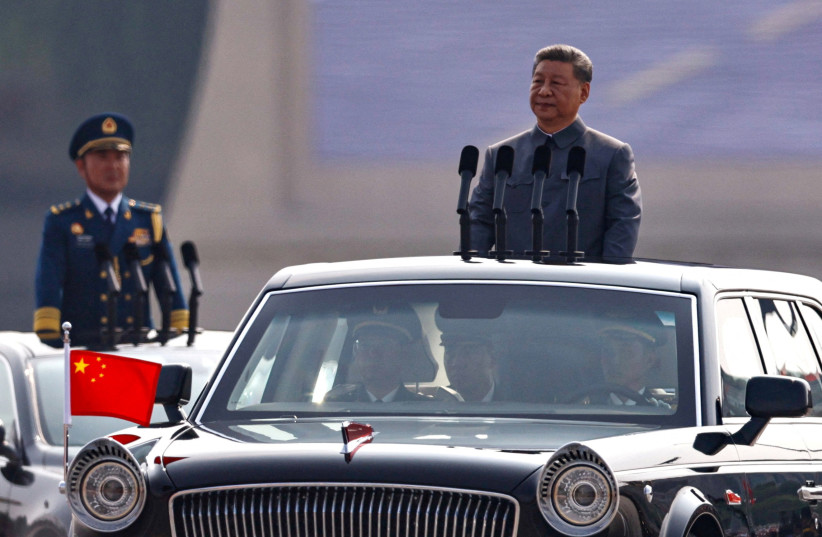
This context helps explain recent diplomatic shifts. A high-stakes meeting is expected between US President Donald Trump and Chinese President Xi Jinping in early April, and the events unfolding in the Middle East will heavily influence the balance of power at the summit. The conflict with Iran directly impacts energy markets, alliance structures, and both superpowers’ broader strategic leverage.
Trump’s recent attempts to calm global markets and limit escalation should be understood in this light. For the US, the Middle Eastern theater is vital, but the central strategic contest remains with China. A prolonged war that destabilizes the global economy could ultimately weaken America’s hand ahead of critical negotiations with Beijing.
To look only at the first chessboard is to see just another Middle Eastern conflict.
Yet ultimately, the war against Iran is unfolding on two levels. Regionally, it seeks to shape a more stable order in the Middle East. Globally, it is a defining chapter in the competition between the US and China over energy, technology, and the architecture of global alliances. To recognize both is to understand a far more significant move in the geopolitical contest of the 21st century, one that will have a profound impact on our future, provided the US can maintain economic and domestic resilience in the face of market volatility.
The writer is the founder and chairman of Infinity AI Funds, president of the Israel-China Chamber of Commerce, and author of Working with the Chinese.