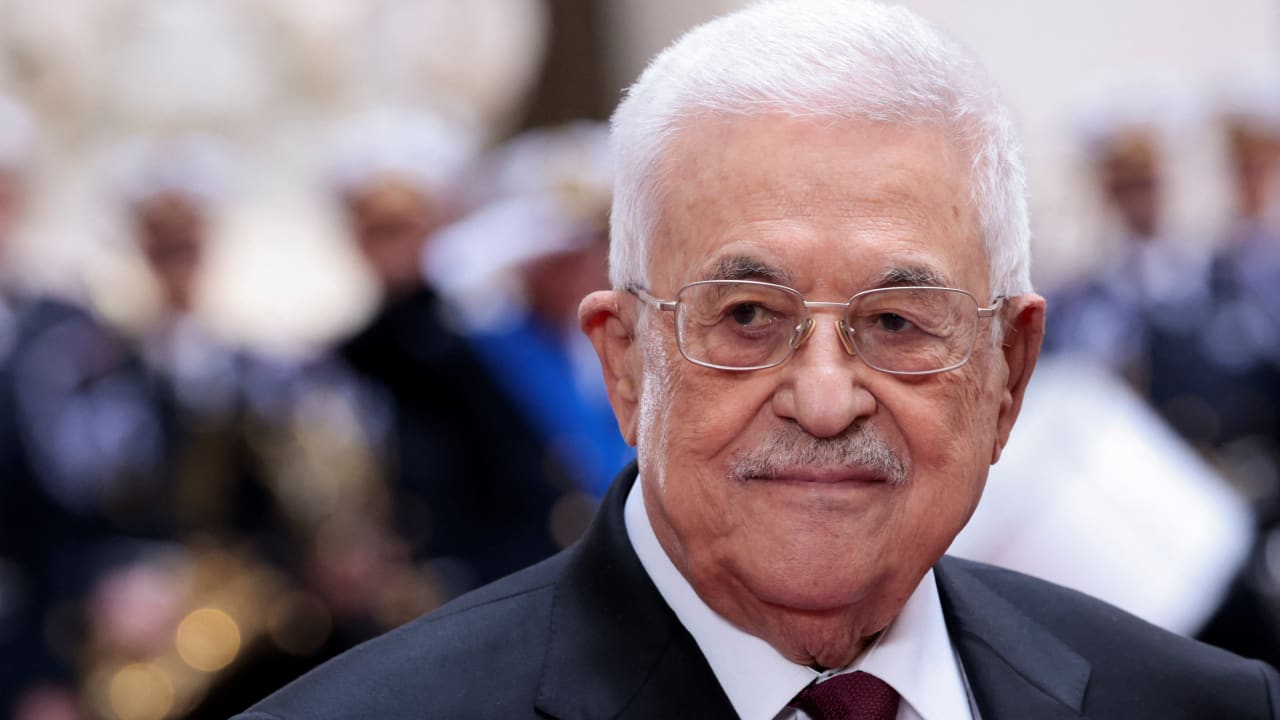
Voices in Palestinian media have been divided in recent weeks over Fatah’s decision to include convicted Palestinian prisoners in its upcoming Eighth Movement Conference, with some viewing the move as an attempt to mask the organization’s ineffective governance, while others see it as a legitimate embrace of the Palestinian “struggle,” according to op-eds published on Palestinian platforms reviewed by The Jerusalem Post.
Fatah’s Eighth Movement Conference, to be held on May 14, will include convicted terrorists and prisoners imprisoned for more than 20 years, Fatah Revolutionary Council member Tayseer Nasrallah confirmed on the official Palestinian Authority radio station.
"There have always been several members of the [Fatah] Revolutionary Council from within the prisons, and also brother leader Marwan Barghouti, who is a member of the Central Committee, was elected while in prison…Anyone who spent 20 years in Israeli prisons will be a member of the conference. In this way, this conference will be held only with true and serious representation of the Palestinian prisoners," Nasrallah told the radio host when asked about Fatah’s commitment to highlighting the voices of “released and exiled prisoners.”
While little has been announced on who will attend the conference, Palestinian media have been awash with op-eds questioning whether the PA can regain legitimacy and accusing Fatah of using the prisoners as a symbol without taking meaningful action to support the cause.
“At the heart of this moment, the question of the prisoners emerges as a moral test that cannot be postponed. The prisoners are not a symbol to be invoked, but a litmus test for the movement's integrity. Their active representation is not a mere formality, but a reminder that those who paid the price for freedom must be partners in overcoming the crisis, not mere witnesses to it,” one writer published on the Al-Najah university news site last week, accusing the PA of using a “superficial success” to hide the organization’s failures. “The eighth conference is not just another event, but a final test of Fatah's seriousness in confronting its own shortcomings. It will either be a turning point that restores the movement's meaning and role, or a moment of consolidation on a path of decline that is no longer sustainable.”
Dr. Yasser Abu Bakr published in Al-Najah that Fatah’s treatment of prisoners would be used as a loyalty test by Palestinians.
“The issue of prisoners, martyrs, and the wounded stood out as not merely an administrative or social matter, but a moral standard by which the sincerity of belonging and the depth of national commitment are measured. This issue represents, in the Fatah consciousness, the essence of the movement's struggle for identity, and any shortcoming in dealing with it is not interpreted simply as an administrative error, but as a test of loyalty to the values upon which the movement was founded,” Bakr wrote. “This reflects a profound truth: the legitimacy of liberation movements is built not only on their political programs, but also on their ability to protect the symbols of their sacrifices and preserve their dignity.”
Dr. Bassem al Tamimi, a member of the Palestinian National Council and senior Fatah figure, published in the Ramallah-based Palestinian newspaper that the conference’s topic would be on the Palestinian vision cemented by “the sacrifices of hundreds of thousands of fighters, defenders, martyrs, wounded, prisoners, bereaved mothers, and orphans.”
Tools to ensure the Palestinian right of return
Tamimi claimed the conference would include discussions on tools to ensure the implementation of the Palestinian right of return, self-determination, and independent statehood for Palestinians. These goals, he asserted, could only come about under the “Unity” of the Palestinian Liberation Organization.
Palestinian political analyst Muhammad Ali Al-Aidi, on Fatah’s official site, wrote that the conference would be a “test” on Fatah and that the organization needs “an honest review, one devoid of flattery or evasion.”
“Organizational decay, weak accountability, and a lack of justice in some areas” have led to Fatah becoming a shell of its potential, Aidi wrote, arguing for an infusion of new blood into the system. “The eighth conference must be a conference of revitalization, not merely a reshuffling of positions. It must establish a clear political program, restore the national struggle in all its legitimate forms, and strengthen national unity based on partnership, not exclusion. It must be a conference that rebuilds trust between the leadership and the rank and file, between the movement and its supporters, and between Fatah and its core principles.”
In the publication Al-Quds, Palestinian columnist Mohamed Zuhdi Shahin claimed that the upcoming conference was “a true test of the movement's spirit,” which can “restore the national conference” by providing a platform to self-criticize and prioritize public interest.
“The Eighth Conference is an opportunity, perhaps the last, to demonstrate that Fatah was not merely a phase in Palestinian history, but an ongoing project that renews itself to the extent that it remains true to its people. People are not easily deceived, but they are very forgiving of those who possess the courage to admit their mistakes and the audacity to correct them,” he wrote. “Ultimately, Fatah does not need to convince people that it was once great, but rather to prove to them that it is still capable of being so.”