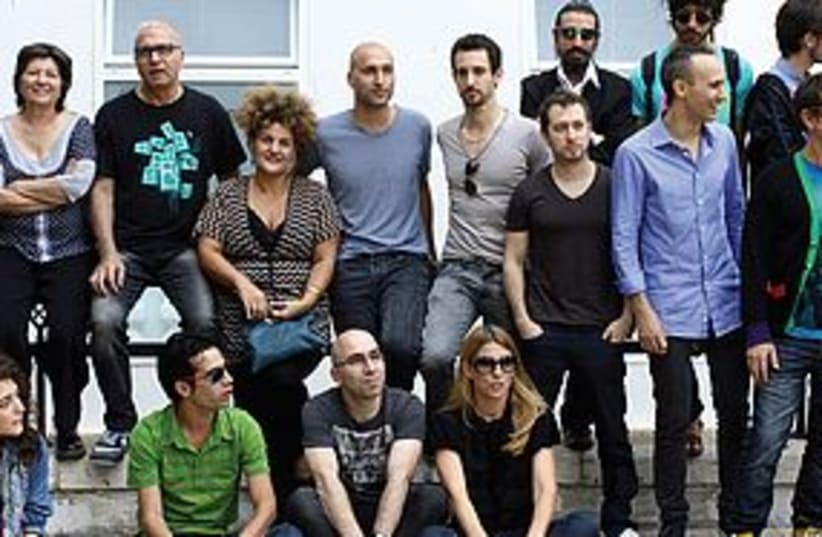
Singer Dana Berger is one of the 150 top artists who will perform at the six-day Piano Festival in Tel Aviv and Jaffa.
By BARRY DAVISThe Roster 311(photo credit: Courtesy/Ilan Bseor)
The annual Piano Festival in Tel Aviv and Jaffa is one of the most varied and densely populated musical events of the year. The roster of artists that will feature in this year’s festival, which takes place between November 22 and November 27 at the Einav Center, Suzanne Dellal Center and the Noga Hall, includes veterans such as Shlomo Gronich, Corinne Alal, Hava Alberstein and Yehudit Ravitz, alongside mid-generation performers such as Dana Berger, Yeremi Kaplan, Arcadi Duchin and Aviv Gefen, and some of the younger crowd of Ran Danker, Shira Gabrielov and Eric Berman. All told, around 150 artists will contribute to 38 shows over the six days.The Piano Festival’s genre spread has also widened over the years and now, in addition to the predominantly rock and pop fare, it embraces colors of jazz and more ethnically seasoned material.There are also all sorts of thematic shows in the program, including the Hishtakfut (Reflection) concert by 41-year-old rocker Dana Berger, on November 25, which is based on songs of female artists across a couple of generations who have inspired Berger. The list of Berger’s muses over the years includes Joni Mitchell, Janis Joplin, Kate Bush, Nico and Hazel O’Connor, as well as a good many local artists such as Alberstein, Etti Ankri, Si Hyman, Ravitz and Alal.Interestingly, the last we spoke, Berger bemoaned the paucity of female figures on the pop and rock, but things have changed remarkably in the interim.“Yes, the situation has improved a lot,” she notes. “That problem has, thankfully, been solved.”Of course, the forthcoming show at the Piano Festival does not borrow from the new crop of women rockers and poppers. “I have gone for the singers and singer-songwriters I listened to while I was growing up,” says Berger, “so, for instance, there is nothing by [31-year-old former Benot Nechama band member] Dana Adini in the show because she was probably around two years old when I was listening to the older singers. The music you hear when you are little dictates who you grow up to be,” she says.
Hence, the inclusion of songs by Hyman, Ankri, Joplin, Mitchell et al. There will also be some penned songs and, although the list has yet to be finalized, you can count on hearing such Berger hits as “Sheket” and “Yesh Bezeh Taam.”“There also be a new song of mine,” adds the singer. “The show is based on songs from the past, but you have to look forward, too.”Berger will be supported by four other instrumentals for the Hishtakfut show, including longtime collaborator pianistkeyboardist Elad Adar, trumpeter Avishai Cohen and violinist Nikki, with Adi Sharon providing electronics and loop embellishment. The range of sidemen suggests that Berger is adopting a multipronged approach to the source material.“Other than [Joni Mitchell song] ‘Blue,’ which for me is sort of sacred and I won’t be changing it at all, all the other songs will be interpreted differently from the originals,” explains Berger. “There’s no point in just doing a song the way it was first performed. I am bringing myself, as a person and as an artist, to the material I have chosen.”The inclusion of Cohen, who normally earns his keep on the New York jazz scene, should stretch the stylistic hinterland even further. “Avishai is only arriving in Israel on Sunday, and I haven’t really gotten down to talk to him about the repertoire yet,” Berger says, “but it is reasonable to assume that some jazzy elements will find their way into what he’ll be doing in the show.”Sharon will also contribute some “extraneous” vibes to the concert output. “I wanted to add something a bit rawer to the show,” explains Berger. “I think that will give the concert some edge.”The Bush number in the Hishtakfut lineup is the plaintive ballad “The Man with the Child in His Eyes.” “That will give Elad [Adar] an opportunity to show off his piano skills,” says Berger, “and I am really happy Nikki will be with me too. She plays with Yehuda Poliker, and I discovered her a while back. We do duo shows all over the country, which is great fun. The core of the show is Elad, Avishai and myself, and Nikki and Adi will add the sparks and extra color.”Elsewhere in the Piano Festival lineup there are plenty of musical heavyweights, with Ehud Banai making his debut at the event, and Miki Gabrielov will front a special tribute show to mark the 40th anniversary of the release of Arik Einstein record Badesheh Etzel Avigdor, for which Gabrielov wrote most of the numbers and was responsible for all the arrangements. Gabrielov’s cross-generational cohorts in the festival show include Ohad Hitman, Hemi Rudner, Muki, Tamar Eisenman, Haim Romano, and Gabrielov’s daughter Shira.Corinne Alal will present the Shabbat Baboker children’s show, and Idan Alterman will front the Magical Mystery Tour show of Beatles songs.Other Piano Festival one-offs include Aviv Gefen’s first artistic encounter with Evyatar Banai, Rami Kleinstein and Erez Lev Ari; and Eran Tzur with the Meitar Ensemble. And there will be a number of unveilings over the six days, such as Shlomo Gronich’s Sidrat Albumim (Album Series) confluence with Efrat Gosh; Asaf Amdurski synergy with Shuli Rand; and Ruth Dolores Weiss’s new show If I’m Not Free Now.Weather permitting, there will also be free outdoor shows during the festival at the Suzanne Dellal Center in Jaffa.For more information: www.pianofestival.co.il. For tickets: (03) 762-6666 or *9080 and (03) 510-5656 or www.suzannedellal.org
if(catID != 151){
var cont = `Take Israel home with the new Jerusalem Post Store