“There are a lot of obstacles but there... are business opportunities to make,” says Israel-Palestinian Chamber of Commerce executive officer.
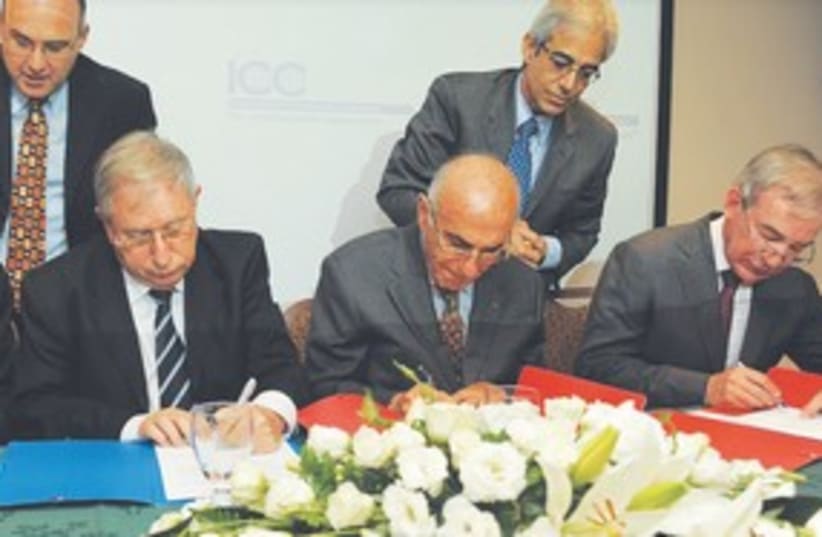
By ARIEH O’SULLIVAN / THE MEDIA LINEIsraeli-Palestinian trade arbitration project_311(photo credit: International Chamber of Commerce Israel)
Business between the Palestinian Authority and Israel is growing despite the political impasse as both sides seek to boost sales.“For the Israeli market, the Palestinian market is a very promising one because you are talking about two million people who are very good consumers,” Avi Nudelman, chief executive officer of the Israeli-Palestinian Chamber of Commerce, told The Media Line. “Many Palestinians like to buy Israeli products because of the quality, even if it is more expensive than the Turkish or the Egyptian products.”A recent conference hosted by the Faculty of Business and Management at Ben-Gurion University of the Negev brought together top Israeli and Palestinian trade experts to seek ways to enhance cross border business interactions.The conference culminated with a competition between Israeli and Palestinian business students to brainstorm on areas of business cooperation.“The competition was unique. The students were able to draft cooperation packages and exchange ideas,” Miki Malul of the university’s Department of Public Policy and Administration, who moderated the conference, told The Media Line.Panel members emphasized the importance of holding business meetings between both sides in order to strengthen the personal ties that are almost non-existent today. Nudelman said that both sides are interested in engaging in business relations, but haven’t been able to find the platform to facilitate interactions.“There are a lot of obstacles but there is a lot of awareness from both sides that there are business opportunities to make,” Nudelman said. “There is a lot of willingness to cooperate between Israeli and Palestinian markets.”Muhyeddin "Muhi" Sayed Ahmad, the public relations coordinator for the Hebron Chamber of Commerce and Industry, told the conference about a website he runs where Palestinian produce is offered for sale. The website allows Israeli businessmen and foreign business entities to make deals with manufacturers from the Palestinian Authority through the website’s network.Malul explained that there is a knowledge gap among Israelis regarding Palestinians - particularly with regards to its business sector.“These kinds of meetings contribute to narrowing these gaps and thus to promoting economic ties that will one day be a factor in making peace between both parties,” he said.Nudelman said future was also to be found in the field of software, where many Israeli and other foreign companies already outsource their software needs to Palestinian software companies. He said many Palestinians were interested in much broader cooperation with these companies. He added that the growth of an educated workforce in the PA might help expand this cooperation as more sophisticated tasks are transferred to Palestinian companies.“For the Palestinians, of course, the Israeli market is the biggest market they could dream about. The problem for the Palestinians is that this market sells them more than they buy from them,” Nudelman said.Two-way trade between Israel and the Palestinian-ruled areas reached $4.3 billion last year. But the trade is heavily tilted in Israel’s favor, with exports to the PA amounting to $3.5 billion while Palestinian exports were just $816 million. But with the Israeli economy growing quickly, Palestinians have been able to sell more: Last year, Israel increased Palestinian purchases by 18%, according to Israel’s Customs Directorate.Nader Tamimi, chair of the Association of Traditional Industries in the PA, gave some concrete examples of the trade ties that already exist. For example, today artisans in Hebron manufacture Judaica, such as Kiddush cups and Seder dishes, for Jews from Israel and the entire world. He added that, despite the current atmosphere, there are regular interactions between Palestinian and Israeli businessmen.Tamimi also shared his frustration that the younger generations on both sides are not familiar with one another. He suggested that the Israeli government allow tours for Israeli businessmen within the PA and for Palestinian businessmen within Israel in order to allow both sides to learn about the other, and to create a wider forum for joint business opportunities.Jihad Alubra, director of MATI Business Development Center for the Bedouin Settlements, said Arab Israelis in general, and Bedouins in particular, often act as mediators in business interactions between Israelis and Palestinians because of their ability to bridge gaps created by prevailing mistrust between the parties and because of their ability to travel relatively freely to the PA territories.Ahmad said ultimately the close proximity between the Israeli and Palestinian markets allowed the supply of finished products in a short amount of time. But he said easing restrictions on the passage of good from the PA into Israel was necessary.The Israeli-Palestinian Chamber of Commerce is mainly an organization whose aim is to represent the Israeli private sector and push sales in the Palestinian markets. Still, a growing prosperity among the Palestinians is beneficial to both sides, Nudelman said.“It is like a win-win situation for both sides. For us it is great if I can promote Palestinian business interest in Israel as well,” he said.
if(catID != 151){
var cont = `Take Israel home with the new Jerusalem Post Store