Ashdod: Rockets from Gaza leave 1 seriously injured
5 others hurt from 2 Grad rockets; light damage caused to Yeshiva building; at least 10 other rockets land in South.
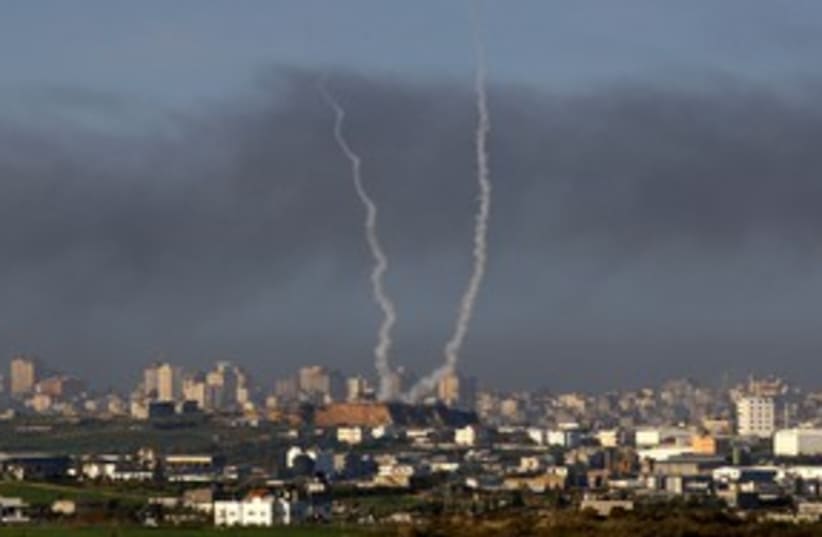
By JPOST.COM STAFF, REUTERSSmoke trails from rockets being fired in Gaza 311 (R)(photo credit: Yannis Behrakis / Reuters)
One person was seriously injured and another moderately injured after a Grad rocket fired from Gaza landed in the courtyard of a Yeshiva in Ashdod on Friday morning. Four other people were treated for shock following the attack. All were taken to Kaplan Medical Center in Rehovot. An additional Grad that failed to explode subsequently fell in the area and was neutralized by the bomb squad.Light damage was caused to the building as a result of the rocket fire.RELATED:Counter-terror officer killed by terrorist fire near EilatTimeline of the attacks on the Sinai borderThe rocket attack came less than a day after a three-stage terror attack near Eilat killed eight people.Earlier on Friday, at least 10 rockets were fired at various targets in the South including Ashkelon and Beersheba.All of the rockets landed in open territory and no injuries or damage were reported.IAF aircraft struck seven Hamas security installations in Gaza early Friday morning, killing at least one Palestinian, in further retaliation for the attacks on Thursday.Gaza residents said three compounds controlled by Hamas were hit in the overnight raids. Medical officials said a 13-year-old boy in a nearby building was killed and 17 people were wounded.Defense sources said the attackers infiltrated from Gaza via Egypt's Sinai desert, despite stepped up efforts by Egyptian security forces in recent days to rein in Palestinian terrorists."If anyone thinks the State of Israel will resign itself to this, they are wrong," Prime Minister Binyamin Netanyahu said in a brief television address about the most deadly attack in Israel since 2008.The IDF said seven gunmen were killed in southern Israel, including two who blew themselves up in suicide attacks on one of the buses and in a confrontation with soldiers.Egyptian soldiers apparently shot dead two gunmen, the military said.Click for full Jpost coverage
Related Tagsegged
if(catID != 151){
var cont = `Take Israel home with the new Jerusalem Post Store