Decision to encrypt new model of Skylark I UAV stems from probe revealing intercepted surveillance footage's role in “Shayetet Disaster.”
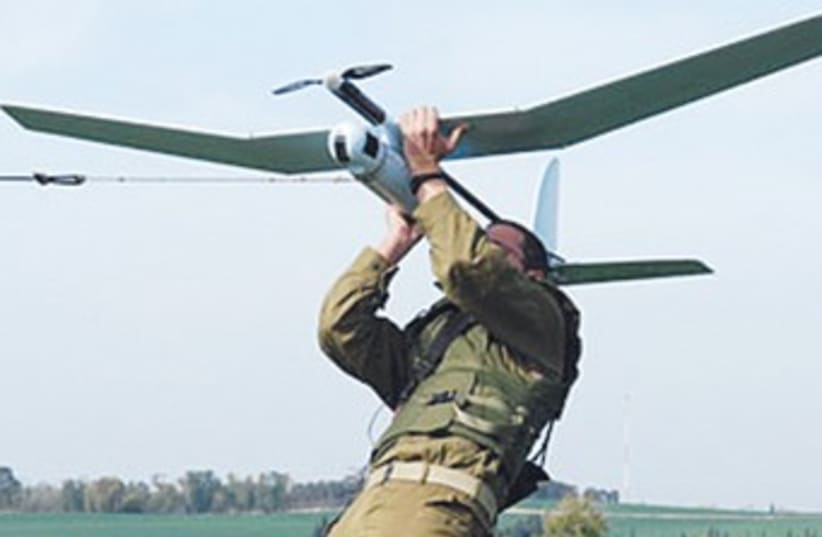
By YAAKOV KATZSkylark UAV I 370(photo credit: dover.idf.il)
The IDF is continuing to encrypt its unmanned aerial vehicles amid concern that Israel’s adversaries have gained technology which enables them to intercept surveillance footage.In the coming months, the Ground Forces Command will take delivery of a new model of the Skylark I UAV – developed by Elbit Systems – which will come with a new encryption system aimed at preventing enemy forces from intercepting its footage.The Skylark I drone has been supplied over the past two years to IDF battalions as part of the “Sky Rider Program,” which was created to provide battalion commanders with their own aerial surveillance capabilities without needing to rely on the Israel Air Force.The Skylarks currently in IDF use were recently grounded after the landing airbag opened unexpectedly on a number of drones in mid-flight. The Skylark I lands by opening an airbag which it lands on to prevent damage to the body of the aircraft.The man-portable Skylark I weighs around 6 kilograms and is designed for “under the clouds” reconnaissance missions.It can be launched by hand or a catapult and has an operational endurance of around three hours at altitudes of up to 3,000 feet.In addition to the built-in encryption, the new batch of Skylarks will also include a control system enabling commanders to switch between UAVs during missions without interrupting the tracking of a target.The requirement to encrypt drones was issued to domestic defense contractors by the IDF in 2010 after a military probe concluded that Hezbollah succeeded in ambushing a Navy commando force in 1997 after intercepting surveillance footage of a planned raid in Lebanon.In what has been called the “Shayetet Disaster,” 11 commandos from the Navy’s Flotilla 13 – known as the Shayetet – were killed in a Hezbollah ambush in 1997, including the commander of the force, Lt.-Col. Yossi Korakin.The IDF assumption had been that the ambush was random and that Hezbollah did not have advance intelligence about the raid on the Ansariya Beach in Lebanon.In August 2010, though, Hezbollah Sheikh Hassan Nasrallah revealed footage from what he claimed was an Israeli UAV that had conducted surveillance over the area that the commandos were supposed to raid.After Nasrallah’s press conference, then-IDF Chief of Staff Lt.-Gen. (res.) Gabi Ashkenazi ordered the Navy, Military Intelligence and the IDF’s C4I Directorate to establish a panel of experts to investigate whether the Hezbollah footage was genuine. The team concluded that it was and had been intercepted during an Israeli surveillance mission over the planned raid area.
if(catID != 151){
var cont = `Take Israel home with the new Jerusalem Post Store