IDF establishing elite units for logistical support
Special reconnaissance unit will be responsible for ferrying supplies to troops behind enemy lines.
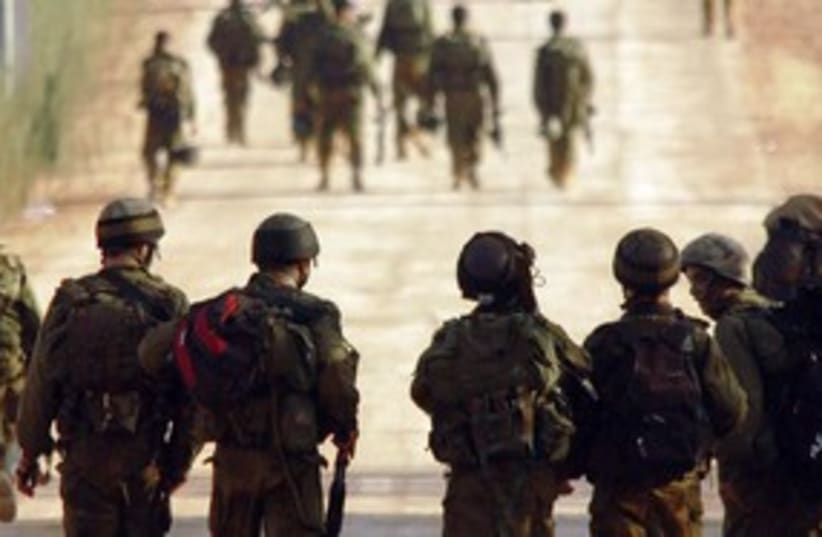
By YAAKOV KATZIDF soldiers marching in Second Lebanon War 311 (R)(photo credit: Ho New / Reuters)
The IDF plans to establish an elite reconnaissance unit with a high level of maneuverability for providing logistical support for military forces operating behind enemy lines.Under a plan drafted by OC Logistics Corps Brig.-Gen. Mufid Ganem, a special unit will be added to each IDF division and will be responsible for bringing critical supplies to troops operating behind enemy lines when regular logistics units are incapable of doing so.A decision on the establishment of the new units will be finalized at the upcoming General Staff workshop during which Chief of Staff Lt.- Gen. Benny Gantz will rule on the military’s next multi-year procurement program.The IDF came under harsh criticism following the Second Lebanon War when it failed to open up supply lines to units that were operating just a few kilometers beyond the border.Since then it has put an emphasis on beefing up battalion logistics units to ensure that they will be able to bring supplies to combat soldiers as needed and in line with the progress of the ground advance during a war.Each new unit will consist of several dozen soldiers who receive high-level combat training with an emphasis on navigation. The units will be equipped with fast and durable vehicles for easy maneuverability in difficult terrain.“This will be an addition to the regular supply lines for getting special equipment to a unit or reaching forces that are operating deep inside enemy territory,” a senior officer from the Logistics Corps explained.In April, the Logistics Corps held an exercise to improve its delivery of ammunition and supplies to forces cut off from regular supply lines. During the drill, the IDF practiced dropping ammunition, food, supplies and even Hummer vehicles from C- 130 Hercules transport aircraft.In another improvement, the IDF recently completed the installation of new software for its Tzayad digital program that enables commanders to monitor supply levels. Tzayad creates a digital picture of a battlefield and allows units to share information on the location of friendly and hostile forces, as well as imagery collected from ground and aerial sensors.
if(catID != 151){
var cont = `Take Israel home with the new Jerusalem Post Store