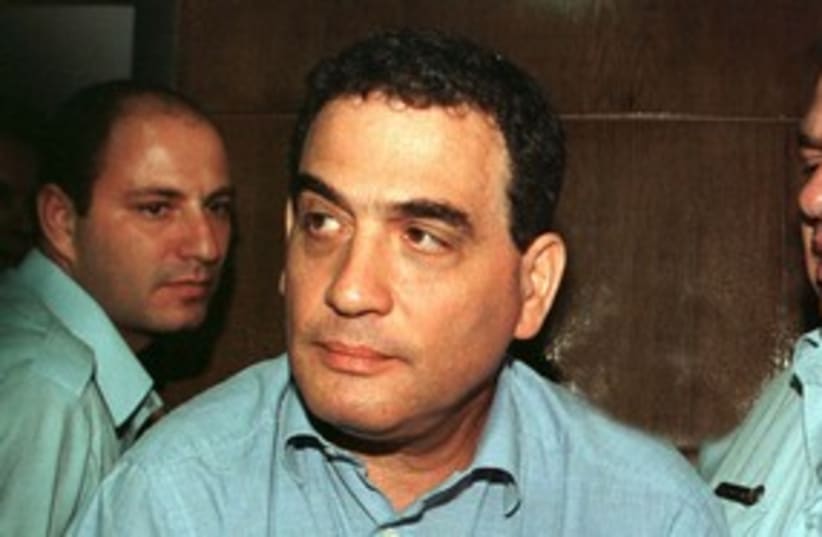
Businessman who sold arms to Iran set free after 14 years
After serving 14 years of 16-year sentence for selling chemicals, Nahum Manbar no longer a threat to public, says attorney-general
By JOANNA PARASZCZUK, YAAKOV LAPPINNahum Manbar 311 (R)(photo credit: REUTERS/Havakuk Levison)
Nahum Manbar, a businessman convicted of endangering national security by selling components of chemical weapons to Israel’s foremost enemy, Iran, walked out of prison on Monday after serving 14-and-a-half years of his 16- year prison sentence.Manbar was convicted in 1998 following a trial that rocked the country and saw then-Mossad chief Shabtai Shavit take the stand against him in a closed-door trial.RELATED:'Iran may recruit Manbar if he's freed' Parole panel: Manbar will stay in prison Before his arrest in 1997, Manbar attempted to deceive the Mossad by presenting himself as a source of information to the intelligence agency, Shavit told Israel Radio on Monday.The parole board of the Prisons Service approved the release after Attorney-General Yehuda Weinstein stated that he had no opposition to Manbar walking out of prison. He said Manbar was no longer a public threat.Manbar, 65, was originally convicted by the Tel Aviv District Court on charges of aiding the enemy and harming state security, and passing information to the enemy with the intent of harming national security – crimes that carry a maximum penalty of life imprisonment.
Manbar, originally from Kibbutz Givat Haim, was indicted following a Shin Bet (Israel Security Agency) and Mossad investigation that began after he had been barred from entering the US on charges of selling chemical weapons components to Tehran.According to the original indictment, in 1990, Manbar used an Iranian intermediary, Barry Hashemi, to contact Majid Abbaspour, formerly Iran’s chief security adviser and head of Tehran’s chemical weapons project.The indictment charged that Manbar signed an agreement between his company and Iran’s Ministry of Defense Special Industries Group to deliver mustard and nerve gas components, and also to provide information about equipment to manufacture three types of nerve gas, including sarin.In late 2000, the Supreme Court denied Manbar’s appeal against his conviction.Two further appeals to the Jerusalem District Court in 2007 and 2008 against the state’s refusal to grant him early release were also turned down.On Monday, the attorney-general said the state no longer opposes Manbar’s release, because of the short time remaining until the end of his sentence.However, according to a release-conditions agreement between Manbar’s lawyer, Amnon Zichroni, and the state attorney’s office, Manbar is barred from leaving Israel, from having any contact with foreign nationals and from media interviews.
if(catID != 151){
var cont = `Take Israel home with the new Jerusalem Post Store