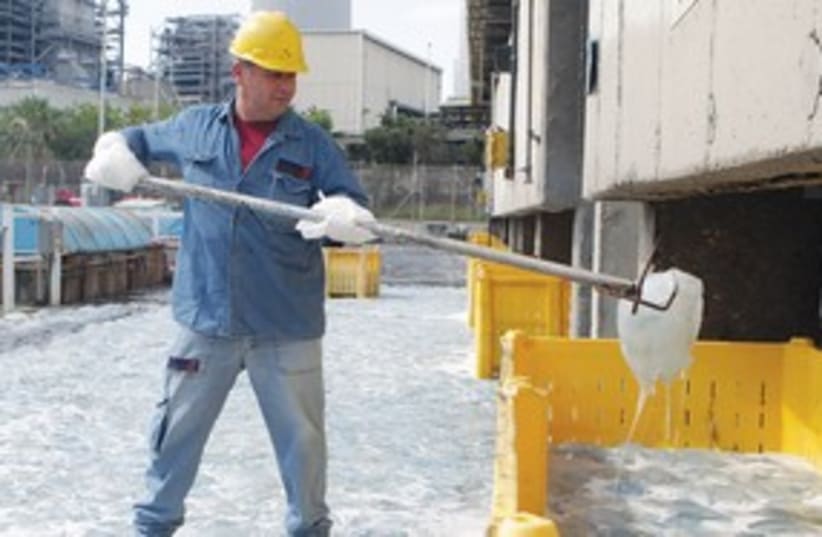
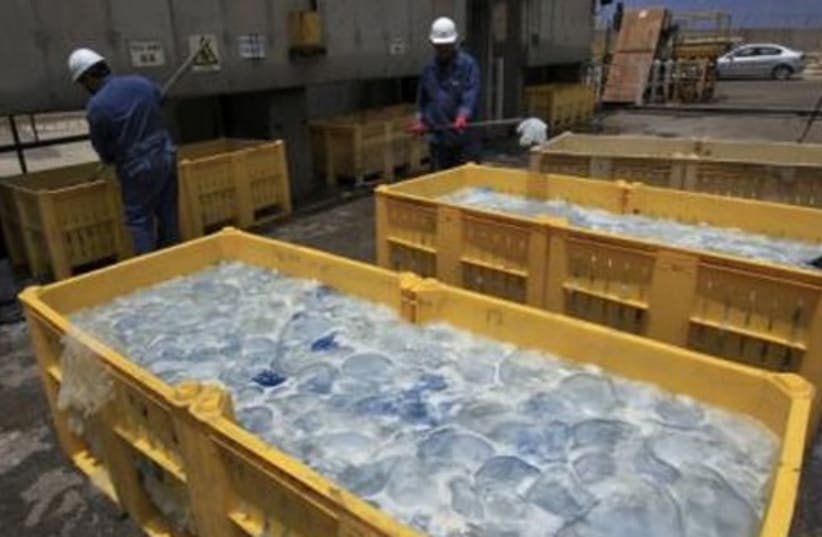
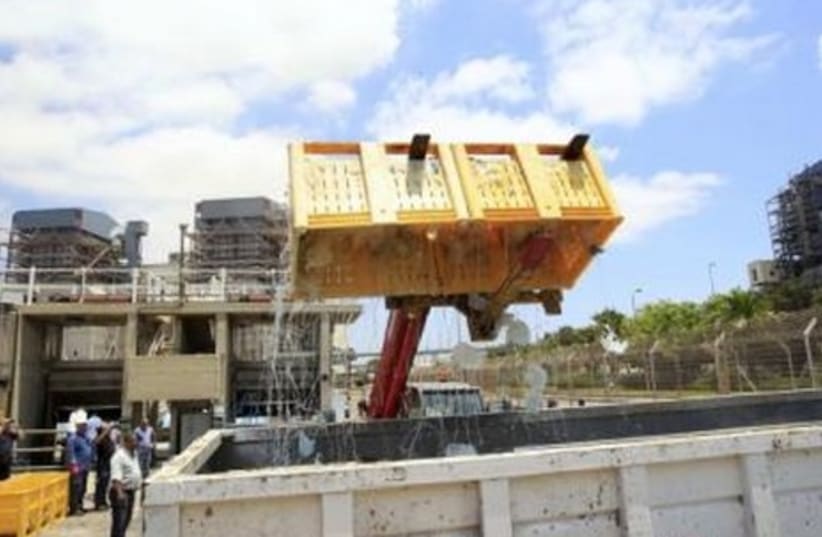
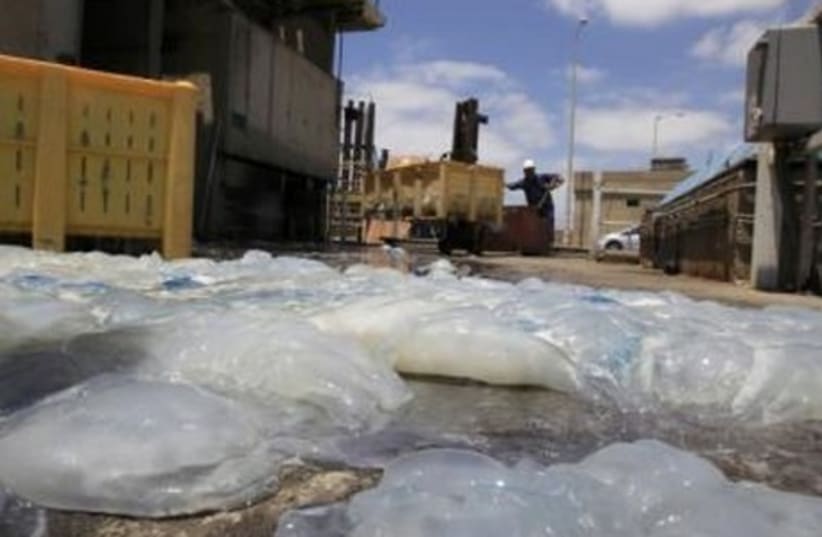
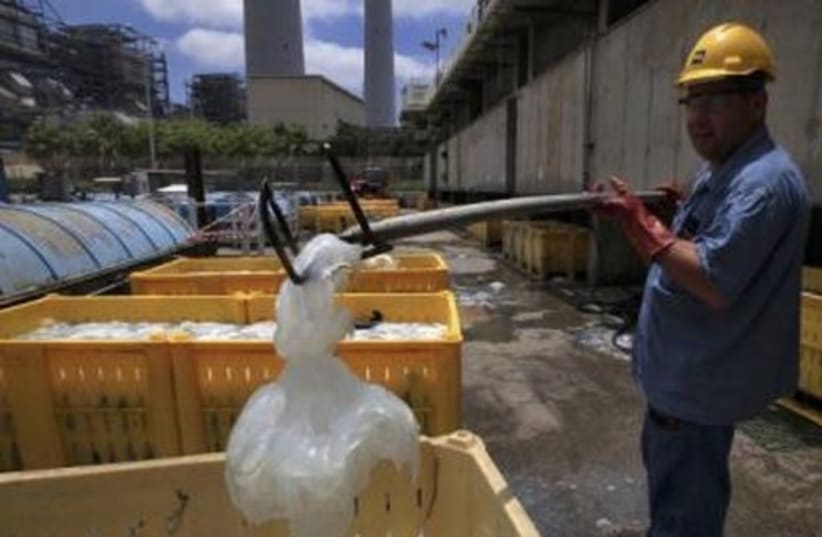
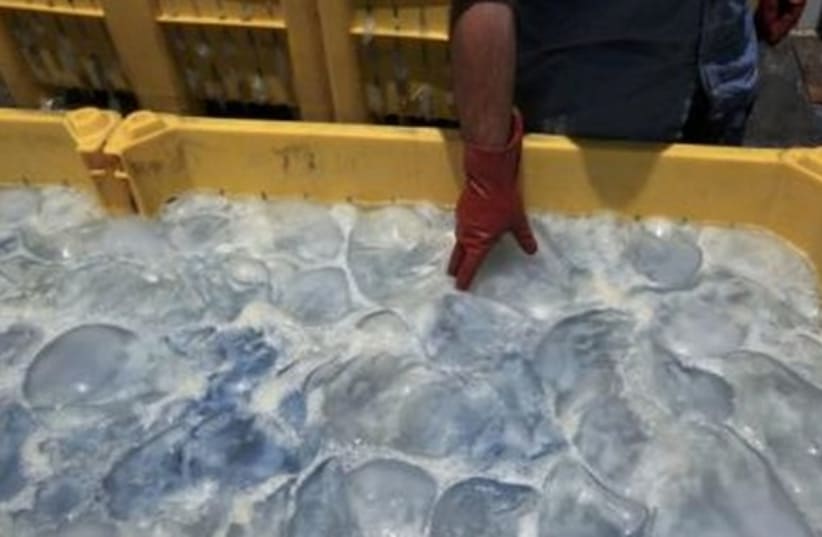
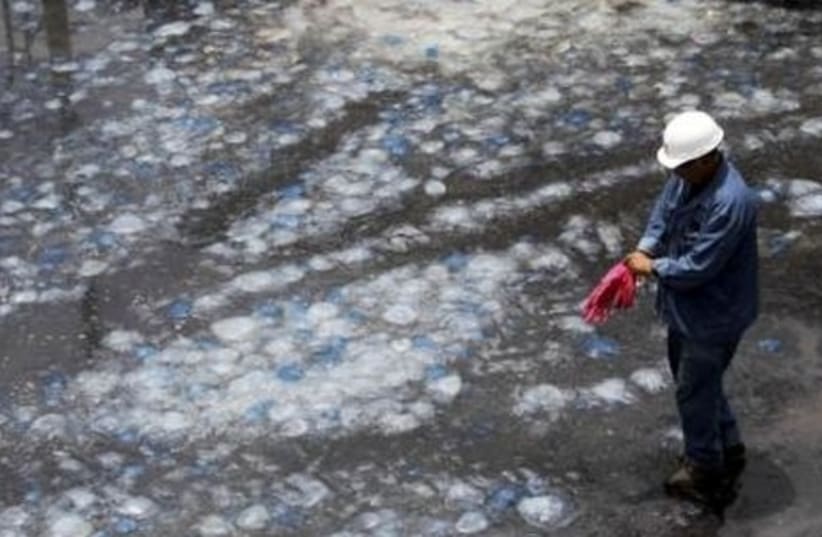
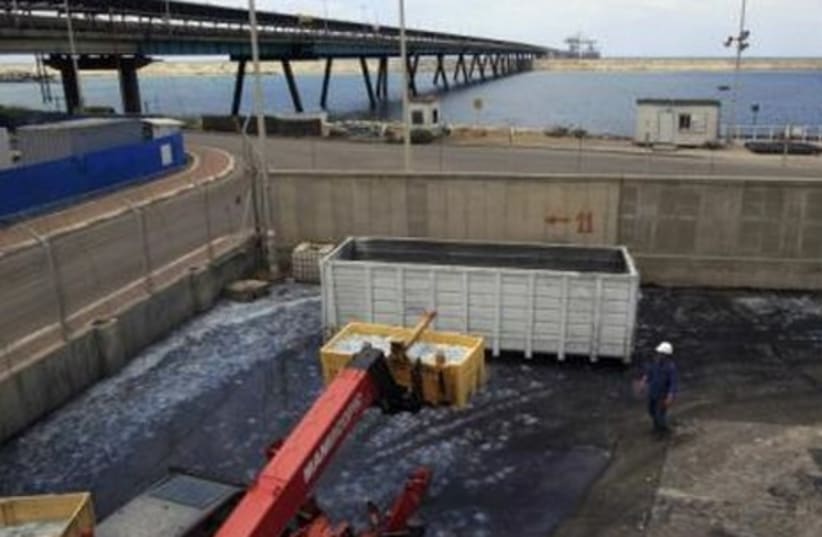
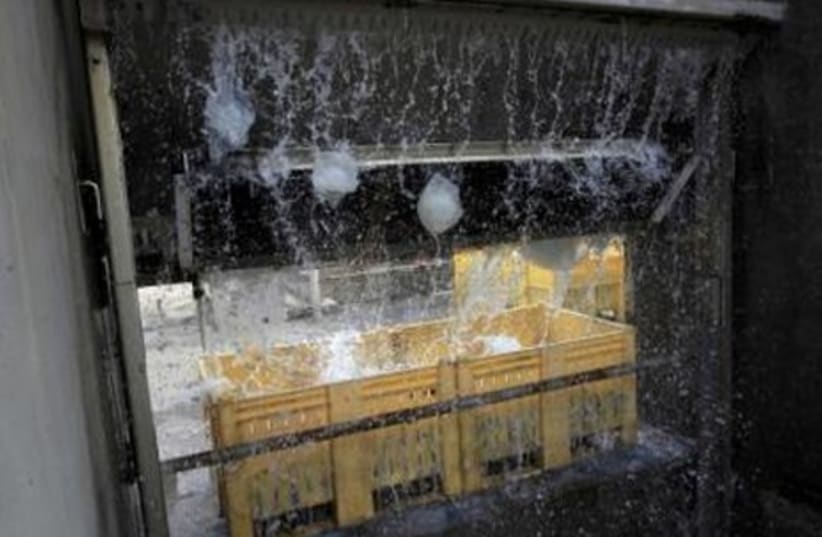

Trucks were subsequently utilized to transfer the jellyfish to a mass disposal area, the Israel Electric Corporation said.RELATED:New jellyfish tells tale of global warming Unwelcome jellyfish arriving early this season While the plant suffered from the jellyfish implosion from the weekend through Tuesday, by Wednesday the problem was under control, and the facility did not have to shut down during the cleaning process, according to Deputy Spokeswoman Iris Ben-Shahal.The Environmental Protection Ministry has granted the IEC a permit to capture the jellyfish and then shuttle them in huge containers to a dumping site, she explained.
The trash-rake, a mechanical-comb system, is regularly used about twice a day to clear fish, plastic bags and jellyfish – but during times of “attack,” the rake is in operation 24 hours per day, IEC marine ecologist Dr. Anat Glazer said.The problem was so great that the IEC took extra precautionary measures during the onslaught and attempted to seize some of the fish before they got to the site, according to Ben- Shahal.“Some people went to boats and put out nets to catch the jellyfish before they came, because it was such a huge attack,” Ben- Shahal told The Jerusalem Post on Wednesday. “We thought the strainers and combs wouldn’t be able to catch them all.”But Glazer said that while these boats were “better than nothing,” they collect very few compared to the amount pouring in during periods like the past few days. In the past, she said she tried to install a “Jacuzzi-like” screen of bubbles, but the pressure wasn’t strong enough to block them.The jellyfish are not particularly drawn to the power plant cooling systems; rather, they “largely drift with the currents, migrating only vertically in the water column as non-visual, ambush feeders,” according to Dr. Bella Galil, senior scientist at the National Institute of Oceanography.“The jellyfish are not ‘attracted’ to the water intakes – they are ‘sucked in’ – involuntarily,” she told the Post Wednesday afternoon.While by Wednesday the waves were no longer shuttling the jellyfish in such mass quantities, the trash-rake was still operating, Glazer said. Experts couldn’t confirm whether the hordes are larger than previous years.“Our impression – and I emphasize the word ‘impression,’ which is not a scientific word – is that it’s considerable this year,” said Prof. Ehud Spanier, a marine biologist and ecologist at the Leon Recanati Institute for Maritime Studies and in the Department of Maritime Civilizations at the Leon H. Charney School for Marine Sciences.“One thing for sure is that in the last two or three years they have been appearing in more months than previously,” he added.The jellyfish, which were introduced to the Mediterranean through the Suez Canal 29 years ago, used to only appear in June through September, as well as February and March, but in the past few years they have had a significant presence year-round, according to Spanier.The Levant Basin of the eastern Mediterranean is “the only place on earth with four alien-scyphozoan jellyfish concurrently,” all of whom migrated from the Suez, added Galil.When the jellyfish come in “big concentrations,” scientists have found that there are often accompanying “big concentrations of rubbish... which is another problem that we suffer from,” Spanier explained.Spanier said that there are many different reasons for the jellyfish explosion – both in Israel and worldwide – including global warming, which has increased sea temperatures significantly and provides a good environment for jellyfish, but less so for other species.“Also, over-fishing, which is very clearly happening along out coast, can [eliminate] potential predators of the jellyfish that are a protective unit,” Spanier added. “These jellyfish have unbelievable reproductive potential. They can reproduce throughout the year...and they spawn hundreds of thousands of eggs.”Galil agreed, noting that Mediterranean fish stocks are in decline and that “once jellyfish become dominant in a region, annual cycles of strong jellyfish production may inhibit the revival of some depleted fish stocks since they routinely compete for plankton prey with juvenile, and many adult, pelagic fish.”As far as the future of the season goes, none of the scientists were able to predict what Israelis – and their power stations – should expect in the coming months. However, only a few years ago a similar problem closed the large Ashkelon power plant.“There is no rule on the behavior of the jellyfish,” Glazer said. “The power plant wishes to know the future because they want to be ready for such an attack.”