For those watching their waistlines, a delicious and interesting salad can be the key to sticking to a diet.
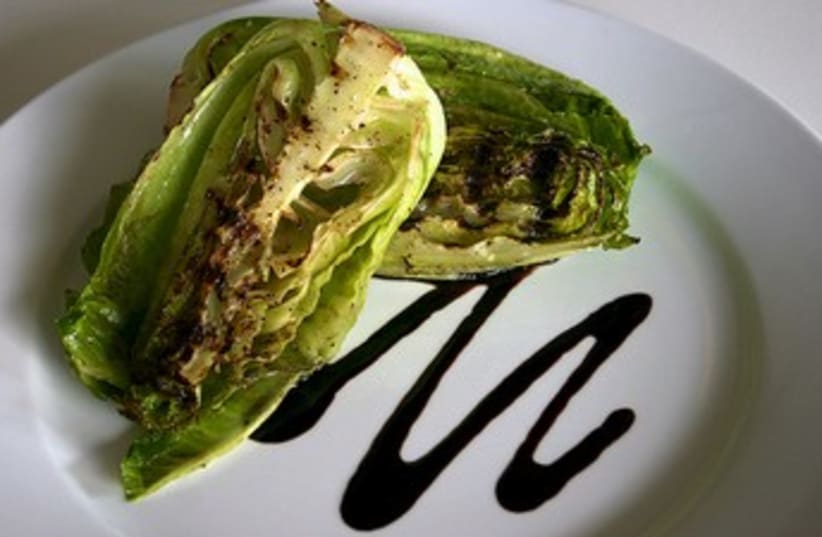
By LAURA FRANKELGrilled lettuce and vegetable salad 370(photo credit: Laura Frankel)
I start every meal with a salad. I love the textures and flavors. I also like the way the vinaigrette plays off of each ingredient and makes the flavors pop. The trick to keeping salad interesting is to add a variety of textures and flavors.For instance, I like to lightly grill my lettuces. During the warmer months I'm outside with a platter of baby lettuces, all brushed with olive oil and sprinkled with salt and pepper. I add them to my grill, for just a few minutes on each side, until they are caramelized and lightly browned. The subtle flavor of the lettuce is enhanced by the brief charring and the result is a sweet and refreshing salad. When the weather is not cooperating, I use my grill pan to give my salads a little extra oomph.For those watching their waistlines, a delicious and interesting salad can be the key to sticking to a diet. I like to grill my favorite vegetables. I scoop whatever is in season at the farmer’s market and lightly brush it with olive oil and grill away until tender and caramelized.Grilled lettuce and vegetable saladServes 62 heads of Romaine hearts2 heads radicchio2 heads favorite baby lettuce (I like Lollarossa, red leaf or green leaf)Your favorite seasonal vegetables and fruits such as: carrots, broccoli, artichokes (outer leaves peeled off and choke cut out), onions, eggplant, tomatoes, figs, peaches, apricots, plums ½ cup favorite nuts, toasted and chopped (optional)1. Grill the lettuces and vegetables until they are lightly caramelized and slightly softened.Caesar vinaigrette1 egg yolk1 clove of garlic, minced1 tablespoon Dijon style mustard2 anchovy filets, minced1 teaspoon of salt½ teaspoon freshly cracked black pepper1 tablespoon red wine vinegar2 teaspoons fresh lemon juice1 cup neutral flavored oil (canola, a light extra virgin olive oil, safflower oil. grape seed oil)½ cup parmesan cheese if making a dairy recipe1. Place the ingredients for the vinaigrette, except for the oil, in the work bowl of a food processor. Pulse the mixture until thoroughly combined.2. With the motor running, add the oil, drop by drop, until the mixture begins to come together and emulsify (the mixture will look like mayonnaise). Once the mix has started to come together, you can add the oil more quickly.3. If the vinaigrette is too thick, add a few teaspoons of water. If the vinaigrette is too thin, add more oil and it will thicken back up. Stir in the cheese if using.4. The vinaigrette can be stored, covered, in the refrigerator for up to 5 days.5. Pile the lettuces and grilled vegetables and fruit on a platter. Drizzle with vinaigrette.Basic red wine vinaigretteThis is the workhorse vinaigrette in my home and professional kitchen. The flavors enhance lettuces, vegetables and summer fruits.I like to add a small amount of toasted walnut or hazelnut oil. The flavor of the oil is sensuous and enriches the entire salad. If you have a nut allergy, just replace the nut oil with extra virgin olive oil.Yields slightly less than 1 cup1 heaping tablespoon of Dijon style mustard1 teaspoon kosher salt½ teaspoon freshly cracked pepper3 tablespoons red wine vinegar½ cup extra virgin olive oil2 tablespoons toasted walnut or hazelnut oil1. Whisk the mustard, salt and pepper and vinegar together until emulsified. Slowly pour the olive oil while whisking. Add the nut oil, if using, and store covered in the refrigerator for up to 1 month. If the oil becomes solid in the refrigerator, leave the vinaigrette at room temperature or place the bottle in a bowl of warm water to gently heat the oil.Fig-balsamic vinaigretteThe sweet, perfumey flavor of figs enhances the syrupy balsamic to create a beautiful and versatile vinaigrette. I use this vinaigrette on salads, drizzled over chicken and fish.Kosher balsamic can be a bit harsh. Dried figs coax out the fruity flavor of the grapes and wood from the barrels the condiment was aged in.2 cups balsamic vinegar1 cup dried figs, chopped Dijon style mustard1 teaspoon kosher salt ½ teaspoon freshly cracked pepper¾ cup extra virgin olive oil1. Place the vinegar and figs in a small sauce pan and bring to a simmer. Reduce the heat and allow the figs to very gently poach in the vinegar until the vinegar has reduced by ½.2. Strain out the figs and discard. Cool the vinegar and whisk the ingredients together until emulsified. Store the vinaigrette, covered in the refrigerator for up to 1 month. Chef Laura Frankel is Executive Chef for Spertus Kosher Catering and author of Jewish Cooking for All Seasons, and Jewish Slow Cooker Recipes.Follow @JPost_Lifestyle
if(catID != 151){
var cont = `Take Israel home with the new Jerusalem Post Store