Research published in Israel Medical Association Journal states that sperm counts in semen declined, motility of sex cells dropped.
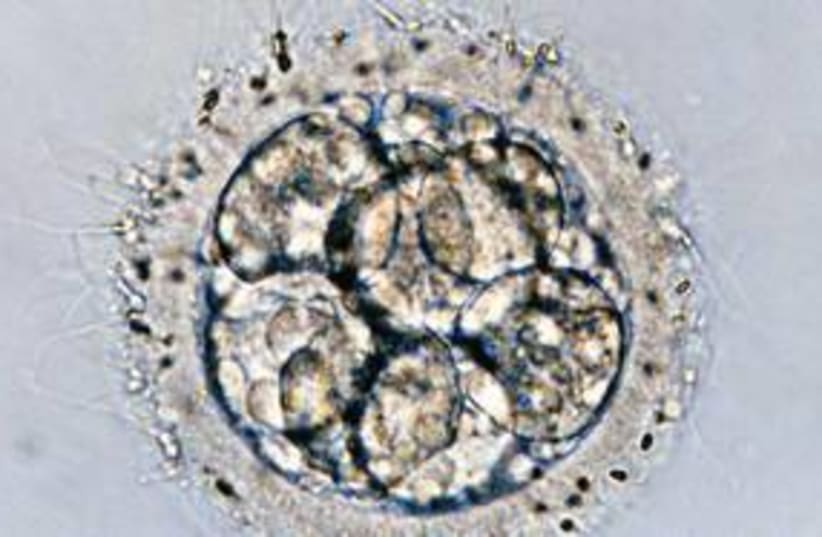
By JUDY SIEGEL-ITZKOVICHSperm cells surround an embryo 311(photo credit: Debbi Morello/Detroit Free Press/MCT)
The quality of semen among fertile sperm donors has dropped “drastically” during the last 15 years, according to new research conducted in Jerusalem and published recently in the Israel Medical Association Journal.The researchers, headed by Dr. Arye Hurwitz and his colleagues at the reproductive endocrinology and infertility unit of the Hadassah University Medical Center in Jerusalem’s Mount Scopus, stated that both the sperm counts in the semen had declined and the motility of the sex cells had dropped, thus making it more difficult to produce pregnancies by ordinary artificial insemination.In 2004, the criteria for sperm donation were lowered.In 2009, 38 percent of applicants for sperm donation were rejected, compared to a third of applicants 10 to 15 years ago. If the old strict criteria were in place today, the researchers wrote, 88% of sperm donors would be rejected.The rapid deterioration of sperm quality, the Hadassah researchers wrote, “is alarming and may lead to a cessation of sperm donation programs.”The semen donors whose samples were included in the study ranged in age from 20 to 37, were healthy, unmarried, highly educated and living in the Jerusalem area. A full 98% of them were white. The 58 sperm donors either responded to ads at the Hebrew University campuses or heard by word of mouth. Their blood was tested for a variety of infectious diseases from HIV to hepatitis B and C and syphilis and hereditary diseases such as cystic fibrosis and Tay-Sachs.Ninety men originally registered, but a third were rejected because of the low quality of their sperm. A total motile sperm count of 20 million was required in each donation for artificial insemination.The pregnancy rate of women who received the donations r e m a i n e d high at 80%, the researchers wrote, but was significantly lower than that recorded years ago, “suggesting that the subfertility limit may be imminent.”The researchers did not suggest why the quality has declined, but in previous research, some of the factors for this have included female hormones in the environment, heating of the scrota by laptop computers and even frequent bicycling and the wearing of tight clothing.“The recorded rapid deterioration of sperm quality among semen donors in our unit may be alarming,” they concluded.“This presumed trend can lead in the near future to closure of services of semen donation for intra-uterine insemination based on low sperm donation and a switch to in-vitro fertilization” in the test tube, including the use of technologies to “shoot” individual sperm into ova. This technique is much more expensive, invasive and complicated than artificial insemination.Studies in similar units around the country are needed, the Jerusalem researchers said.
if(catID != 151){
var cont = `Take Israel home with the new Jerusalem Post Store