Deal was proposed last year but never acted on by Teheran.
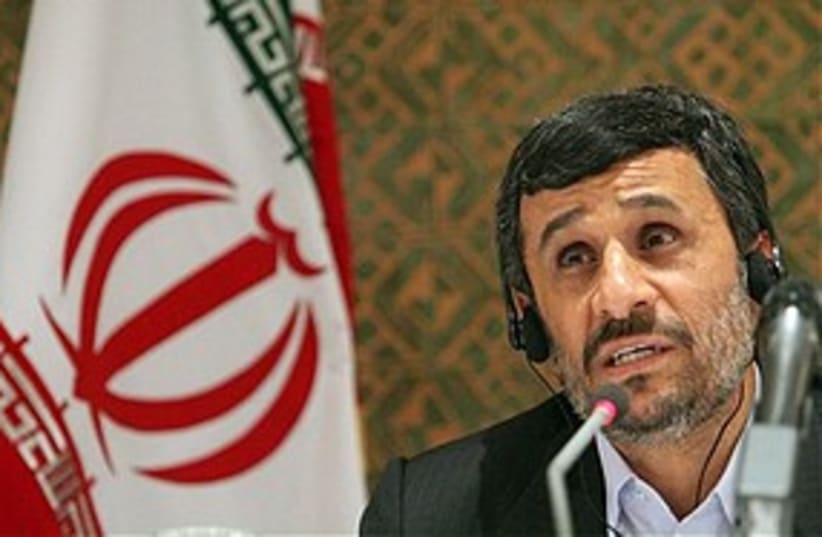
By HILARY LEILA KRIEGERAhmadinejad at NPT 311(photo credit: AP)
WASHINGTON – The US is looking to arrange high-level talks with Iran on a potential nuclear fuel swap deal proposed last year but never acted on by Teheran.“We hope to have the same kind of meeting coming up in the coming weeks that we had last October,” US State Department spokesman PJ Crowley told reporters Wednesday, referring to a meeting the permanent UN Security Council members – the US, France, Britain, Russia and China – plus Germany, had with Iran in Geneva.What did Teheran ask of Hizbullah?Teheran criticizes Russian president for sanctions supportThe American openness to another meeting with Iran comes after Teheran recently delivered a letter to the UN’s International Atomic Energy Agency in a bid of outreach toward the international body, which the US is now reviewing.The letter itself followed the imposition of Security Council sanctions and tough unilateral sanctions from the US and, this week, the EU and Canada.Under the plan reached in Geneva, Iran was to ship stockpiles of its lowenriched uranium to France and Russia for further enrichment so it could be used for medical purposes. Iran seemed to agree to the deal at the time, but never moved forward with it. In June, it signed a similar deal with Turkey and Brazil right before the Security Council’s sanctions vote, a move dismissed by the US as a ploy to undercut the sanctions.Iran’s letter to the IAEA answered certain questions posed about its deal with Turkey and Brazil.In objecting to the Turkey-Brazil deal in June, the US pointed out that Iran had since enriched significantly more uranium – a first step to producing a nuclear weapon – and shipping the same quantity abroad then as was agreed to in October would not have the desired effect of limiting Iran’s ability to move toward building a nuclear weapon.On Wednesday, though, Crowley said that “we obviously are fully prepared to follow up with Iran on specifics regarding our initial proposal,” as well as address “the broader issues of trying to fully understand the nature of Iran’s nuclear program.”
if(catID != 151){
var cont = `Take Israel home with the new Jerusalem Post Store