The Jerusalem Post
Jpost search icon google-icon iphone
  Set as Homepage
Wed, Jun 19, 2013   11 Tammuz, 5773
newspapers magazines
 
    • Breaking News
    • Diplomacy & Politics
    • Defense
    • National
    • Mideast
    • Syria
    • Iran
    • World
    • Business
    • Sports
    • Health & Science
    • Environment
  • Video
  • Opinion
    • Columnists
    • Editorials
    • Op-Eds
    • Letters
  • Jewish World
  • Lifestyle
    • Arts & Culture
    • Food & Wine
    • Travel
  • Features
    • Insights & Features
    • Week in review
    • On the Web
    • Shalva Superheroes
    • Obama in Israel
  • Blogs
    • In the news
    • Judaism
    • From the Middle East
    • Lifestyle
    • Aliya
    • Science and Technology
  • JPost Apps
    • iPhone app
    • iPad app
    • Android app
    • Twitter
    • Facebook
    • RSS feeds
    • JPost Toolbar
    • JPost Newsletter
    • JPost Alert
  • Premium Zone
    • The Jerusalem Report
    • Magazine
    • Metro
    • In Jerusalem
    • ePaper
    • Expert Opinion
    • Q&A
    • Dash
    • Christian Edition
    • Ivrit
  • French
    • Politique & Social
    • Affaires Palestiniennes
    • Diplomatie & Monde
    • Art & Culture
    • Israel
  • Green Israel
JPost Learn Hebrew  
Advertise with us  
Nefesh Guided Aliyah  
Eldan  
AFMDA  
YTA  
Isram Group  
JPost Twitter  
JPost Facebook  
Classifieds  


Breaking News
 
 
  • JPost.com
  • Iranian Threat
  • News
 

EU plans to introduce new sanctions against Iran

By REUTERS
10/15/2012 03:07
Tweet

EU to introduce new measures against Tehran's banking, industry and shipping sector at foreign ministers meeting.

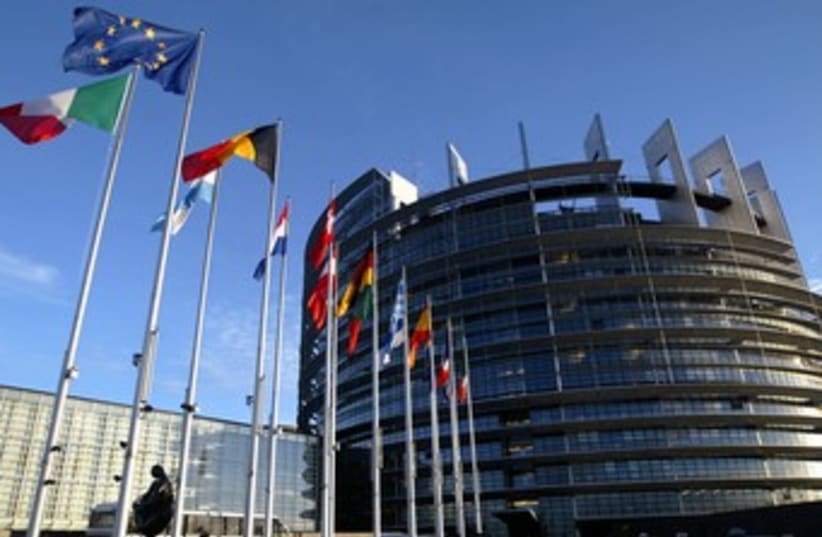
The European Parliament building in Strasbourg
The European Parliament building in Strasbourg Photo: REUTERS/Vincent Kessler

LUXEMBOURG - European Union governments plan to ratchet up sanctions pressure against Iran over its nuclear program on Monday, approving new measures against Tehran's banking sector, industry and shipping.

The new sanctions mark one of the toughest pushes against Iran by Europe to date, and come amid mounting concerns over the Islamic Republic's military intentions and the failure of diplomacy to solve the atom stand-off this year.

  • FM: EU failure on Iran like appeasement to Hitler
  • Sweden seeks to block tough EU Iran sanctions

Iran insists its nuclear work has only peaceful dimensions and has refused in three rounds of talks since April to scale it back unless major economic sanctions are lifted.

But governments in Europe and the United States have refused to do so and, instead, are tightening the financial screws against Tehran as fears grow that the nuclear dispute could envelop the Middle East in a new war.

"In the last couple of months Iran has not budged on any of the key issues and we must therefore increase the pressure through sanctions," German Foreign Minister Guido Westerwelle said in Berlin.

Speaking a day before his counterparts meet in Luxembourg to approve new sanctions, he said diplomacy was still an option.

Click here for full Jpost coverage of the Iranian threat

"Our offer to Iran still stands: substantial negotiations with the clear aim of preventing Iran from arming itself with nuclear weapons. It is time for a political solution." Iran's nuclear interlocutors -- Germany, France, Britain, United States, China and Russia -- asked Tehran this year to abandon the enrichment of uranium to 20 percent, a crucial technological step on route to producing an atom bomb.

Tehran's refusal has lead Israel, widely understood to be the only nuclear power in the Middle East, to threaten to bomb its nuclear installations.

At Monday's Luxembourg meeting, foreign ministers will also extend measures levied against Belarus over human rights abuses, and approve a new round of sanctions against Syria to pressure President Bashar Assad to halt violence against rebels.

On Sunday night, EU foreign ministers dined with Sergei Lavrov, foreign minister of Russia, a longtime supplier of arms to Assad's government - though Lavrov said in June that Moscow is not delivering offensive weapons to Syria.

"We must not cease to strive for common solutions to international problems, even when this is very difficult, as with the current conflict in Syria," Westerwelle said.

The dinner lasted three-and-a-half hours, and was "very open and frank and friendly", according to one EU diplomat. The foreign ministers talked first about bilateral issues between the European Union and Russia, and then about international issues, in particular Syria and Iran.

Sanctions Push

The new sanctions on Iran mark a significant change of policy for the European Union which has focused in the past on targeting specific people and companies with economic restrictions.

It has traditionally lagged the United States in imposing blanket industry bans, wary of punishing citizens while inflicting pain on governments.

But pressure on Iran is already doing significant damage to its economy, in part due to an oil embargo levied by the EU this year and Washington's new financial sanctions.

Earlier this month, riots broke out in protest against the collapse of the rial currency, which has lost some two thirds of its value against the dollar in the last year.

An EU diplomat has told Reuters the new European measures include a ban on financial transactions, with some exceptions for those involving humanitarian aid, food and medicine purchases and provisions for legitimate trade.

In a reversal of existing European policy, the ban will require European traders to apply to their governments for authorisation before they can finance any transactions in allowed goods. Previously, the EU's more narrow approach was to allow trade broadly while banning specific products.

Trade will be hampered further by a new ban on Europeans extending short-term trade guarantees.

"The new EU sanctions will augment the already severe pain that sanctions are inflicting on Iran's economy," said Cliff Kupchan, a Middle East analyst at consultancy Eurasia Group.

EU states will be banned from selling metals and graphites - crucial in steel-making - to Iran. The EU will also ban imports of natural gas from Iran.

The EU is also targeting Iran's shipping industry, in an effort to curb Tehran's ability to sell oil outside of Europe and the United States to obtain funds and hard currency.

New measures will forbid European companies from providing shipbuilding technology and oil storage capabilities, as well as flagging and classification services to Iranian tankers.

  • Send
  • Large
  • Small
  • Print
  • Share
Most Viewed in
1
Russian FM: Iran willing to halt 20% uranium enrichment
2
'Iran may exploit Rohani win to advance nuclear program'
3
Rohani: Iran nuclear aims not meant to be exposed
4
'Iran's nuclear aims advancing despite sanctions'
JPost Community
Tweet
sanctions Syria Russia United States industry Iran
Tweets about "#jpost"
Share this article
Tweet
Share
Send
Your comment must be approved by a moderator before being published on JPost.com. Disqus users can post comments automatically.

Comments must adhere to our Talkback policy. If you believe that a comment has breached the Talkback policy, please press the flag icon to bring it to the attention of our moderation team.
JPost Services
conferenceConference
newsletterNewsletter
iphoneMobile Apps
kotelcamKotel Cam
kolboJPost Alert
premiumPremium
JPost TV News  
Mobile Apps  
Bank Hapoalim  
Meir Panim  
Israel Law Center  
Inbal Hotel Jerusale  
Meier on Rothschild  
Weizmann Institute o  
JPost Premium Zone  
JPost kotel Camera  
         
 
Israel Focus
JPost TV News
Watch Now!  
Donate to Save Lives in Israel
 
Israel Law Center
The ultimate Mission to Israel, October 21 – 28, 2013 Register now!  
Nefesh B'Nefesh Guided Aliyah
Already living in Israel? Enjoy the Benefits of Aliyah!  
One year International MBA
in English, Bar-Ilan University, Israel – Open House July 9, 2013, 17:30  
Give "Freedom" this Passover
to needy Israeli families. Donate now  
YTA – A Yeshiva in Israel…
in English. Come Join Us  
War Threatens
Protect the People of Northern Israel  
Bank Hapoalim
Israeli's number one bank  
Jerusalem Post Lite
Lite Edition of the Jerusalem Post for English improvement  
Learn Hebrew with us
Get 10 minutes free personal coaching in Hebrew through phone or Skype  
JPost newspapers
Sign up for the JPost newspapers and receive one month free subscription  
Kosher English Magazine
English language weekly magazine - especially for religious people  
JReport Kindle Edition
Now you can get the Jerusalem Report directly to your Kindle  
JPost Premium Edition
The very best articles are available only in our Premium edition  
Lifestyle Magazine
 
 
Real Estate
Meier on Rothschild
Tel Aviv's Most Prestigious Address  
Don't Look For a House!
In Israel, our website will do it for you!  
 
Travel
Tourism Magazine
June 2013  
The Inbal Jerusalem Hotel
Hot summer deal, order now!  
Eldan Rent a Car
20% off all Car Rental Reservations in Israel  
Hertz Car Rental
Special Online Discounts!  
The King David Jerusalem Hotel
One of the world's truly iconic hotels, and a Jerusalem landmark  


Sites Of Interest:

Jerusalem Hotels
KKL-JNF
Poalim Online
BreitBart.com
Our Friends
Jerusalem Attractions
Jerusalem Tours
itraveljerusalem.com

JPost sites:

Learn Hebrew
The Jerusalem Report
Our Magazines
JPost Edition Francaise
Green Israel
Christian World
Jerusalem Post Lite

Services:

JPost Mobile Apps
JPost Premium
JPost Newsletter
JPost Toolbar
JPost News Ticker
JPost RSS feeds
JPost Archives
JPost Alert
JPost Kotel Cam

JPost Conferences:

NYC Conference
Diplomatic Conference

Information:

About Us
Feedback
Staff E-mails
Copyright
Sitemap
News Partners
Advertise with Us
Statistics
Ad Specs
Terms Of Service
Jpost.com, the online edition of the Jerusalem Post Newspaper - the most read and best-selling English-language newspaper in Israel. For analysis and opinion from Israel, the Jewish World and the Middle East. Jpost.com offers expert and in-depth reporting from Israel, the Jewish World and the Middle East, including diplomacy and defense, the Palestinian-Israeli conflict, the Arab Spring, the Mideast peace process, politics in Israel, life in Jerusalem, Israel's international affairs, Iran and its nuclear program, Syria and the Syrian civil war, Lebanon, the Palestinian Authority, the West Bank and Gaza Strip, Israel's world of business and finance, and Jewish life in Israel and the Diaspora.
 
About Us | Advertise with Us | Subscribe | Premium | Newsletter | RSS | Contact Us
 
All rights reserved © The Jerusalem Post 1995 - 2012