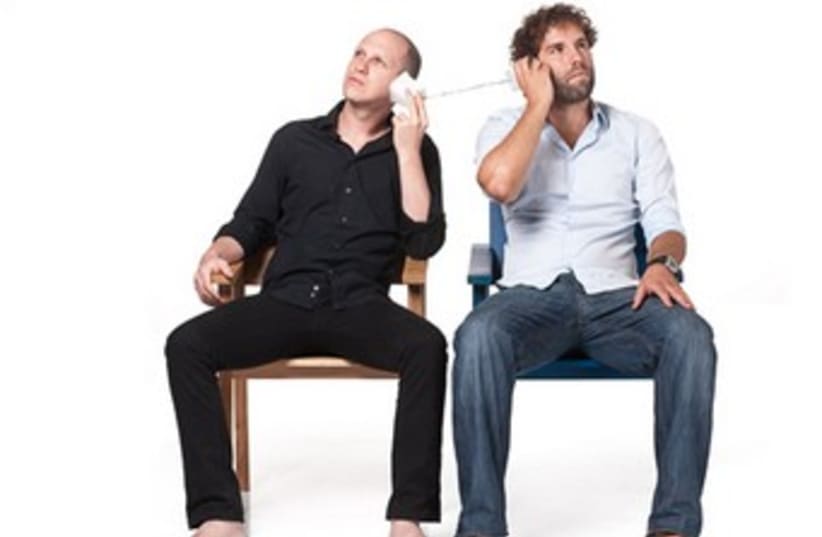
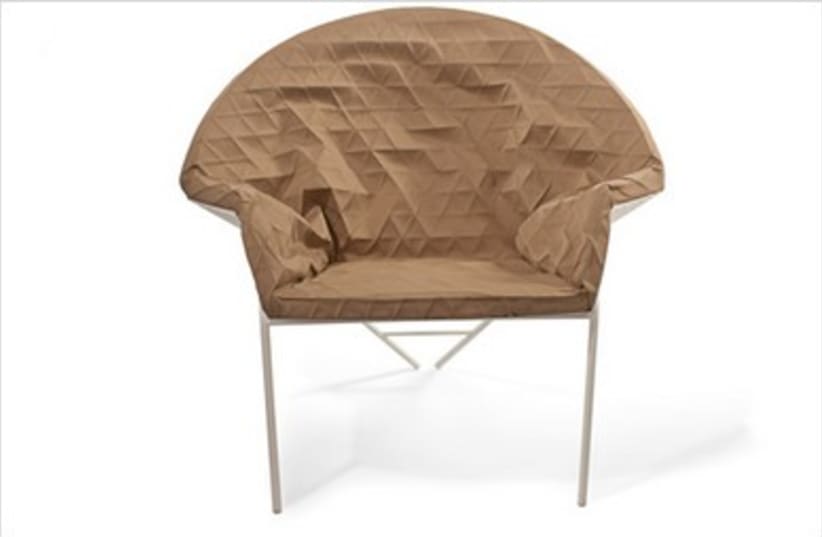
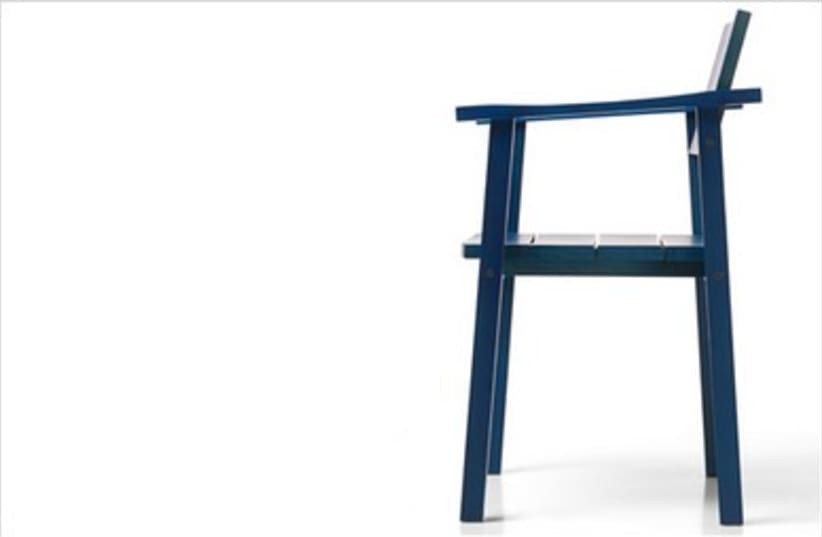
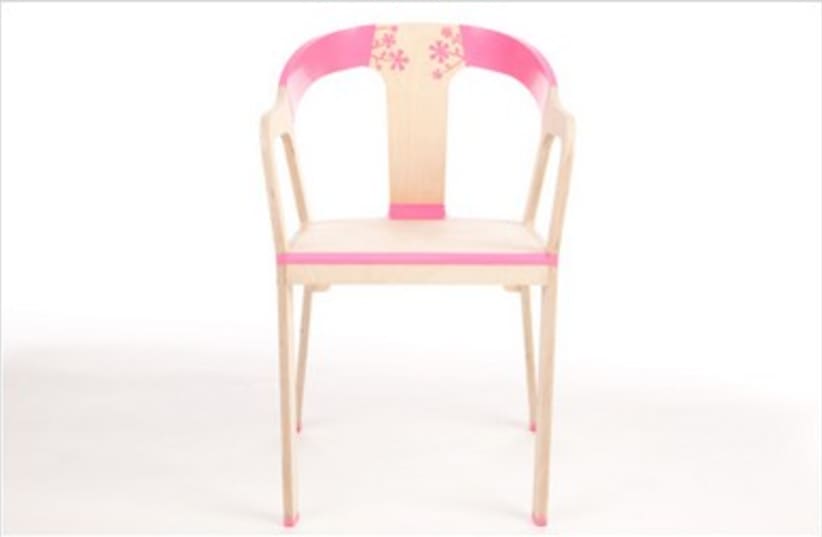
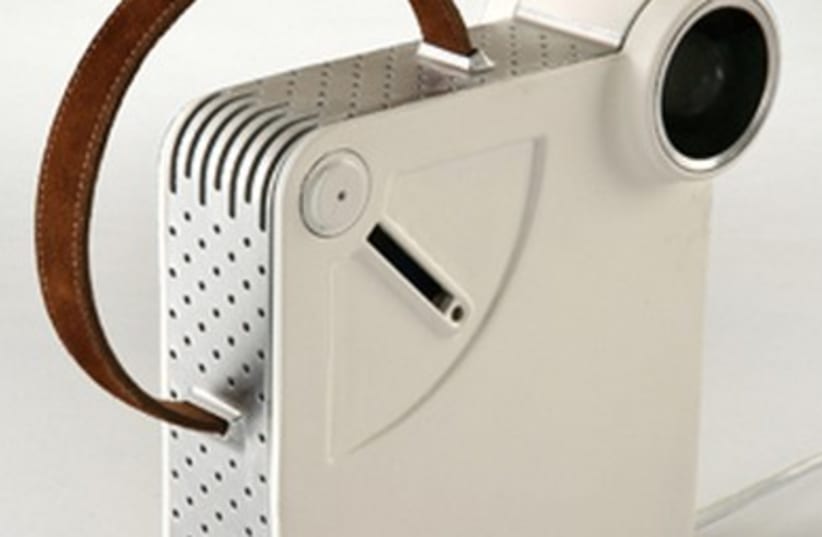
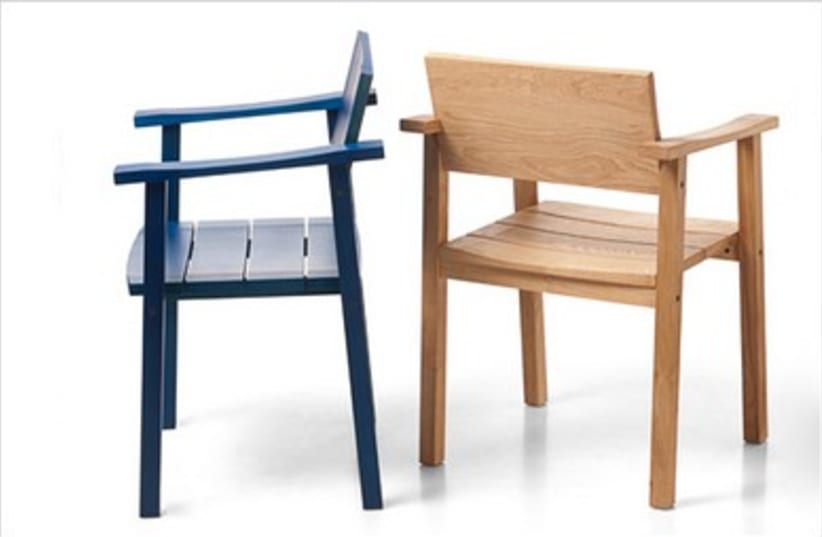

While Gil Sheffi and Yoav Avinoam have had their fair share of separate adventures, not long ago they decided to join forces and form their “”. These two industrial designers always look for the X-Factor that will guide them to a new beginning and a new creation. By keeping their users always in the back of their minds the outcome is always a joy for the eyes as well as the body and mind. Can you explain a little bit about your background?
Yoav: We both studied industrial design at the Bezalel Academy of arts and design, Jerusalem, and that’s where we met. However, we started to work together only a couple of years after graduation. I was born in Petah Tikva. My mother is my connection to the artistic world. As a child I had a great interest in vehicles and their shapes, though I couldn't describe it as design at the time. I did have a great passion for creating out of what was available to me.Gil: I was also born in Petah Tikva, two years after Yoav. Until the age of three, when I moved to Hod Hasharon, I actually lived just around the block from Yoav, but we didn’t meet until much later. Before doing the army I was interested in basketball. The only roots I can trace to design were my love for building models, Technic Lego and remote control cars.When did you first decide that you wanted to become designers?Almost like every other Israeli, we both took a long trip after our military service ended. We traveled different continents. But still, somewhere along the way, while surrounded by nature, wondering what's next, we both came to the same conclusion - Design. There is something wonderful about design. It involves technical knowledge alongside great creativity. We both fell for the prospect of telling a story, through the objects around us. Where do you live, what do you like about it and how does it affect your creations?
Gil: Yoav lives in Ramat Hasharon, and I live in Tel Aviv, but we both have relatively big gardens. I love the contrast of living in a cultural center and not being surrounded only by asphalt. To walk on soil has a wonderful feeling.Yoav: I think there is something special about being a designer in Israel. Being connected to the world and the different industries via the Internet, reaching the global world on one hand, and on the other, the limited small Israeli industry creates a vacuum of challenges and opportunities. Paradoxically, because of this vacuum we operate with no boundaries and limitations, creating from within.
Give us a glimpse into a normal day in your life.Our daily routine starts with a cup of black coffee, talking about last night’s insights. In the morning, we take care of the studio’s administrative perspectives and meet with clients. Afterward we dive into the best part of the day, design. It can be working in the workshop with actual materials, working on CAD software, research or making design sketches. At the end of the day, in the late evening we try to go out (though it can be difficult at times) and let loose, in order to make sure that tomorrow we come in fresh for a new day of creating design.Can you briefly describe your process for creating a new design?All projects have the same starting point. We search for the X-factor - something new or an idea that hasn't been expressed before. It can also be re-examining of familiar things that will create the story of the product. For us, Design is not styling, it's not just about form. Design is planning the product not only as a standalone object but as part of a bigger image. It's interaction with the users, it's cultural context, it's surrounding and more are very important. The object has to be right for both sides; the manufacturer and end user. That's why we emphasize the process of understanding the object and its needs prior to dealing with its form. It’s important to us to define an anchor point that will be the product's focal point. Later we operate according to that anchor; it can be through playing with the materials themselves, exploring shapes, cultural context exploration, integration with users, the surroundings or a mixture of the above. What are you most proud of professionally? And what has been your favorite project so far?Alongside projects we do for clients, according to a brief we define together, there are also the projects we create from within ourselves. There is something actually more difficult about creating in total freedom; we try to take advantage of the opportunity to wear different hats. When such a project is born and a big company wants it for mass production, there is great satisfaction in that. At the moment we have two projects of that nature that are in the stages of development for big companies that decided to go through with them. What are you really good at? What are you really bad at?Gil: I think we are good listeners, but not in the sense that all men claim to be with life companions. We are good at listening to the client’s wishes and needs. We strive to become part of their team but to bring our different perspective into the equation. We help them to open and embrace new directions and options they didn't consider before. Together, as a team we take the best course in order to achieve the common goal of creating the best product.Yoav: What we are bad at? Probably deciding we are finished with a design project. It's always difficult to decide that a project can't be even slightly better; there are always more options to explore. That's probably why I sleep with a sketch book by my bed. Design is a process without a clear ending. Luckily we have a schedule to help us finish the process. What do you do to stay inspired and motivated to create?We keep our eyes open. There is so much stimulation around us. If you know how to “look” then inspiration is really everywhere.
Which place in the world most inspires you and why?
Gil: I think that Rio De Janeiro is the most inspiring place I've been to. Strangely, it’s a place where civilization and nature have intertwined like nowhere else I've seen. The bountiful jungle surrounding Rio becomes an urban wild concrete jungle known as the favelas (Rio's poor neighborhoods) that then become the busy metropolis of Rio. This creates an interesting gradient from jungle to a modern city. What are some other passions you have besides art and design?Yoav: I love being with family and friends, going out or going traveling in nature. There is something wonderful about being with the people that know everything about you and vice versa, yet still finding new discussions and interests with them.
What challenges have you overcome as designers?There is a great challenge in making the decision of starting your own business, leaving the safe nest of being an employee. Could you explain your progression as designers, compared to when you first started out, how have you changed since then?
For us, it’s a continuous process of evolving. Looking back, every project teaches you something. It's a like building with Lego blocks; every junction of every project is another block in the building, an endless process of maturing as a designer.Do you ever hit a creative block – if so, how do you get out of it?In design usually you have too many options, not too few. Every question has endless answers. The challenge is not to find the way but to choose between them. Those junctions are the critical points of the process. Good decisions will get you to the desired result.
What advice do you have for young designers who want to follow your path?
Sometimes the cliché is right - believe in yourself, work hard and embrace any luck that comes across your path.
What has been one of your biggest lessons learned since starting out?Weekends are sacred, unless you really have to finish something for Sunday.
What has contributed the most towards what you have achieved?We followed the same cliché we advise others to follow: belief, hard work and luck. Describe one thing or person that has influenced your designs the most.Yoav: We have both participated in students exchange programs in Milan at different times. I believe my time there, getting a different perspective, and meeting the European design culture definitely changed the way I comprehend my role as a designer in our society.
At the age of 20, what did you think you were going to do “in life” – where do you see yourself in the future? Has your dream come true already?Gil: At the age of 20 I wanted to do something that I love and enjoy doing every day. That part has come true. As designers we still have some dreams we want to fulfill. Read Einat’s blog and follow her designed journey at http://www.designbreakonline.com/Follow @JPost_Lifestyle