Gate into Old City's Muslim Quarter reinaugurated.
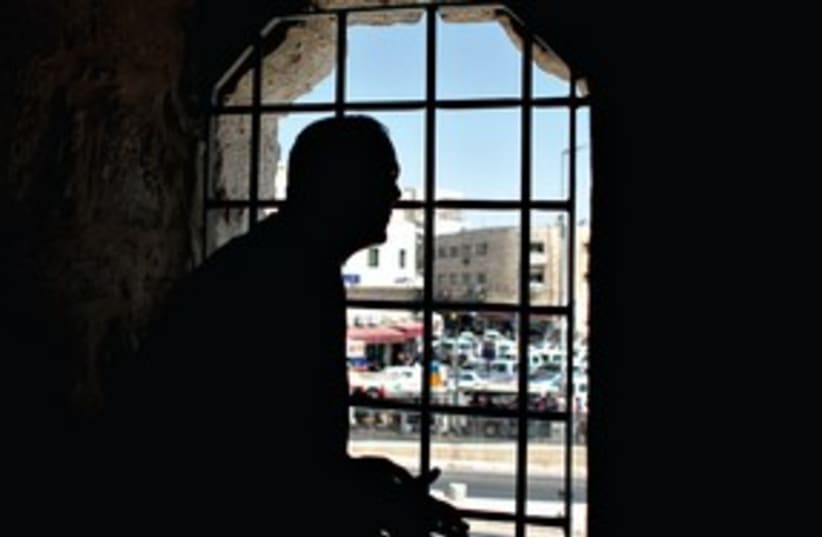
By ABE SELIGHerods Gate 311(photo credit: Associated Press)
Herod’s Gate, which was opened in 1539 and leads into the Muslim Quarter of Jerusalem’s Old City, was reinaugurated during a ceremony on Monday morning after months of rehabilitation and conservation work.The gate is also known as the Flower Gate, and is a short distance to the east of the Damascus Gate.Mayor Nir Barkat and the gypsy mukhtar of the Old City, Abed-Alhakim Mohammed Deeb Salim, whose community resides in the Muslim Quarter’s Bab al- Huta section near Herod’s Gate, were on hand for the ceremony, as was Moshe Leon, the chairman of the Jerusalem Development Authority, and Shuka Dorfman, director-general of the Israel Antiquities Authority (IAA).Herod’s Gate and sections of the Old City walls adjacent to it were treated during the course of 2009 as part of the Jerusalem City Walls Conservation and Rehabilitation Project, which is funded by the Prime Minister’s Office, administered by the Jerusalem Development Authority and implemented by the IAA’s Conservation Department.“The rehabilitation work on the gate took four months to complete and was conducted in cooperation with the local residents and merchants so as not to disrupt the bustling urban activity that is characteristic of the place,” the municipality said in a statement.The work on the gate was proceeded by strict preparations that included meticulous conservation and historical survey and documentation.The IAA’s Conservation Department had to contend with the challenges of working in a busy urban and commercial environment.The gate’s facades and interior received extensive treatment that included a thorough cleaning, the repair of stones and decorations that had been subjected to years of weathering, and the removal of vegetation, signs of vandalism and moisture.All of the electrical infrastructure and plumbing that had “adorned” the gate’s facades were removed and properly reinstalled so as not to detract from its appearance.
if(catID != 151){
var cont = `Take Israel home with the new Jerusalem Post Store