The Jerusalem Post
Jpost search icon google-icon iphone
  Set as Homepage
Thu, Jun 20, 2013   12 Tammuz, 5773
newspapers magazines
 
    • Breaking News
    • Diplomacy & Politics
    • Defense
    • National
    • Mideast
    • Syria
    • Iran
    • World
    • Business
    • Sports
    • Health & Science
    • Environment
  • Video
  • Opinion
    • Columnists
    • Editorials
    • Op-Eds
    • Letters
  • Jewish World
  • Lifestyle
    • Arts & Culture
    • Food & Wine
    • Travel
  • Features
    • Insights & Features
    • Week in review
    • On the Web
    • Shalva Superheroes
    • Obama in Israel
  • Blogs
    • In the news
    • Judaism
    • From the Middle East
    • Lifestyle
    • Aliya
    • Science and Technology
  • JPost Apps
    • iPhone app
    • iPad app
    • Android app
    • Twitter
    • Facebook
    • RSS feeds
    • JPost Toolbar
    • JPost Newsletter
    • JPost Alert
  • Premium Zone
    • The Jerusalem Report
    • Magazine
    • Metro
    • In Jerusalem
    • ePaper
    • Expert Opinion
    • Q&A
    • Dash
    • Christian Edition
    • Ivrit
  • French
    • Politique & Social
    • Affaires Palestiniennes
    • Diplomatie & Monde
    • Art & Culture
    • Israel
  • Green Israel
JPost Learn Hebrew  
Advertise with us  
Nefesh Guided Aliyah  
Eldan  
AFMDA  
YTA  
Isram Group  
JPost Twitter  
JPost Facebook  
Classifieds  


Breaking News
 
 
  • JPost.com
  • Opinion
  • Columnists
 

Accepting Israel as the Jewish state

By DANIEL PIPES
LAST UPDATED: 05/11/2010 21:24
Tweet

A base for resolving the Arab-Israeli conflict does exist.

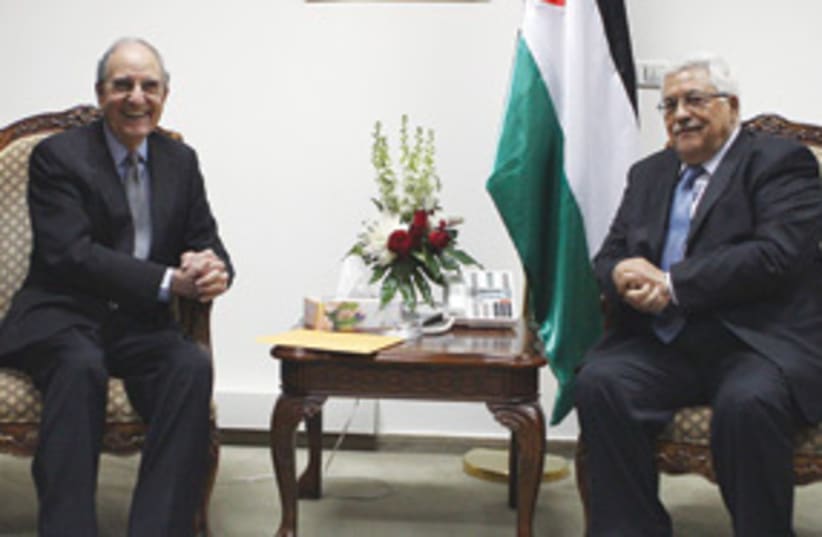
Abbas and Mitchell
Abbas and Mitchell Photo: AP
When a major Arab state finally signed a peace treaty with Israel, it was long assumed, the Arab-Israeli conflict would end. The Egypt-Israel peace treaty of 1979, however, buried that expectation; it had the perverse effect of making other states – and also the Egyptian populace – even more anti-Zionist.

The 1980s gave birth to a hope that, instead, Palestinian recognition of Israel would close the conflict. The total failure of the 1993 Declaration of Principles (also known as the Oslo Accords) then buried that expectation.

What now? Starting about 2007, a new focus has emerged, of winning acceptance of Israel as a sovereign Jewish state. Israel’s former prime minister Ehud Olmert set the terms: “I do not intend to compromise in any way over the issue of the Jewish state. This will be a condition for our recognition of a Palestinian state.”

Olmert was Israel’s worst prime minister, but he got this one right. Arab-Israeli diplomacy has dealt with a myriad of subsidiary issues while tiptoeing around the conflict’s central issue: “Should there be a Jewish state?” Disagreement over this answer – rather than over Israel’s boundaries, its exercise of self-defense, its control of the Temple Mount, its water consumption, its housing construction in West Bank towns, diplomatic relations with Egypt, or the existence of a Palestinian state – is the key issue.

Palestinian leaders responded with howls of outrage, declaring they “absolutely refused” to accept Israel as a Jewish state. They even pretended to be shocked at the notion of a state defined by religion, although their own “Constitution of the State of Palestine,” third draft, states that “Arabic and Islam are the official Palestinian language and religion.”

Olmert’s efforts went nowhere.

ON TAKING over the premiership in early 2009, Binyamin Netanyahu reiterated Olmert’s point in his diplomacy. Regrettably, the Obama administration endorsed the Palestinian position, again sidelining the Israeli demand. (Instead, it focuses on housing for Jews in Jerusalem. Talk about the heart of the issue.) If Palestinian politicians reject Israel’s Jewish nature, what about the Palestinian and the broader Arab and Muslim publics? Polls and other evidence suggest a long-term average of 20 percent acceptance of Israel, whether in the Mandatory period or now, whether by Muslims in Canada or by Palestinians in Lebanon.

To learn more about current Arab opinion, the Middle East Forum commissioned Pechter Middle East Polls to ask a simple question of 1,000 adults in each of four countries: “Islam defines [your state]; under the right circumstances, would you accept a Jewish state of Israel?” (In Lebanon, the question differed slightly: “Islam defines most states in the Middle East; under the right circumstances, would you accept a Jewish state of Israel?”) The results: 26 percent of Egyptians and 9% of urban Saudi subjects answered (in November 2009) in the affirmative, as did 9% of Jordanians and 5% of Lebanese (in April 2010).

The polls reveal broad consensus across such differences as occupation, socioeconomic standing and age. For no discernable reason, more Egyptian women and Saudi and Jordanian men accept a Jewish Israel than their gender counterparts, whereas among the Lebanese both sexes rank similarly. Some significant variations exist, however: as one would expect in Lebanon, 16% of (largely Christian) north Lebanon accepts a Jewish Israel in contrast to just 1% in the (mostly Shi’ite) Bekaa Valley.

More significantly, weighting these responses by the size of their populations (respectively, 79, 29, 6 and 4 million) translates into an overall average of 20% acceptance of Israel’s Jewishness – neatly confirming the existing percentage.

Although 20% constitutes a small minority, its consistency over time and place offers encouragement. That one-fifth of Muslims, Arabs and even Palestinians accept Israel as a Jewish state suggests that, despite a near-century of indoctrination and intimidation, a base for resolving the Arab-Israeli conflict does exist.

Would-be peacemakers must direct their attention to increasing the size of this moderate cohort.

Getting from 20% to, say, 60% would fundamentally shift the politics of the Middle East, displacing Israel from its exaggerated role and releasing the peoples of this blighted region to address their real challenges. Not Zionism but such, oh, minor problems as autocracy, brutality, cruelty, conspiracism, religious intolerance, apocalypticism, political extremism, misogyny, slavery, economic backwardness, brain drain, capital flight, corruption and drought.

The writer (www.DanielPipes.org) is director of the Middle East Forum and Taube distinguished visiting fellow at the Hoover Institution of Stanford University.
  • Send
  • Large
  • Small
  • Print
  • Share
This article is by :
Daniel Pipes
Recent stories:
  • Lessening UNRWA’s damage
  • Lion's Den: Middle East studies in uphea...
  • Purchasing, not stealing, Israel
  • Lion's Den: ‘Fin de Régime’ in Syria?
Most Viewed in
1
Preconditions have no basis in law or fact
2
President Peres
3
The world’s preferred refugees
4
Ending the Chief Rabbinate electoral machinations
JPost Community
Tweet
Zionism ArabIsraeli conflict Declaration of Principles Egypt Israel peace treaty Anwar Sadat Ehud Olmert
Tweets about "#jpost"
Share this article
Tweet
Share
Send
Your comment must be approved by a moderator before being published on JPost.com. Disqus users can post comments automatically.

Comments must adhere to our Talkback policy. If you believe that a comment has breached the Talkback policy, please press the flag icon to bring it to the attention of our moderation team.
JPost Services
conferenceConference
newsletterNewsletter
iphoneMobile Apps
kotelcamKotel Cam
kolboJPost Alert
premiumPremium
JPost TV News  
Mobile Apps  
Bank Hapoalim  
Meir Panim  
Israel Law Center  
Inbal Hotel Jerusale  
Meier on Rothschild  
Weizmann Institute o  
JPost Premium Zone  
JPost kotel Camera  
         
 
Israel Focus
JPost TV News
Watch Now!  
Donate to Save Lives in Israel
 
Israel Law Center
The ultimate Mission to Israel, October 21 – 28, 2013 Register now!  
Nefesh B'Nefesh Guided Aliyah
Already living in Israel? Enjoy the Benefits of Aliyah!  
One year International MBA
in English, Bar-Ilan University, Israel – Open House July 9, 2013, 17:30  
Give "Freedom" this Passover
to needy Israeli families. Donate now  
YTA – A Yeshiva in Israel…
in English. Come Join Us  
War Threatens
Protect the People of Northern Israel  
Bank Hapoalim
Israeli's number one bank  
Jerusalem Post Lite
Lite Edition of the Jerusalem Post for English improvement  
Learn Hebrew with us
Get 10 minutes free personal coaching in Hebrew through phone or Skype  
JPost newspapers
Sign up for the JPost newspapers and receive one month free subscription  
Kosher English Magazine
English language weekly magazine - especially for religious people  
JReport Kindle Edition
Now you can get the Jerusalem Report directly to your Kindle  
JPost Premium Edition
The very best articles are available only in our Premium edition  
Lifestyle Magazine
 
 
Real Estate
Meier on Rothschild
Tel Aviv's Most Prestigious Address  
Don't Look For a House!
In Israel, our website will do it for you!  
 
Travel
Tourism Magazine
June 2013  
The Inbal Jerusalem Hotel
Hot summer deal, order now!  
Eldan Rent a Car
20% off all Car Rental Reservations in Israel  
Hertz Car Rental
Special Online Discounts!  
The King David Jerusalem Hotel
One of the world's truly iconic hotels, and a Jerusalem landmark  


Sites Of Interest:

Jerusalem Hotels
KKL-JNF
Poalim Online
BreitBart.com
Our Friends
Jerusalem Attractions
Jerusalem Tours
itraveljerusalem.com

JPost sites:

Learn Hebrew
The Jerusalem Report
Our Magazines
JPost Edition Francaise
Green Israel
Christian World
Jerusalem Post Lite

Services:

JPost Mobile Apps
JPost Premium
JPost Newsletter
JPost Toolbar
JPost News Ticker
JPost RSS feeds
JPost Archives
JPost Alert
JPost Kotel Cam

JPost Conferences:

NYC Conference
Diplomatic Conference

Information:

About Us
Feedback
Staff E-mails
Copyright
Sitemap
News Partners
Advertise with Us
Statistics
Ad Specs
Terms Of Service
Jpost.com, the online edition of the Jerusalem Post Newspaper - the most read and best-selling English-language newspaper in Israel. For analysis and opinion from Israel, the Jewish World and the Middle East. Jpost.com offers expert and in-depth reporting from Israel, the Jewish World and the Middle East, including diplomacy and defense, the Palestinian-Israeli conflict, the Arab Spring, the Mideast peace process, politics in Israel, life in Jerusalem, Israel's international affairs, Iran and its nuclear program, Syria and the Syrian civil war, Lebanon, the Palestinian Authority, the West Bank and Gaza Strip, Israel's world of business and finance, and Jewish life in Israel and the Diaspora.
 
About Us | Advertise with Us | Subscribe | Premium | Newsletter | RSS | Contact Us
 
All rights reserved © The Jerusalem Post 1995 - 2012