To call Yitzhak Shamir taciturn is a bit of an understatement. He was a man of few words and prominent among them was “no."
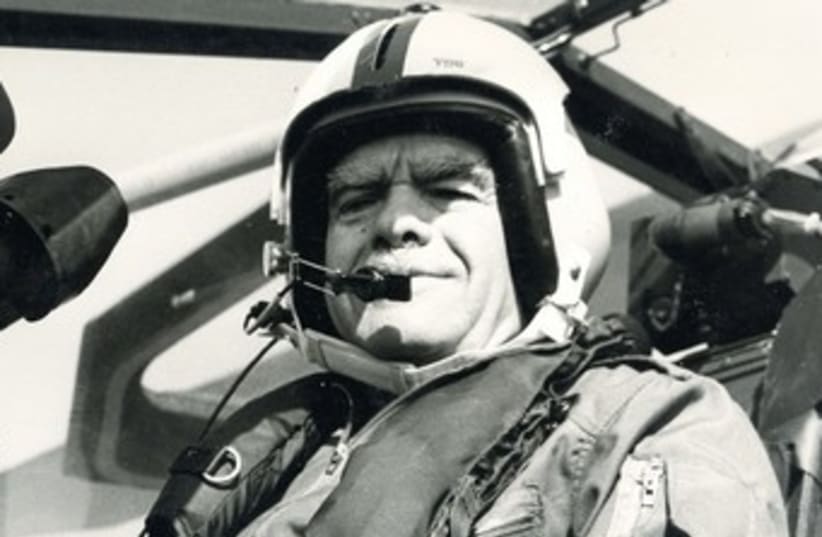
By DOUGLAS M. BLOOMFIELDYitzhak Shamir in cockpit of Cobra helicopter gunship 370(photo credit: Jonathan Reif/IDF Spokesman’s Office))
To call Yitzhak Shamir taciturn is a bit of an understatement. He was a man of few words and prominent among them was “no,” especially when it came to dealing with President George H.W. Bush and his secretary of state, James A. Baker III and their plans to forge a peace between Israel and the Arabs.Bush came to office just weeks after the outgoing Reagan administration had announced recognition of the PLO. Shamir personally got the word of Reagan’s decision just hours before the announcement in a phone call from Secretary of State George Shultz, and the premier’s chief of staff immediately phoned his contacts on Capitol Hill urging them to “start a firestorm of opposition” to block the move.It was too late. Too many members of Congress shared the Reagan administration’s frustration with what they considered Shamir’s intransigence and did not seriously object when Reagan decided to recognize the PLO on his way out the door as a favor to his successor.After the Gulf war the Bush administration sought to use its victory and undisputed role as the world’s sole superpower to launch a comprehensive peace process. Shamir wasn’t interested. He rejected territorial compromise and Palestinian statehood, convinced that Israelis were only deluding themselves if they thought the Arabs would accept them and live in peace with a Jewish state.Shamir, who died Saturday at 96 after a long bout with Alzheimer’s disease, had opposed the peace treaty with Egypt and once boasted that he never gave up a single grain of Israeli soil.BUSH LATER demanded Israel freeze settlement construction and threatened to withhold loan guarantees for resettlement of Jewish refugees from the crumbling Soviet Union. When the Jewish community mounted a campaign to free the funds, Bush complained during a White House press conference, “I’m one lonely little guy” up against “some powerful political forces” made up of “a thousand lobbyists on the Hill.”That proved a turning point for Bush and in Jewish voting for Republican presidential candidates. Many saw it as challenging the loyalty of Israel’s supporters; Shamir reportedly saw it as a sign of anti-Semitism. Reagan had won 39 percent of the Jewish vote in 1980 and Bush, riding his coattails in 1988 got 27 percent. But four years later “the lonely little guy” got only 11% of the Jewish vote, and the Republican party still has not been able to climb back to anywhere near the Reagan level.Personal relations between Shamir and Bush were so frosty at times that they barely spoke, if at all. Anger with Shamir’s stubbornness led Baker to tell the House Committee on Foreign Affairs that if the Israeli leader was interested in resuming the peace process he could call the Secretary at 202- 456-1212. That wasn’t really Baker’s number; it was the switchboard at the White House.Privately Baker told a cabinet colleague who complained that the administration was losing Jewish support, “[Bleep] the Jews, they didn’t vote for us anyway.”Despite the intensity of the animosity between the two governments, Bush was instrumental in helping bring Jews out of the Soviet Union and Ethiopia to Israel.On one crucial issue Shamir took great political risk to cooperate with a Bush White House request. He had been asked not to respond to Iraqi missile attacks and other provocations during the first Gulf War in the interest of helping Washington hold together its fragile coalition that included most Arab states. Shamir agreed despite considerable pressure from some of his closest associates to retaliate in response to 39 Scud attacks.In another instance Shamir was too willing to go along with the Reagan administration on an issue that put the prime minister in opposition to most of Israel’s best friends in Congress, including nearly all the Jewish members. That issue was South Africa.WHEN CONGRESS threatened to cut off aid to any country selling weapons to the apartheid government, Shamir shrugged off the warnings that Israel would not be protected.He continued to ignore the warnings when the legislation passed both chambers and seemed vindicated when Reagan vetoed the legislation, but his government finally acted after the veto was overridden.Shamir later told me that he felt safe ignoring all the warnings because President Reagan had personally assured him the legislation would never pass and that even if it did he’d veto it. The Israeli government then said it would sign no new contracts with South Africa, but few if any existing ones were cancelled.Unlike some politicians, Shamir was not one to say yes when he meant no. He took pride in standing up to American pressure as a matter of ideology, but it cost him his premiership.He lost the 1992 election to Yitzhak Rabin in large part because of his failure to successfully manage the American portfolio.bloomfieldcolumn@gmail.com
if(catID != 151){
var cont = `Take Israel home with the new Jerusalem Post Store