The Jerusalem Post
Jpost search icon google-icon iphone
  Set as Homepage
Wed, Jun 19, 2013   11 Tammuz, 5773
newspapers magazines
 
    • Breaking News
    • Diplomacy & Politics
    • Defense
    • National
    • Mideast
    • Syria
    • Iran
    • World
    • Business
    • Sports
    • Health & Science
    • Environment
  • Video
  • Opinion
    • Columnists
    • Editorials
    • Op-Eds
    • Letters
  • Jewish World
  • Lifestyle
    • Arts & Culture
    • Food & Wine
    • Travel
  • Features
    • Insights & Features
    • Week in review
    • On the Web
    • Shalva Superheroes
    • Obama in Israel
  • Blogs
    • In the news
    • Judaism
    • From the Middle East
    • Lifestyle
    • Aliya
    • Science and Technology
  • JPost Apps
    • iPhone app
    • iPad app
    • Android app
    • Twitter
    • Facebook
    • RSS feeds
    • JPost Toolbar
    • JPost Newsletter
    • JPost Alert
  • Premium Zone
    • The Jerusalem Report
    • Magazine
    • Metro
    • In Jerusalem
    • ePaper
    • Expert Opinion
    • Q&A
    • Dash
    • Christian Edition
    • Ivrit
  • French
    • Politique & Social
    • Affaires Palestiniennes
    • Diplomatie & Monde
    • Art & Culture
    • Israel
  • Green Israel
JPost Learn Hebrew  
Advertise with us  
Nefesh Guided Aliyah  
Eldan  
AFMDA  
YTA  
Isram Group  
JPost Twitter  
JPost Facebook  
Classifieds  


Breaking News
 
 
  • JPost.com
  • Opinion
  • Op- Ed Contributors
 

A matter of direction

By WARREN GOLDSTEIN
02/28/2013 22:03
Tweet

If the princess marries a coarse and crude person, she is brought into a state of disgrace by her husband. So, too, the Torah is brought into a state of disgrace by a learned person who does not conduct himself with derech eretz.
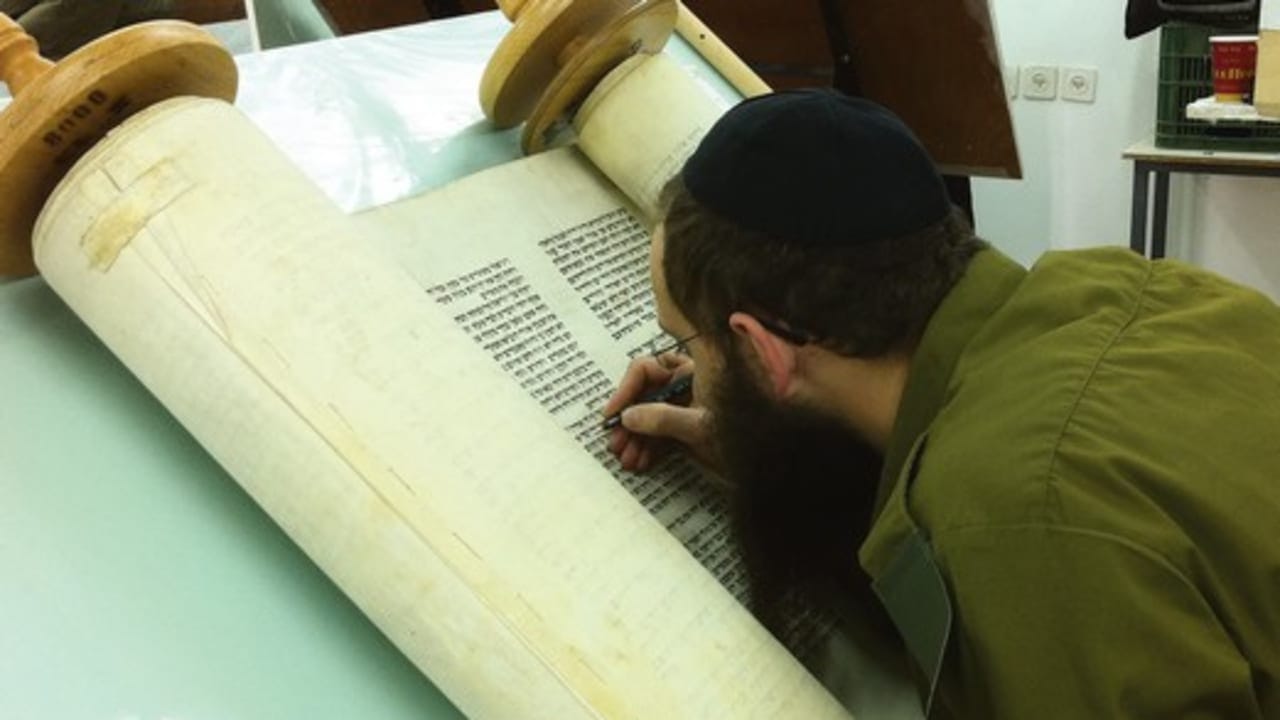
Torah scribe
Torah scribe Photo: Courtesy Derech AMI
Rabbi Chaim Shmulevitz candidly states that a person can keep all the mitzvot and still be on the wrong derech (path) in life, and be held accountable by God for his mistakes (Sichot Mussar 31:99). He writes that even good intentions and devotion cannot save a person from the responsibility of not properly examining his derech, and for not seriously considering the possibility that he may be on the wrong path.

Apart from praying for guidance – which is important – Reb Chaim gives guidelines for how one can assess the authenticity of one’s derech.

He cites the verse from Psalms as the standard by which all of one’s Torah should be measured: “The commandments of Hashem are yesharim” (19:9), meaning that the commandments of G-d reflect the value of yashrut, which literally means “straight,” but reflects much broader values of integrity and uprightness. This, says Reb Chaim, is the ultimate test of one’s derech: If the Torah and mitzvot one performs reflect the value of yashrut, one is on the right path. If not, even though on the surface one appears to be doing everything in accordance with G-d’s will by obeying His mitzvot, in fact he is fundamentally at odds with Hashem.

Reb Chaim says that derech eretz (courtesy) is one important part of what yashrut means. Therefore, everything that a person does, including in the realm of mitzvot, must be guided by values of derech eretz and middot tovot (good character).

He notes that according to a Midrash cited by Rashi, Moses questioned G-d’s command to count the tribe of Levi, including the babies of at least one month, saying that he was unable to fulfill the instruction because it would mean infringing on the families’ privacy. Granting his objection, G-d told him to go to each tent, and while Moses stood outside, a heavenly voice called out to him the number of people in each household.

Reb Chaim explains that though Hashem had given an explicit command to count the people, Moses fulfilled the task in a way that would not violate the principles of derech eretz. Yet the Torah states that Moses followed G-d’s instruction “as commanded.”

(Numbers 3:16). He contends that the phrase “as commanded” is to be understood literally, for it was as if G-d actually commanded him not to enter the houses, but to wait outside for the Divine voice to supply the needed information. Reb Chaim concludes that any instruction from Hashem must be interpreted as consistently as possible with the principles of derech eretz and middot tovot.

Hakarat hatov (gratitude) is another critical aspect of yashrut.

Reb Chaim again cites the example of Moses. Commanded by G-d to go to war against Midian, Moses sent Pinhas to lead the people into battle. Viewed superficially, Moses did not do as he was told by G-d.

The Midrash cited by Rashi recounts that Moses felt it would be wrong for him to fight against Midian, for he owed that country a debt of gratitude. It had provided him with refuge when he fled from Egypt. As gratitude is an important Torah value, it follows that Moses had to interpret G-d’s command to go to war against Midian in a way that was compatible with it.

Reb Chaim cites a Midrash which is very harsh in its criticism of a talmid hacham (Torah scholar) who does not conduct himself with derech eretz and middot tovot, saying that “a carcass is better than him.” (Vayikra Raba 1:15). The Midrash makes this comment in the context of praising the exemplary derech eretz of Moses. The Book of Leviticus begins with G-d’s invitation to Moses to enter the Mishkan (the tent of meeting) in order to hear the contents of the Torah as part of the ongoing revelation that had begun on Mount Sinai.

Despite his familiarity and closeness to G-d, Moses was not so presumptuous as to enter uninvited.

The Midrash points out the extent of Moses’s humility and sensitivity: “Go and learn from Moses, father of wisdom, father of the prophets, who took Israel out of Egypt, and through him many miracles and wonders were done on the Red Sea; and he went up to the heights of Heaven and brought down the Torah from Heaven and was involved in the work [of building] the Mishkan, and yet would not go into the inner chamber until [G-d] called to him.”

Good character and derech eretz prevented Moses from entering without being called to do so. In contrast, one of the worst character traits from the perspective of our Sages is brazenness. “The brazen-faced [go] to Gehinom [Purgatory],” says the Mishna. The opposite quality is gentle sensitivity, a quality connected to humility – epitomized by Moses.

Reb Chaim (Sichot Mussar 32:5) notes that from this Midrash, we learn that even with all of Moses’s greatness and awesome achievements for Hashem, Torah and klal Yisrael (the Jewish people), even a carcass would have been better than him if he had acted with a lack of derech eretz. This example reinforces the principle that a lack of menschlichkeit (human decency) puts a person on the wrong derech, no matter what other good qualities he may have.

In reference to this, Rabbi Aharon Kotler comments, “Not only are we obligated to the priority of derech eretz before Torah, but also if there is a lack of derech eretz, all of a person’s Torah is to be considered nothing; and not only is his Torah... considered unimportant, even his very essence is nullified.”

Reb Aharon explains that the reason derech eretz comes before Torah is that Torah was given to a person to elevate him and bring him into a state of closeness to Hashem and to eternal life – but these levels of Torah were given only to a person who has already reached the level of completeness of what it means to be a human being. And it is only through attainment and practice of the values of derech eretz that a person becomes a human being in the complete sense of the word. The image of a carcass conveys the seriousness with which our sages regard the precept of derech eretz, implying that without derech eretz and character refinement, a person is sub-human.

Reb Aharon explains that the reason the Midrash refers to a talmid hacham – even though everybody has similar duties of derech eretz – is that a breach of derech eretz by a talmid hacham is considered even more severe because of the hillul Hashem (desecration of G-d’s name) that is caused. Disgrace to the Torah is brought about by a person who is recognized as having such a strong bond to the Torah and yet “is dirty and despicable with bad deeds and bad thoughts.” He cites sources to explain that the Torah is like the daughter of Hashem who is taken in marriage by a person who learns. If the princess marries a coarse and crude person, she is brought into a state of disgrace by her husband. So, too, the Torah is brought into a state of disgrace by a learned person who does not conduct himself with derech eretz.

The writer is chief rabbi of South Africa. This is an adaptation of an extract from The Legacy, coauthored by Warren Goldstein and Berel Wein, published by Maggid, a division of Koren Publishers Jerusalem. The book will be launched in Jerusalem on Tuesday, March 5, at 8 p.m. at the Great Synagogue. For more details of the book, visit www.korenpub.com.
  • Send
  • Large
  • Small
  • Print
  • Share
Most Viewed in
1
Iran's new fanatic-in-chief
2
Gezi Park protests: The AKP's battle with Turkish society
3
The Iranian election: Have the people really won?
4
Chief rabbi battle
JPost Community
Tweet
derech eretz Torah Hashem Rabbi Aharon Kotler Midrash Mishna Rabbi Chaim Shmulevitz
Tweets by @Jerusalem_Post
Share this article
Tweet
Share
Send
Your comment must be approved by a moderator before being published on JPost.com. Disqus users can post comments automatically.

Comments must adhere to our Talkback policy. If you believe that a comment has breached the Talkback policy, please press the flag icon to bring it to the attention of our moderation team.
JPost Services
conferenceConference
newsletterNewsletter
iphoneMobile Apps
kotelcamKotel Cam
kolboJPost Alert
premiumPremium
JPost TV News  
Mobile Apps  
Bank Hapoalim  
Meir Panim  
Israel Law Center  
Inbal Hotel Jerusale  
Meier on Rothschild  
Weizmann Institute o  
JPost Premium Zone  
JPost kotel Camera  
         
 
Israel Focus
JPost TV News
Watch Now!  
Israel Law Center
The ultimate Mission to Israel, October 21 – 28, 2013 Register now!  
Nefesh B'Nefesh Guided Aliyah
Already living in Israel? Enjoy the Benefits of Aliyah!  
One year International MBA
in English, Bar-Ilan University, Israel – Open House July 9, 2013, 17:30  
Give "Freedom" this Passover
to needy Israeli families. Donate now  
YTA – A Yeshiva in Israel…
in English. Come Join Us  
War Threatens
Protect the People of Northern Israel  
Bank Hapoalim
Israeli's number one bank  
Jerusalem Post Lite
Lite Edition of the Jerusalem Post for English improvement  
Learn Hebrew with us
Get 10 minutes free personal coaching in Hebrew through phone or Skype  
JPost newspapers
Sign up for the JPost newspapers and receive one month free subscription  
Kosher English Magazine
English language weekly magazine - especially for religious people  
JReport Kindle Edition
Now you can get the Jerusalem Report directly to your Kindle  
JPost Premium Edition
The very best articles are available only in our Premium edition  
Lifestyle Magazine
 
 
Real Estate
Meier on Rothschild
Tel Aviv's Most Prestigious Address  
Don't Look For a House!
In Israel, our website will do it for you!  
 
Travel
Tourism Magazine
June 2013  
The Inbal Jerusalem Hotel
Hot summer deal, order now!  
Eldan Rent a Car
20% off all Car Rental Reservations in Israel  
Hertz Car Rental
Special Online Discounts!  
The King David Jerusalem Hotel
One of the world's truly iconic hotels, and a Jerusalem landmark  


Sites Of Interest:

Jerusalem Hotels
KKL-JNF
Poalim Online
BreitBart.com
Our Friends
Jerusalem Attractions
Jerusalem Tours
itraveljerusalem.com

JPost sites:

Learn Hebrew
The Jerusalem Report
Our Magazines
JPost Edition Francaise
Green Israel
Christian World
Jerusalem Post Lite

Services:

JPost Mobile Apps
JPost Premium
JPost Newsletter
JPost Toolbar
JPost News Ticker
JPost RSS feeds
JPost Archives
JPost Alert
JPost Kotel Cam

JPost Conferences:

NYC Conference
Diplomatic Conference

Information:

About Us
Feedback
Staff E-mails
Copyright
Sitemap
News Partners
Advertise with Us
Statistics
Ad Specs
Terms Of Service
Jpost.com, the online edition of the Jerusalem Post Newspaper - the most read and best-selling English-language newspaper in Israel. For analysis and opinion from Israel, the Jewish World and the Middle East. Jpost.com offers expert and in-depth reporting from Israel, the Jewish World and the Middle East, including diplomacy and defense, the Palestinian-Israeli conflict, the Arab Spring, the Mideast peace process, politics in Israel, life in Jerusalem, Israel's international affairs, Iran and its nuclear program, Syria and the Syrian civil war, Lebanon, the Palestinian Authority, the West Bank and Gaza Strip, Israel's world of business and finance, and Jewish life in Israel and the Diaspora.
 
About Us | Advertise with Us | Subscribe | Premium | Newsletter | RSS | Contact Us
 
All rights reserved © The Jerusalem Post 1995 - 2012