Natural gas ‘gateway to future,’ says top official
Experts at energy forum say Israel’s natural gas reserves can create more than just a valuable supply for Israel.
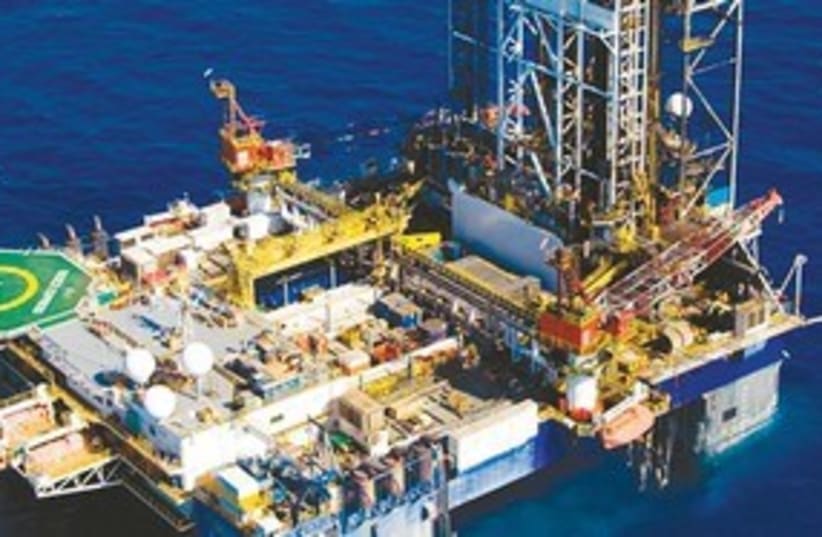
By SHARON UDASINLeviathan 311(photo credit: Courtesy of Albatross)
Israel’s ample natural gas reserves can create more than just a valuable energy supply for Israel and the countries that may import the resource, experts said at a forum on Wednesday.Because Israel’s natural gas is mostly made up of methane, the hydrocarbon substance can be used in various outlets within the chemical and transportation industries, a use that is already occurring in other OECD countries, explained Dr. Bracha Halaf, the senior manager of oil replacement at the Energy and Water Ministry. Halaf was speaking at the “French-Israeli Seminar on Natural Gas in Israel: Issues and Forecast” event held in Tel Aviv on Wednesday morning and organized by the French Embassy to Israel, The Israeli Institute for Economic Planning and the Energy and Water Ministry, with sponsorship by Technip, an oil and gas industry provider for project management, engineering and construction headquartered in Paris.In the chemical industry, the natural gas could be transformed into things like naphtha, a chemical used in industrial solvents and cleaning fluids, shoe polish, lighter fluid and other modes; feedstock for ammonia-based fertilizers; olefins; formaldehyde; and acetic acid, according to Halaf. In the chemical industry as a whole, 85 percent of all chemicals are produced from 20 simple chemicals called base chemicals and these are produced from 10 raw materials – which include oil, natural gas and other resources, she explained.For the transportation sector, the natural gas could be used to generate LPG (liquefied petroleum gas), jet fuel, diesel, hydrogen gas, CNG/LNG (compressed natural gas/liquefied natural gas), gasoline and biodiesel, among other things, she said. Particularly CNG and methanol are both readily available from natural gas and can be economically valuable technologies, as well as generate many new jobs, she added.“It can open a new era for the Israeli chemical industries,” Halaf said, calling natural gas for Israel a “gateway to the future.” The ministry, she said, is currently providing grants of up to $500,000 for demonstration projects that explore new ways of making use of natural gas. One such project currently taking place is that of Dor Chemicals, which is conducting a motor vehicle field trial run using a mixture containing 85% gasoline and 15% methanol – M15, according to Halaf. This could introduce methanol as mode of transportation for both Israel and other countries, she said. Meanwhile, a company named Engineuity is experimenting with the production of diesel (Syngas) from methane.As Israel is comparatively a latecomer to the natural gas field, Halaf said that the government hopes “to learn from the experience gained by other countries” and create international partnerships, while allowing Israel to “serve as a test bed.”At the moment, Israel is using 90% of its natural gas supply toward generating electricity, but with the heavily increased supply, it could do particularly well to consider using some for transportation purposes, agreed Ariella Berger, the head of oil-alternatives research at the Israel Institute for Economic Planning.“Currently, it’s fair to say that transport is very much monopolized by one fuel source – this is not just in Israel, of course,” she said. “Oil dependence is a global issue. Nearly all transportation is based on oil and transportation is what drives commerce and the commerce drives the global economy.”If Israel continues to work on technologies that could turn natural gas into fuel for vehicles, it could therefore decrease oil dependence domestically and around the globe, according to Berger.Prof. Eugene Kandel, the head of the National Economic Council of the Prime Minister’s Office, had a similar opinion, stressing that Israel should be “a catalyst of changing the world dependence on oil.”In 2010, Israel imported $8.6 billion worth of oil, and of that, $5 billion went into transportation, she explained. Every billion cubic meters of natural gas in transportation could potentially save Israel $370 million every year on its crude oil bill, she said.While of course electricity costs in general could be cut by using natural gas in place of oil, employing it to run huge operations like desalination plants could save additional costs and thereby generate cheaper water, Berger added.She cautioned, however, that the infrastructure for handling natural gas in Israel is still quite underdeveloped at the moment.“It’s important to keep in mind that Israel is very much a newcomer to the field of natural gas,” Berger said.
if(catID != 151){
var cont = `Take Israel home with the new Jerusalem Post Store