Groups say World Bank's plan to build pipeline from Red Sea will destroy the Dead Sea, as water levels decline at rapid rate.
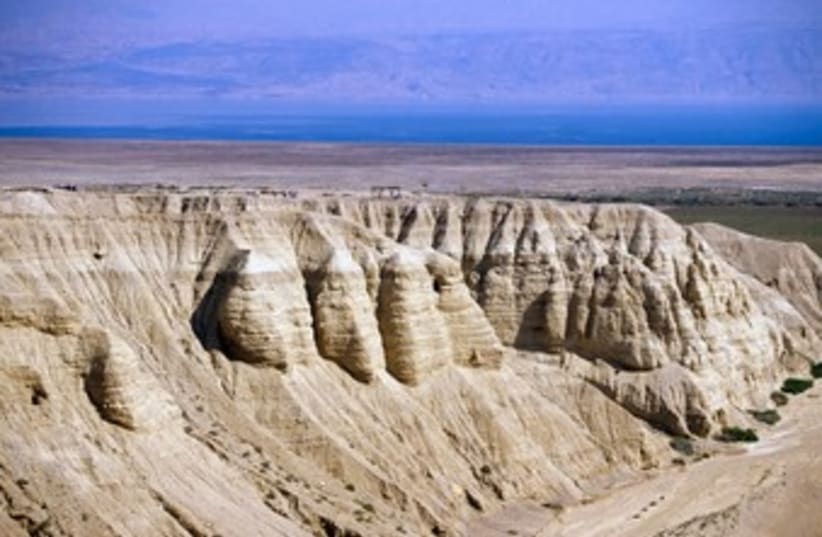
By SHARON UDASINDead Sea 370(photo credit: BiblePlaces.com)
As the World Bank prepares to move forward with public hearings on a Red Sea-Dead Sea conduit project next week, regional environmental group Friends of the Earth Middle East and the Environmental Protection Ministry have slammed the plan as destructive to the very sea that it aims to save.“We coined the phrase ‘Save the Dead Sea’ 15 or 16 years ago, so we want our governments to come with support – but to the right project, not the wrong project,” Friends of the Earth executive director Gidon Bromberg said, at a press conference in Tel Aviv on Tuesday.A month ago, the World Bank released three detailed reports regarding a trilateral plan to build a 180-kilometer pipeline to transport water from the Red Sea to the Dead Sea – a feasibility study, an environmental and social assessment, and a study of strategic alternatives, drafted by different external authors.Defining the objectives of such a project as saving the Dead Sea from environmental degradation, desalinating water and generating hydroelectricity at reasonable prices, the World Bank also stressed that the program should be “a symbol of peace in the Middle East,” particularly among the Israeli, Jordanian and Palestinian participants.As those involved have pondered the pros and cons of such a project for a decade, the Dead Sea water level has continued to decline at a rate of one meter per year, due to the progressive decline of the Jordan River flow.The feasibility study determined that going ahead with the conduit would feasible, involving 180 km. of tunnels and pipelines, a tremendous desalination plant and two hydropower plants, all in Jordan.The project would cost an estimated $9.97 billion.While the feasibility study gave the project an unofficial go-ahead, the environmental and social assessment warned of grave risks such as detrimental “changes to the appearance and water quality” of the Dead Sea as well as damage to the region’s overall ecology.The third report, on alternatives to the Red-Dead conduit plan, pinpoints an option that combines several solutions – desalination at Aqaba and the Mediterranean shore, with water importation from Turkey and water conservation and recycling.Although both the Environmental Protection Ministry and Friends of the Earth Middle East vehemently object to carrying out the plan offered in the feasibility study, Regional Cooperation Minister Silvan Shalom has continually supported the project as one that will benefit all sides and save the Dead Sea.The World Bank will hold a public hearing in Jerusalem next Tuesday, as well as similar forums in Amman this Wednesday and Ramallah next Wednesday.The feasibility study identifies issues that might be bad for the Dead Sea environment, Bromberg explained. Gypsum levels may rise as marine water mixes with the hypersaline Dead Sea. If the gypsum does not crystallize and fails to sink to the sea’s floor, the water will become a milky white color, Bromberg said.There is also the possibility of rampant red algal blooms following the change in chemical composition of the waters, he said, citing the feasibility study.“When you have the growth of algae, you’re going to have slime,” Bromberg said.Quoting a section of the environment and social assessment, he pointed to an inherent risk of irreversible damage to the Dead Sea waters, destroying its integrity and rendering it incapable of ever achieving World Heritage Site status.The feasibility study deems a pilot program impossible, as only one of at least 75 percent of the full project size would be a reliable model for evaluation, Bromberg said.“Either we go the whole way and play God or we don’t do anything at all,” he said.The project could also threaten the Arava on both sides of the border, creating vulnerabilities to insidious leakage or catastrophic failures resulting from terrorist attacks or earthquakes, Bromberg added, quoting the environmental and social assessment.If entrepreneurs decided to develop tourist sites with additions such as artificial lakes stemming from the aqueous pipeline, “Disneyland style development” could also damage the region, he added.And due to the energy required to pump the water, the project would actually leave Israel/Jordan 880 megawatts in the hole and double Jordan’s greenhouse gas emissions output, he said, citing both the Environmental and social assessment and the feasibility study.Because the brunt of the project would occur in Jordan, Friends of the Earth Jordanian executive director Munqeth Meyhar expressed major concerns about potential land and habitat degradation in his country.“We do have regional concerns as Friends of the Earth Middle East, but as a Jordanian I have a bit more concerns,” Meyhar said. “As you see the whole project is in Jordanian land. The intake will affect coral reefs of the Jordanian side. The water will be dropped in the Dead Sea on the Jordanian side, so this area will be affected first if anything will happen.”As far as providing desalinated water and generating affordable hydroelectricity, Bromberg argued that neither would be achieved affordably, with water costing three times as much as now, according to feasibility study data.In addition, for the first $4.5b. required for the project, the countries involved would be dependent on international gifts, and Jordan would also need to raise a loan of about $2.6b. for water pumping.“Everybody knows that the Jordanian economy is suffering,” Meyhar said. “We are in deficit of about $20b. and here we are looking for another grant from somewhere.”While the Jordanian government renounced interest in the project a few months ago due to such financial concerns, following the World Bank report publications, officials once again declared their eagerness to participate, Meyhar said.“They received a promise from the Gulf in case this project will be a peace-building project,” he said.Looking at the project’s other objective – building peace – Bromberg said he felt achieving such an objective was impossible if the countries involved did not first recognize each other as equals.“Rather than being a symbol of peace, we are likely to see the Dead Sea as another issue of controversy and squander,” he said.The Environmental Protection Ministry likewise announced its rejection of the Red-Dead program on Tuesday morning, stressing that without more informed data and experimentation, such a plan cannot proceed. Citing experts from the Geological Survey of Israel, the ministry said that pumping more than 350 million cubic meters of seawater and brine to the Dead Sea could lead to an outbreak of bacteria and algal growth, causing disturbing odors in the region. The ministry likewise described the unsightly gypsum that could take hold in the water, creating an unattractive sea and deterring tourists from visiting the area.But Friends of the Earth and the Environment Ministry differ on what precisely should occur going forward.“The ministry welcomes the project in general,” it said.“However, from a national and regional responsibility standpoint, there is a need for precautionary measures, while examining the environmental of implementing the project.”Before proceeding with any plan, ministry officials said they advocate a limited pilot program that would enable the flow of large quantities of water into the Dead Sea while examining the effects on the ecosystem. Transferring brine through pipelines on a limited, closed basis into a southern portion of the northern Dead Sea basin would allow researchers to monitor environmental impact and gain more certainty about the processes that would take place, according to the ministry.Acknowledging that the World Bank has denied that a small pilot project is a viable option, the ministry stressed the necessity to implement one in the face of possible irreversible consequences. “The Dead Sea is a unique natural resource, and a hasty decision, devoid of real data and tests, is likely to destroy it completely and with it all the tourism in the area,” Environmental Protection Minister Gilad Erdan said. “Launching a preliminary pilot is the only viable option for saving the sea in a responsible manner.”Friends of the Earth, on the other hand, has championed the combination option suggested in the study of alternatives, that calls for combining Aqaba and Mediterranean desalination with Turkish water import, conservation and water recycling – the last of which could also be used to the Jordan River’s benefit.“There’s no need for pilots because everything is using existing technologies,” Bromberg said. “For your money, you get double impact – not only do you get rehabilitation of the Dead Sea but also partial rehabilitation of the Jordan River.”“We are calling on our own governments to support the combination of alternatives, and in that manner we can rehabilitate both the Lower Jordan River and the Dead Sea, providing more affordable [water] prices to our own people,” he said.
if(catID != 151){
var cont = `Take Israel home with the new Jerusalem Post Store