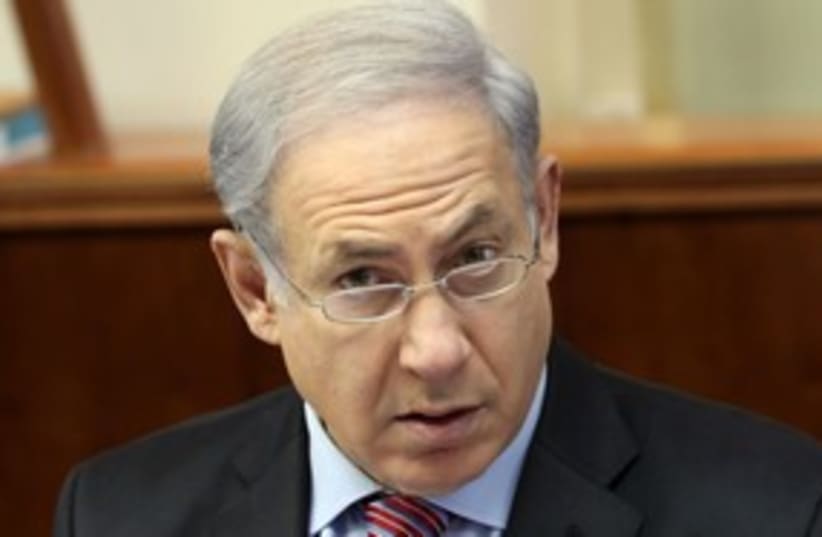

While saying that it was "too early" to relate to the incident in the Korean peninsula, the prime minister said the events there did show that the "world is coming under threat from irresponsible countries that are arming themselves with advanced weaponry, the most threatening weapons. And since these countries are at their core very aggressive, it is only a matter of time before this aggression is expressed in one incident or another." RELATED:US: N. Korea's nuke claim provocative, not surprise Mullen: N. Korea nuclear report shows belligerence Netanyahu, who made these comments during a tour of the Israel Military Industries, said Israel was familiar with this phenomenon because of Iran's behavior, and its cooperation with North Korea, Syria and other countries.The international community, he said, is facing the challenge of "how do you stop this aggression, and stop it in time."Foreign Minister Avigdor Lieberman, at a press conference in Jerusalem on Tuesday afternoon, said that it is "necessary today, more than in the past, to stop and to topple this crazy regime, and to stop their proliferation and provocations." Lieberman, with visiting Italian Foreign Minister Franco Frattini, said North Korea is part of an axis of evil that includes Syria and Iran, and that there is close cooperation between them in the sphere of nuclear and missile technology."I think that North Korea is, as we see, a threat not only for their part of the world, but also for the Middle East and the entire world," Lieberman said.Lieberman said that a "bad message" is being sent. If the international community "cannot stop, cannot suffocate this crazy regime," then how could it deal with Iran, he asked.Frattini said, "We should all condemn this North Korean attack."Seoul will unleash an "enormous retaliation" should North Korea attack again, South Korean President Lee Myung-bak said Tuesday following the attack.The UN Security Council also announced it would be holding an emergency session in the wake of the incident.The United States added its voice to the strong reactions, calling on North Korea to "halt its belligerent action," Press Secretary Robert Gibbs said in Washington. Hereaffirmed that the US is "firmly committed" to South Korea's defense, and to the "maintenance of regional peace and stability."North Korea bombarded the South Korean island near their disputed western border with artillery, setting buildings ablaze and killing at least two soldiers after warning the South to halt military drills in the area, South Korean officials said.South Korea said it returned fire and scrambled fighter jets in response, and said the "inhumane" attack on civilian areas violated the 1953 armistice halting the Korean War. The two sides technically remain at war because a peace treaty was never negotiated.Japanese Prime Minister Naoto Kan ordered his government to "Make preparations so that we can react firmly, should any unexpected event occur," he announced at a press conference Tuesday. He added, "I ordered them to do their utmost to gather information."China, which is the North's economic and political benefactor while maintaining robust commercial ties with the South, called for calm."We express our concern over the situation. The situation is to be verified," Chinese Foreign Ministry spokesman Hong Lei said at a regularly scheduled media briefing in Beijing. He called on both Koreas without naming them "to do more to contribute to peace and stability on the peninsula."Russia also issued a response to the escalating situation. A foreign ministry said, "It's important that this does not lead to an aggravation of the situation on the Korean peninsula," AFP reported.Britain also condemned the "unprovoked" North Korean attack Tuesday. British Foreign Secretary William Hague said, "The UK strongly condemns North Korea's unprovoked attack on the South Korean island of Yeonpyeong." He added, "Such unprovoked attacks will only lead to further tensions on the Korean peninsula."The German foreign minister also issued a condemnation of the attack.The skirmish came amid high tension over North Korea's claim that it has a new uranium enrichment facility and just six weeks after North Korean leader Kim Jong Il unveiled his youngest son Kim Jong Un as his heir apparent.
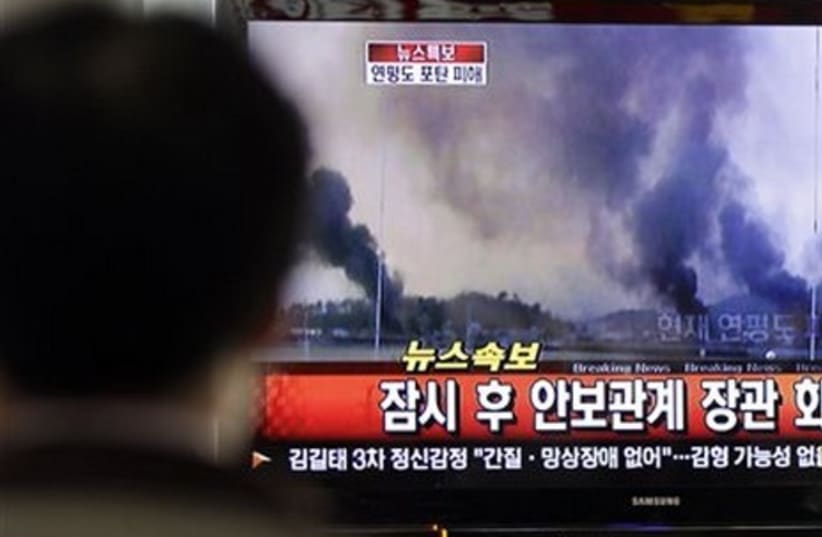
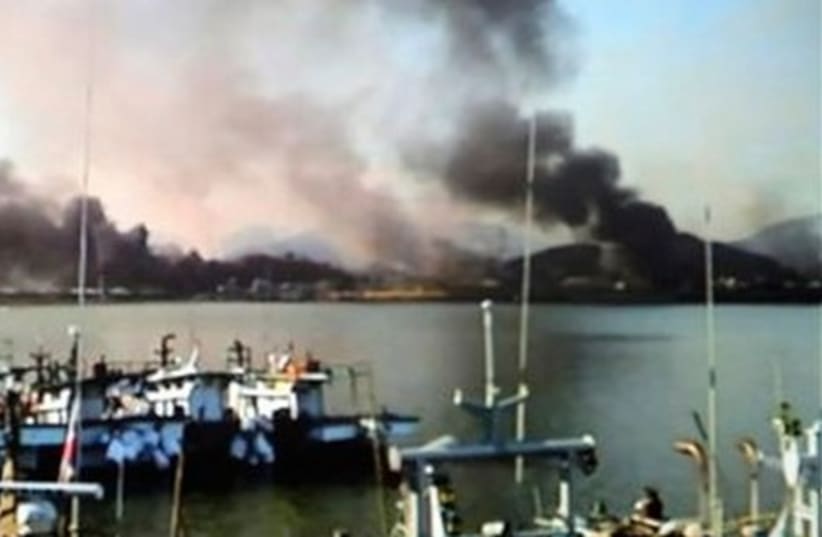
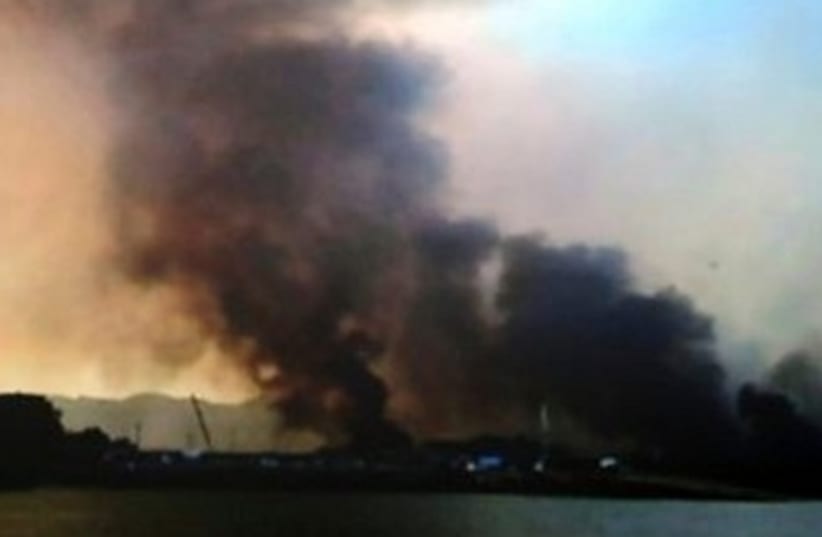
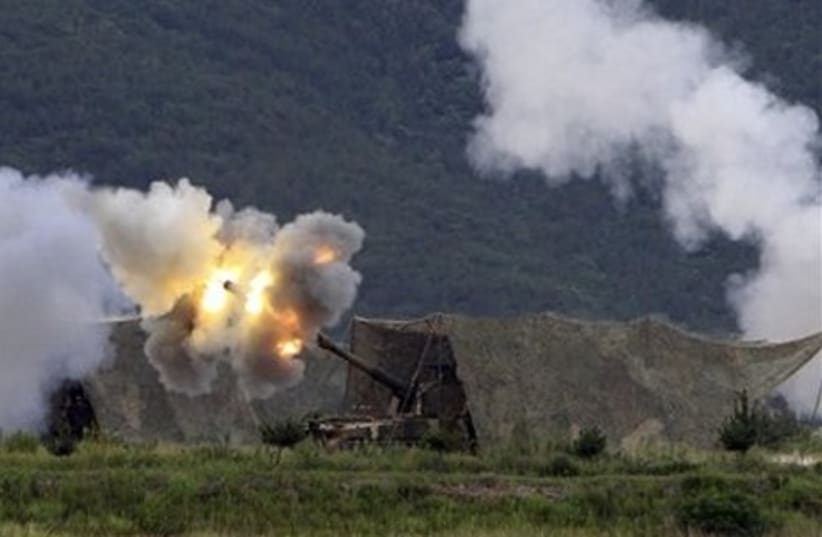
The North's artillery struck the small South Korean-held island of Yeonpyeong, which houses military installations and a small civilian population and which has been the focus of two previous deadly battles between the Koreas.Two South Korean marines were killed, three were seriously wounded and 10 slightly wounded, a Joint Chiefs of Staff official said. Island residents were escaping to about 20 shelters in the island while sporadic shelling continued, the military official said.The firing came during South Korean military drills in the area. North Korea's military had sent a message to South Korea's armed forces early Tuesday to demand that the drills stop, but the South continued them, another military official said. North Korea said that the drills were the cause of the escalation.During the drills, South Korean marines on the island shot artillery toward southern waters, away from North Korea, the official said.Both officials spoke on condition of anonymity, citing military rules.The North's premeditated bombardments struck civilian areas and were "inhumane atrocities," military official Lee Hong-ki said. There are about 30 small islands around the Yeonpyeong, and tension runs high in the area because of its proximity to North Korea. Yeonpyeong is known for its crab fishing.After the North's barrages, South Korea responded by firing K-9 155mm self-propelled howitzers, military officials said, but declined to say whether North Korean territory was hit.YTN TV said several houses on Yeonpyeong were on fire and that shells were still falling on the island, which is about 75 miles (120 kilometers) west of the coast. The station broadcast pictures of thick columns of black smoke rising from the island, which has a population of 1,200 to 1,300. Screams and chaotic shouts could be heard on the video.The existence of North Korea's new uranium enrichment facility came to light over the weekend after Pyongyang showed it to a visiting American nuclear scientist, claiming that the highly sophisticated operation had 2,000 completed centrifuges. Top US military officials warn that it could speed the North's ability to make and deliver viable nuclear weapons.The military tensions between the two Koreas also comes amid a visit to the region by US special envoy on North Korea, Stephen Bosworth. He held talks with South Korean officials Monday and was also scheduled to meet officials in China.