
A recent Pentagon contract just revealed the smartest artificial intelligence strategy in business. While some builders and investors chase fully autonomous everything – self-driving cars, pilotless airplanes, human-less factories – the real winners are asking: How much autonomy should we actually give our AI systems?
The answer is reshaping how companies deploy AI across every industry. It's not what the hype machine is selling.
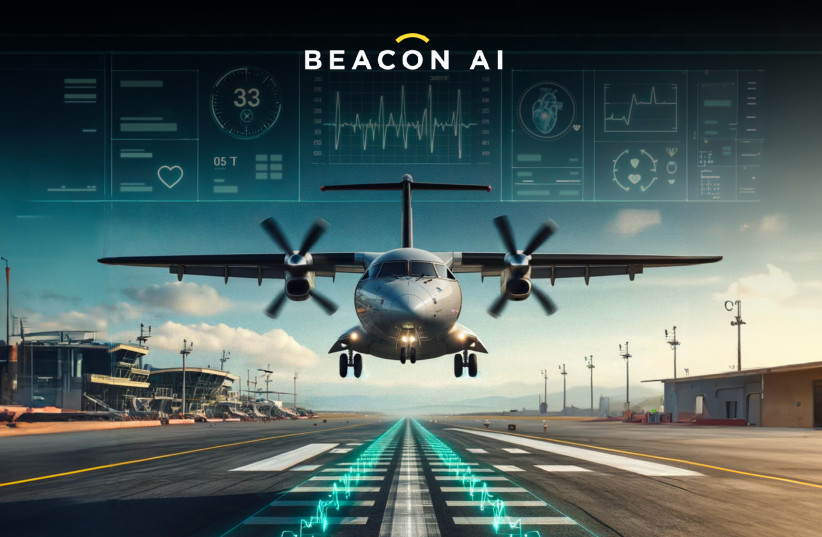
Beacon AI, a California-based aviation software company, recently signed a four-year contract with US Special Operations Command (USSOCOM) worth up to $49.5 million. The deal is not for a fully autonomous, pilotless aircraft or for sci-fi autonomous fighters. Instead, it's for AI-powered pilot assistance software that cuts cockpit workload and speeds mission-critical decisions in high-risk operations.
Think R2-D2, not HAL 9000. The system integrates flight data, weather, routing, and pilot inputs into real-time decision support. This is exactly what human pilots need when operating in contested, time-sensitive environments. Here is the strategic insight. Beacon deliberately chose limited AI autonomy over full automation, and the Pentagon validated this choice with a large check.
The autonomy levels every executive needs to understand
Most boardrooms discuss AI as if it's binary. You either have it or you don't. This is simplistic. AI autonomy operates on a spectrum, and understanding these levels is critical for any leadership team deploying AI systems.
The framework comes from autonomous vehicles, but applies to AI systems in any industry:
- Level 0 (no automation): Humans do everything. Traditional tools with no AI assistance.
- Level 1 (driver assistance): AI provides information and basic support. Think spelling-check or fraud alerts that humans must act upon. The AI has no decision-making power.
- Level 2 (partial automation): AI can execute specific tasks while humans maintain oversight and control. Examples: AI scheduling systems that suggest meetings but require human approval – or trading algorithms with human-set parameters and kill switches.
- Level 3 (conditional automation): AI manages tasks independently within defined conditions, but humans must be ready to take control when the system reaches its limits. Think advanced customer service chatbots that escalate complex issues to humans.
- Level 4 (high automation): AI operates independently in most scenarios within a specific domain, requiring human intervention only in exceptional cases.
- Level 5 (full automation): Complete AI autonomy with no human intervention required or possible.
In aviation, Beacon classifies current autopilot and flight management systems as Level 1. Their new system operates at Levels 2 to 3: context-aware assistance that helps crews manage complexity while keeping humans in command.
They deliberately avoided Levels 4 to 5 because of the massive challenges: data maturity and AI safety requirements, certification complexity, and the enormous cost of entirely removing human oversight.
Why Levels 2 to 3 AI is winning across industries
Levels 2 to 3 AI is winning across industries, first and foremost, because it allows for a lower risk and faster deployment.
Human-in-the-loop systems don't require rebuilding entire compliance frameworks. Beacon's contract includes a production clause for rapid operational deployment. This would not have been possible with fully autonomous systems requiring years of safety validation.
Furthermore, people trust systems that enhance their capabilities rather than replace their judgment. When AI augments human expertise instead of eliminating it, the resistance drops and the adoption accelerates.
This is also the present regulatory reality. From transportation to aviation to healthcare to finance, regulators move cautiously on high-autonomy AI. Levels 2 to 3 systems integrate into existing oversight structures without a fundamental regulatory overhaul.
Cross-industry proof points
We are seeing similar trends across other industries.
Within financial services, for example, JPMorgan's Level 1 to 2 AI systems detect fraud 300 times faster than traditional systems and contributed to $1.5 billion in cost savings through improvements in fraud prevention.
However, humans make final decisions on major trades and loan approvals. Keep in mind that even algorithmic trading operates within human-defined risk parameters.
Within retail, Amazon's recommendation engines generate over 35 percent of sales, while AI-powered demand forecasting has delivered 10 to 20% accuracy improvements. Walmart uses AI to achieve up to 90% inventory accuracy. These Level 2 systems enhance operational efficiency while maintaining human oversight of strategic decisions.
Within healthcare, AI assists radiologists in detecting anomalies (Level 1) and supports doctors with treatment recommendations (Level 2), but physicians retain diagnostic authority and treatment decisions. Even the most advanced AI operates as a sophisticated second opinion.
Within transportation, while everyone talks about self-driving cars, the real money is in Level 2 systems, which include adaptive cruise control, lane-keeping assistance and collision avoidance systems. These systems are deployed across millions of vehicles today, generating immediate value and revenue.
The pattern is universal. Successful AI implementations augment human capability rather than replace human judgment.
The board-level strategic question
Every executive team deploying AI faces the same fundamental choice: What level of autonomy should you grant your AI systems?
Should you pursue Levels 1 to 2 AI Strategy? Namely: Build systems that make your people better at their jobs. Customer service AI that arms your sales and customer-facing teams with better information. Financial analysis AI that accelerates research but leaves investment decisions to portfolio managers. Marketing AI that identifies opportunities while humans control brand messaging.
Or, should you pursue Levels 3+ AI strategy? Namely: Build autonomous systems that operate independently within defined boundaries. This requires massive investment in data quality, extensive testing, regulatory navigation, and sophisticated monitoring systems.
Many companies are betting erroneously by chasing Levels 4 to 5 automation, and hoping it will help reduce manpower costs, when Levels 2 to 3 augmentation delivers faster returns with significantly lower risk.
The next decade prediction: Augmented professionals beat automated everything
Modern knowledge work is increasingly about processing complexity and making judgment calls under uncertainty.
AI excels at data processing and pattern recognition. Humans excel at context, creativity, and strategic thinking. The winning combination amplifies both.
Beacon's system ingests weather data and briefing materials to generate concise mission summaries, letting pilots focus on high-level tactical decisions rather than information processing.
I tend to assume that this is the future across industries: AI will handle the data complexity while humans will handle the strategic complexity.
Consider the economics. Training domain experts takes years and costs millions. Training AI to support these experts costs far less and delivers immediate productivity gains. It is quite obvious which approach maximizes return on investment.
Implementation framework for boards
So, what does this mean for executive board members, considering implementing AI within their organizations?
First, start with Levels 1 to 2. Identify where AI can enhance existing workflows without replacing decision-makers. Focus on data processing, pattern recognition, and information synthesis.
Then, define the autonomy boundaries. The board should explicitly decide which decisions the AI systems can make independently and which require human oversight. These boundaries should be documented, and compliance must be monitored over time.
The next step would be to build escalation pathways. Ensure the AI systems can clearly recognize their limits and seamlessly hand off to human experts when encountering edge cases or high-stakes situations.
Finally, measure the success of the augmentation. The organization and board should track how AI improves human performance rather than how much human work it eliminates.
Metrics such as better decisions, faster processing, and reduced errors matter more than headcount reduction.
The AI revolution has created a false choice between human intelligence and machine automation. The real opportunity lies in synthesis, human creativity amplified by machine intelligence. Levels 2 to 3 autonomy should not be considered as a stepping stone to full automation. For most use cases, it should be considered as the optimal destination.
Beacon AI just proved it with a $49.5 million validation from one of the world's most demanding customers. The question for every board isn't whether or not to deploy AI. That’s a given. The question is how much power to give AI.
Choose wisely. Your competitive advantage depends on getting the balance right.