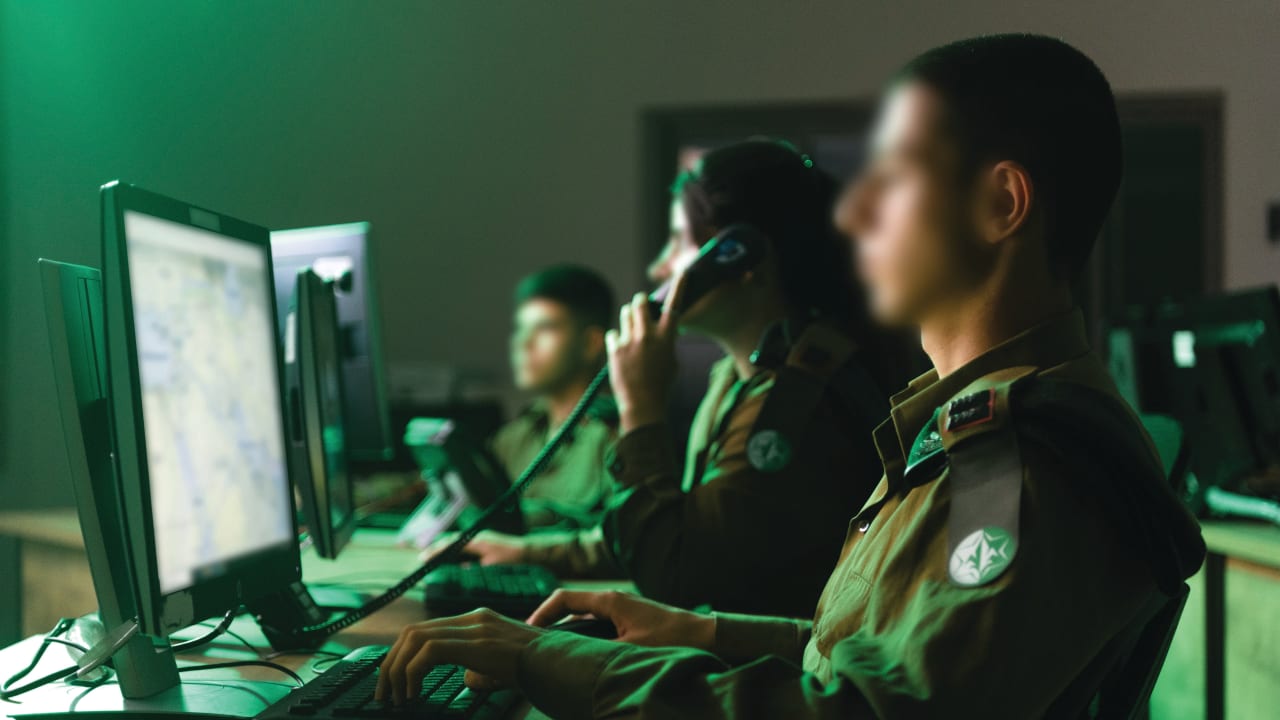
Even our imagination is limited by the current possibilities confronting us, and it blinds us to the full extent of the risks and opportunities presented by artificial intelligence (AI) and quantum revolutions, according to Julia Kogan Ehrlich, a cybersecurity executive and former IDF Unit 8200 intelligence officer.
On the risks side of the challenge, hackers powered by AI have become much more dangerous for potentially penetrating critical infrastructure, she told The Jerusalem Post in an exclusive interview.
Significant portions of critical infrastructure, including energy, water, and transportation, are more likely to use “open-source code,” and this makes it easier for AI cyberattacks to cause harm in the physical world alongside the digital world, she added.

According to Kogan Ehrlich, who is now an angel investor and adviser to early-stage start-ups, AI hackers can more rapidly and efficiently explore social-engineering techniques to personalize their attacks and take advantage of vulnerabilities that they may never have realized in the pre-AI hacking era.
“You can defend well hundreds of times, but they only have to get through once,” she said. “It is always harder to protect than it is to attack. It is never an equal equation. One side is always more powerful: the attacker.”
Kogan Ehrlich's optimism and vision for cybersecurity
Despite these challenges, Kogan Ehrlich expressed optimism about the creative capacities of current and former Israeli cyber-intelligence officials to “create new solutions” to protect the country as well as clients outside of Israel.
Regarding using “AI for security, I don’t know how it is going to look,” she said. “Companies will understand the cybersecurity needs, the market value at stake, and then create a solution.”
But these solutions will constantly evolve, Kogan Ehrlich said.
Kogan Ehrlich moved on to addressing how to use AI to "create the new business idea."
“As long as there is AI, what the vulnerabilities are will continue to be a developing issue,” she said.
Regarding the use of “AI to create the new business idea, we are working side by side with AI,” Kogan Ehrlich said. “This is a middle generation. There will be a later, different, and new generation that will more decisively rely on AI.”
She acknowledged the potential threat of hacking by using quantum computing in the future, which is exponentially faster than supercomputers but not yet usable.
“We are facing a new revolution,” she said. “We are not prepared, but these are still exciting times. Even our imagination is limited based on what we know compared to our potential bright new future.”
Kogan Ehrlich's service in 8200
Kogan Ehrlich served for nearly a decade in the IDF doing SIGINT (signals intelligence) work.
She started off as a technical officer dealing with intelligence and first responses in operational situations related to Israel’s borders.
At some point, she was more focused on threats and intelligence on the southern front. At a later date, she was back to viewing the broader threat matrix.
Recalling that Iran was always the No. 1 intelligence target, Kogan Ehrlich said it was a full-circle experience seeing how the 12-day Israel-Iran conflict played out last June.
During an unexpected war in the 2000s, she and others suddenly had to rapidly learn about issues relating to a region that they had not previously specialized in.
It was a part of the world that no one had cared much about, but in Unit 8200, if the world changed overnight, the unit and its officers had to quickly change with it, she said.
This kind of thinking has helped Kogan Ehrlich advise companies on their strategies to avoid situations in which their product or business strategy suddenly becomes obsolete.
After leaving Unit 8200, she moved to the cyber arena and joined Verint.
Verint has worked with Cloud9 to provide the financial-services market with fully compliant, cloud-enabled communications solutions to support traders both on the trading floor and remotely, “providing necessary flexibility as the industry continues to move to cloud-based platforms and work-from-home environments,” according to the company.
After two years at Verint, she moved to Biocatch, where she focused on fintech cyber issues, including combating complex digital-fraud attacks.
While at Biocatch, she combined knowledge of cybersecurity with behavioral analysis to discover what solutions markets would be looking for next.
8200's uniqueness - dealing with the AI revolution
Start-ups work hard, but employees generally “still have some kind of closure to the workday in the evening if there is no Tier 1 problem,” Kogan Ehrlich said.
“Most problems can be resolved the next day,” she said.
In contrast, Unit 8200 officers need to be at the base due to the classified nature of their work, Kogan Ehrlich said.
Even after what might be considered the end of someone’s shift, the officers have a unique situation of often remaining on the base and continuing to ponder, she said, and they “discuss creative strategies to achieve new projects they have been assigned and to promote some aspect of a project that so far has been missing.”
This “unlimited time commitment and constant focus on accomplishing the national goal” cannot be fully replicated in your average corporate setting or even in a start-up setting, she added.
Another positive is that for Unit 8200 and other top IDF intelligence programs, "you are just getting handed a great pool of people. 8200 is getting the A+ people every year like clockwork," Kogan Ehrlich stated.
Possibly, only some very devoted research labs might approximate aspects of the devotion and readiness for out-of-the-box thinking that occurs constantly in Unit 8200, Kogan Ehrlich said.
Another positive is that for Unit 8200 and other top IDF intelligence programs, “you are just getting handed a great pool of people,” she said. “8200 is getting the A-plus people every year like clockwork.”
When the government tries luring people to work for it after college, “They have to search for talented people and then have to fight for them by offering unusual perks and benefits,” she added.
Businesses do not always get the resources and people they would want, and they work hard at “stealing” talented employees from competitors, Kogan Ehrlich said.
“With Unit 8200, you don’t need to do that,” she said. “You can maximize the force with unlimited resources and unlimited time and capacity to think and plan.”
All a commander needs to do is “guide those great minds to a certain goal or idea,” she said.