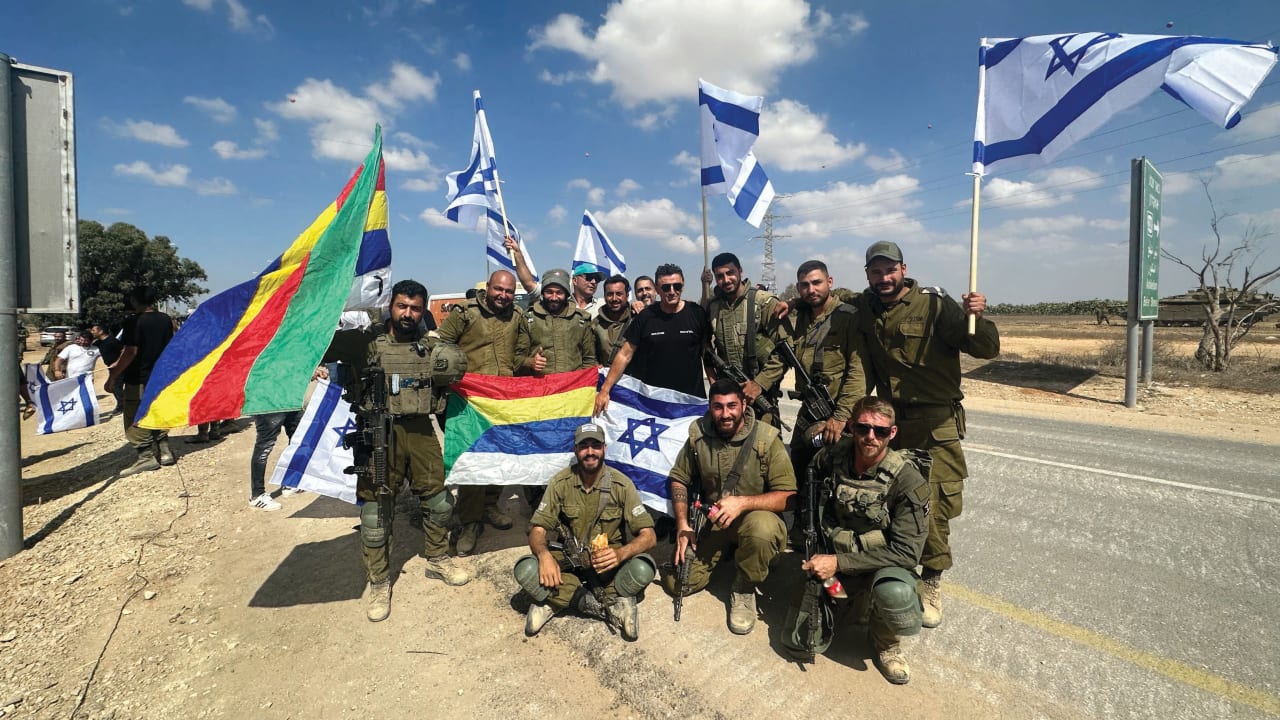
The University of Haifa launched a new program to help discharged Druze soldiers bridge the gap between military service and life afterward, the university announced in a press release on Tuesday.
The four-month-long “Northern Radiance” program began in April and currently hosts 19 participants. For the duration of the program, participants are introduced to higher education and learn professional skills, readying them for future studies or jobs.
The curriculum includes several preparatory and enrichment courses, preparation for the psychometric university entrance exam, career counseling, and more.
Additionally, participants gain an advantage in future admissions at the university. The program also includes social activities, trips throughout Israel, and lectures from leading academics.
During the course of the program, which is being held in partnership with the IDF Human Resources Directorate, the Defense Ministry’s Population Administration, and with the support of the Jewish Federation of Chicago and the Jewish Federations of North America, participants can receive extensive support from the university, including living stipends, tuition scholarships, and personal laptops.

University of Haifa rolls out program to help Druze after IDF service
University of Haifa President Gur Alroey praised the program, dubbing it an “expression of deep gratitude” towards Israel’s Druze population, of whom many serve in the IDF.
“We see the program participants as the next generation of leadership in Israeli society, and we are proud to provide them with the tools to lead meaningful change in their personal lives and in their communities,” he added.
Israel’s Druze population, mostly concentrated in the Galilee and in the Golan Heights, makes up less than 2% of Israel’s population. While Arabic-speaking, the ethnoreligious group’s theology diverged from Islam over a millennium ago.
In contrast to Arab Israelis, Druze citizens of Israel are required to enlist at age 18, and often serve in elite roles. Druze also generally have a higher socio-economic status and are more likely to pursue higher education than Israeli Arabs.