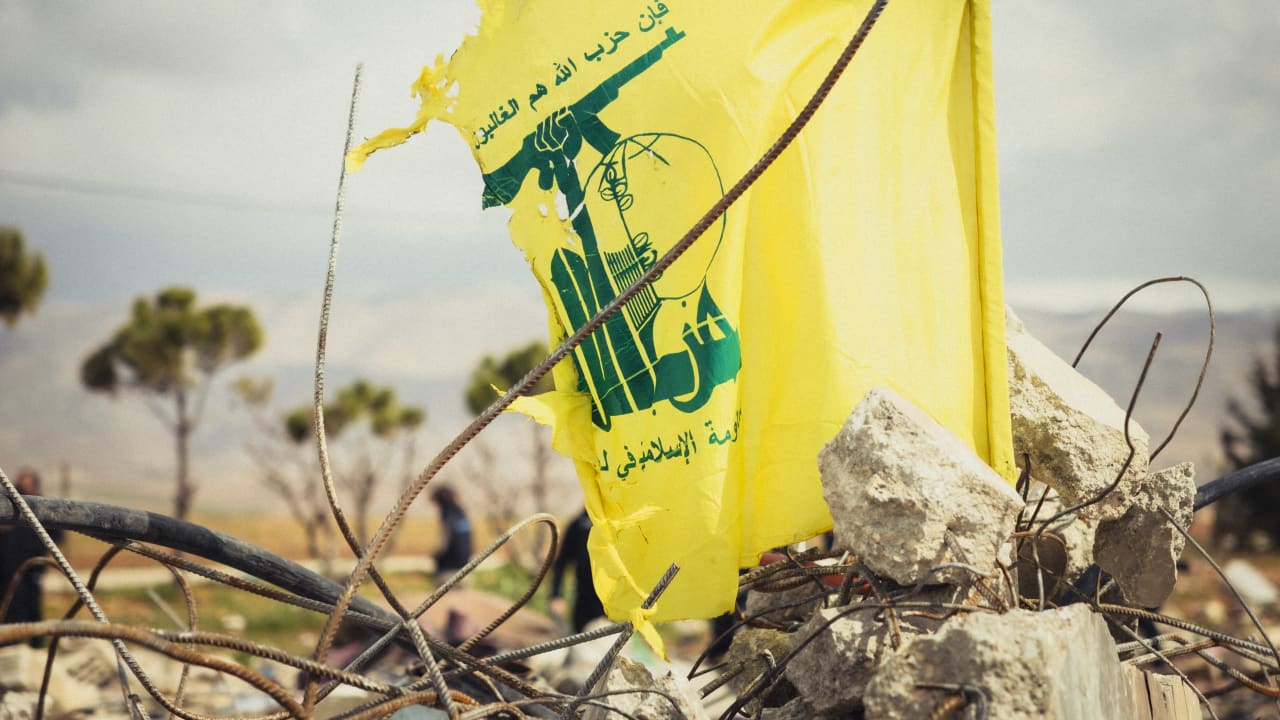
The Lebanese government, under President Joseph Aoun, has been making a determined effort to assert its authority over the rogue Iranian-backed terrorist Hezbollah organization that once operated inside Lebanon as a virtual “state within a state.”
Although much weakened by Israel’s military, and other more covert operations, Hezbollah is still too powerful to be controlled by the government. Since it entered the war on March 2 in support of Iran, it has been launching an average of 150 rockets a day into northern Israel, some coordinated with Iranian missile attacks.
The Lebanese presidency and cabinet have declared Hezbollah’s cross-border attacks “unlawful” and not authorized by the state, stressing that no non-state actor has the right to drag Lebanon into war.
On March 9, Aoun outlined a four-point plan calling for a “total ceasefire,” Hezbollah’s disarmament, and international support to strengthen the Lebanese Armed Forces, coupled with direct Lebanese-Israeli talks under international auspices. In an online conference with senior EU officials, Aoun described the plan as a path toward “permanent security and stability arrangements on our borders,” but declared it was conditional on a halt to Israeli strikes inside Lebanon.
Perhaps as a sign of the sincerity of his intentions, on March 24 Aoun declared Iran’s ambassador-designate Mohammad Reza Sheibani persona non grata, and gave him five days to leave the country. Lebanon objects to the close connection between Hezbollah and Iran’s hardline Islamic Revolutionary Guard Corps, accusing the IRGC of “commanding Hezbollah’s operations” in the current conflict.

On March 30, it emerged that Sheibani, backed by Iran and its Hezbollah supporters, had refused to leave. Iran has stated unequivocally that its ambassador to Lebanon would remain in his post.
A standoff between the Lebanese government, in its efforts to control Hezbollah, and Iran, which regards Lebanon as its colony, has developed. Lebanon has not enforced its own decision, for example, by closing the Iranian embassy, or attempting an arrest of Sheibani. In fact, the situation has settled into a symbolic but revealing deadlock.
Negotiations between Israel and Lebanon
Israel and Lebanon are similarly in a state of frozen animation, and have been for nearly 80 years. The two countries are still technically at war – the war launched on the nascent State of Israel in 1948 by the joint Arab armies.
Since then, no peace treaty or armistice has been negotiated between them, and there have been no diplomatic relations or official channels of communication. Any interchanges have been indirect, via the UN, international mediators, and back-channel contacts. Only UN Security Council Resolution 1701 and subsequent arrangements have provided a formal framework for the cessation of hostilities along the border.
All of which makes Aoun’s recent apparent overture the more unusual. Whether it can lead to direct negotiations is highly unlikely, given the current situation. Israel is establishing a security buffer zone inside southern Lebanon, which it describes as a temporary defense measure rather than a permanent occupation. At the same time, it is undertaking extensive airstrikes against Hezbollah infrastructure and fighters, including in Beirut.
Even so, on March 13 the Qatar-funded Caliber media company reported that Aoun had proposed a one-month truce with Israel, pledging to use the period to achieve the disarmament of Hezbollah. This proposal was communicated to Israel through US Ambassador to Lebanon Michael Issa, but like so many pledges emanating from the Lebanese government, it has simply withered on the vine.
The official Israeli position is that the Lebanese government, in accordance with a number of prior agreements and commitments, is responsible for disarming Hezbollah. If it cannot achieve that, Israeli officials have argued that the war will end only when Hezbollah no longer poses a threat to Israel from Lebanese territory.
Israel has not signaled any readiness to enter political talks with Beirut as long as its relationship with Lebanon is dominated by active hostilities. But the door is not shut fast. Even though Lebanon’s infrastructure is affected by the ongoing military offensive, and civilian deaths and displacements continue to mount, Israel does not describe current operations as a conflict with the Lebanese state, but as self-defense against Hezbollah.
The struggle against Hezbollah
The political gap between the Lebanese and Israeli governments is wide, but not unbridgeable. From Israel’s perspective, Hezbollah is lodged firmly within the Lebanese arena, and it holds the Lebanese state responsible for its disarmament. The Lebanese administration does not disagree, for it is trying to distance the state from Hezbollah’s actions, is openly seeking help to bring the terrorist organization under state control, and has signaled its readiness to negotiate.
On March 31, the EU’s Diplomatic Service issued a statement on behalf of 10 states, including the UK, asserting that the responsibility for the current conflict in Lebanon “lies with Hezbollah,” adding, “We strongly condemn Hezbollah’s attacks in support of Iran against Israel, which must cease immediately.”
They expressed their “full support to the government and people of Lebanon,” and called for “direct political negotiation between Lebanon and Israel, that can contribute to putting a durable end to this conflict and set the conditions for peaceful regional coexistence.”
There is another factor at play. Lebanon’s next parliamentary elections, originally scheduled for May 2026 but now delayed until 2028, could consolidate Hezbollah’s strength, or signal its decline. Aoun has managed to achieve a breathing space of two years in which to ensure that the state gains the upper hand in its struggle with Hezbollah. It is because he acknowledges that the government is not powerful enough to achieve this without help, that he has floated the idea of direct Lebanese-Israeli talks under international auspices.
Negotiations, perhaps leading to joint military operations, could eliminate Hezbollah’s constant onslaught on Israel’s northern border, and would justify Israel’s withdrawal from the buffer zone it is establishing in southern Lebanon. If such talks were ever to be arranged, Hezbollah would undoubtedly attempt to disrupt them, so Israel’s participation would have to be dependent on firm security guarantees, perhaps underwritten by international enforcement.
The possibility of face-to-face talks may seem unlikely. But should the potential, however remote, of a collaborative Lebanese-Israeli effort to strike down Hezbollah – with Israel for once in lockstep with international opinion – be rejected out of hand?
The writer, a former senior civil servant, is the Middle East correspondent for Eurasia Review. Follow him at: www.a-mid-east-journal.blogspot.com