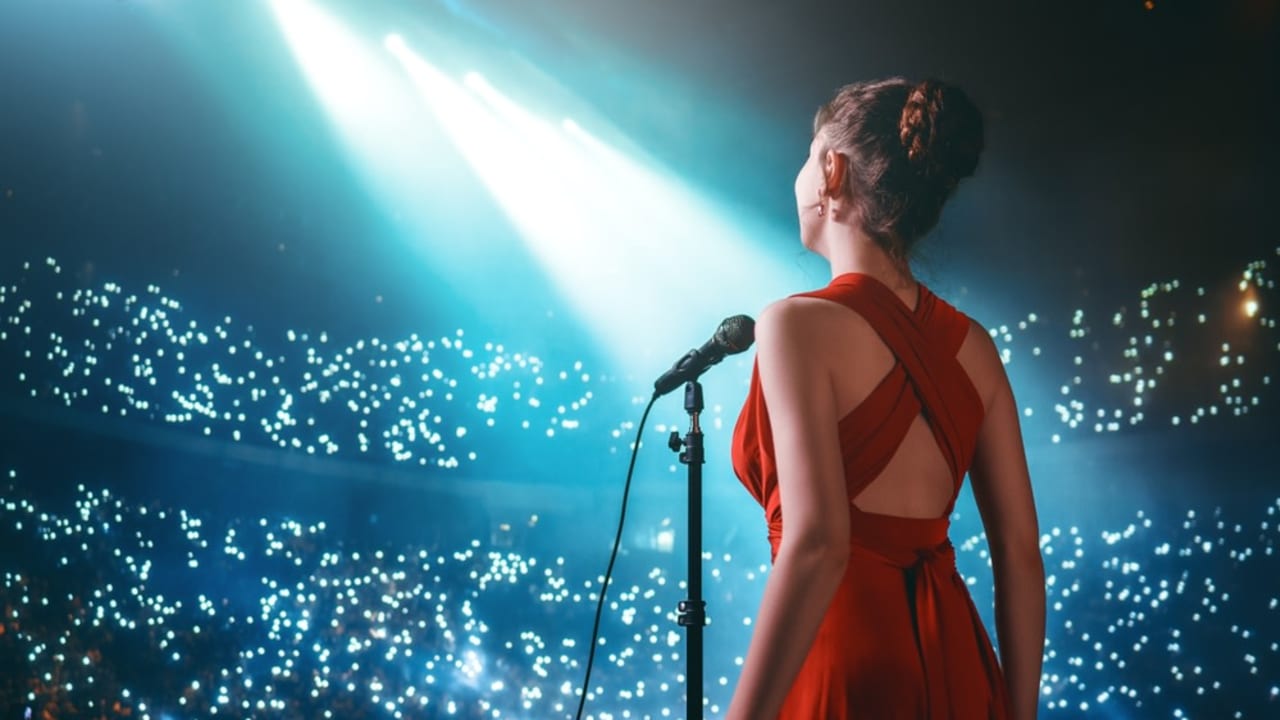
Fame looks fast from the outside, but most of a working entertainer's day is spent waiting. Actors wait for lighting setups, singers wait in airport lounges, and presenters wait in green rooms for a segment that runs late. What fills those gaps is rarely glamorous. Knitting needles, paperbacks, crosswords and a phone full of small games show up far more often than anyone expects, and the reasons are practical rather than quirky.
The waiting is the job
A film or television day is built around the call sheet, the document that tells cast and crew when to arrive, which scenes are scheduled and where to report. An actor called for 6 a.m. might spend two hours in the hair and makeup chair, then sit in a trailer while the crew relights a set for a scene that needs ten minutes of performance. Union rules shape the rhythm too. Under SAG-AFTRA's television agreement, performers in the studio zone are entitled to a 12-hour rest period from dismissal until the first call of the next day, which keeps nights protected but does nothing to shorten the stop-and-start hours in the middle. Israel's screen industry works the same way. Series such as Fauda and Shtisel were made on the same long days of setups, resets and waiting between takes.
Promotional work has its own dead time. A press day can mean twenty short interviews in one hotel suite, with gaps while crews change cameras and publicists swap outlets. Touring musicians face soundchecks in the afternoon, a show at night and a bus or flight to the next city once the encore ends. Layovers, delayed departures and car rides from venue to venue add up quickly, and a schedule that looks packed on paper often contains hours of sitting still. For anyone flying out of Israel, the waiting starts early: Airlines advise passengers departing from Ben Gurion Airport to arrive three hours before an international flight to allow for security checks, and a connection through a regional hub such as Istanbul, Athens or Dubai can add several more hours.
Why small hobbies win
Portability decides almost everything. A good downtime habit has to fit in a carry-on or a coat pocket, survive a security line, and stop instantly when an assistant director knocks on the door. Painting a canvas or restoring a motorcycle does not pass that test. Anything that takes seconds to pick up, can be abandoned mid-step without consequence, and gives the hands or mind something gentle to do will tend to win, which is why the same handful of pastimes keeps turning up in interviews across music, film and sport.
Phones, puzzles and five-minute games
The phone is the obvious tool, and not only for scrolling. A daily word puzzle, a sudoku app, a chess problem or a quick match-three level gives a restless brain a contained task with a clear ending, which is exactly what a fifteen-minute gap needs.
Plenty of people with unpredictable schedules, on sets and off them, keep a few casual titles on the home screen for that reason: A crossword for the morning car, a puzzle game for the makeup chair, a few rounds of casual mobile games such as Splash Coins while a delayed flight sits on the tarmac. The appeal is the format more than any single title. Bright colors, short rounds and an easy pause button suit a day that can be interrupted at any second, and nobody has to explain where they left off.
Needles and yarn, on set and off
Knitting has a surprisingly long Hollywood history, and Ryan Gosling is one of its best-known modern fans. He has said that a group of older women taught him while he was filming the 2007 indie film Lars and the Real Girl, and the Crafts Council noted that he learned on set before naming knitting as his ideal way to spend a day. In a 2013 interview with GQ Australia he described it as one of the most relaxing days of his life and joked that the reward was an oddly shaped scarf.
He is in good company. On the 2011 comedy Larry Crowne, Tom Hanks handed the crew yarn and needles, and Julia Roberts reportedly walked in to find people knitting and purling around the set. Coldplay's Chris Martin has spoken about the band sewing its own clothes in the studio, describing it as a way to control how the group looks.
Athletes do it too. During the Tokyo 2020 Olympics, diver Tom Daley was spotted in the stands with pink and purple yarn during the women's 3m springboard final, and he later shared a cream cardigan he had knitted poolside featuring the Olympic rings and the word Tokyo in Japanese. He even made a small cozy for his gold medal. His crafting now has its own Instagram account, @madewithlovebytomdaley, and he has credited stitching with helping him stay sane through the Games.
Reading, writing and other quiet corners
Books remain the classic trailer companion. A paperback needs no charger, works on any flight and can be closed mid-sentence without losing anything, which makes it ideal for a job built on interruptions. Some performers also keep a notebook nearby for lines, lyrics or simple journaling, since a quiet hour in a dressing room is rare enough to be useful.
Others lean on audiobooks and podcasts during long drives, where screens are a fast route to motion sickness.
Some of the most common habits are barely hobbies at all. Card games with the crew, a deck of trivia questions passed around a green room, or a jigsaw puzzle left half finished on a production office table give people a reason to talk to each other during long days. On a long shoot, a shared puzzle is a small piece of normal life.
None of it looks impressive on a red carpet.
That is the point. The habits that survive a touring schedule are the ones that ask for nothing: No special equipment, no fixed start time and no audience. They work equally well in a hotel room in Berlin, a holding area in Atlanta or a trailer parked near a Tel Aviv beach, and they give a person who spends much of the year performing a few minutes that belong only to them.
The carry-on kit behind the red carpet
Strip away the stylists and security, and the typical downtime kit of a busy star looks a lot like anyone else's: A phone loaded with puzzles and casual games, a book or two, headphones, and sometimes a ball of yarn with a half-finished project attached. Those ordinary tools fill the gaps that every demanding schedule creates, whether the gap is a delayed flight, a lighting change or a press junket running an hour behind.
The lesson travels well beyond Hollywood. Anyone who spends long stretches waiting, whether in Ben Gurion's departure hall, a Jerusalem hospital waiting room or an office in Dubai, can borrow the same approach and pick a pastime that fits in a pocket, pauses without fuss and gives the mind something kind to do.
This article was written in cooperation with GSD Media