
While the weather has turned back to winter, the calendar says it’s spring. Another sure sign? Baseball is back and it’s "Opening Day." For all of you baseball fans out there nothing compares to Opening Day. It means a new season where, for a day or two, everyone has an equal chance of winning the World Series. Optimism reigns supreme. Here in Israel with all that we have gone through these last 30 months, we sure could use a healthy dose of optimism. In fact, I write this column waiting for a siren as I just got a warning that Iranian missiles are on the way!
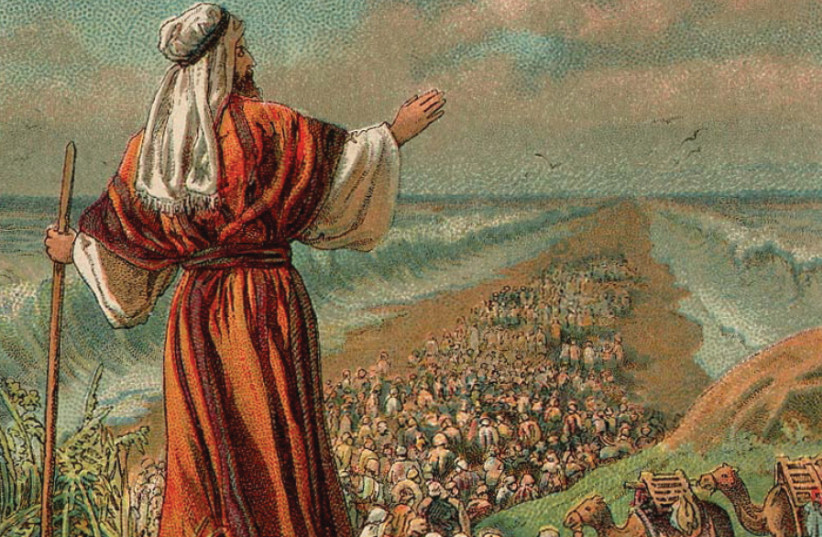
In less than a week we will gather for the Pesach Seder. We will drink 4 cups of wine and then enjoy the aftereffects of eating more matzah than planned. Oh, and we will once again tell the story of the exodus from Egypt. In the 11th chapter of the Book of Exodus we read how the Lord tells Moshe of the upcoming plague of the firstborn and the command that the Jewish people ask their Egyptian neighbors for their jewelry and clothing. In the very next chapter, we read how the children of Israel, indeed left Egypt with great wealth.
As I have mentioned previously, Rabbi Yaakov Beasley asks, “The thrice-fold repetition of the act of taking wealth from the Egyptians should cause the reader to wonder – why was this necessary? Clearly, if even the Torah wanted to mention that the Jews were showered with gifts from their neighbors, it could have done so in passing, without placing it in the textual spotlight. In addition, the ethical question of borrowing items from others without any intention of returning them bothered many commentators. What does this story add to our understanding of the Exodus from Egypt?”
The Chizkuni answers that, “As they were leaving, they asked their neighbors and boarders to take their homes and property in exchange for silver and gold articles of equal value, which would be more portable. In doing so, they fulfilled the verse, "And you will save (your property from) the Egyptians." The word "save" means that the Jewish People leaving Egypt would be able to save their property in this way, and in the verse, "And G-d saved the flock of your father" (Bereishit 31:9). (Commentary to 12:35)
Rabbi Beasley adds, “The acquisition of Egyptian gold and silver was therefore simply a mutual exchange of possessions, and no ethical questions arise.”
He continues, “Another approach is brought from the Talmud (Sanhedrin 91b). According to the Midrash, the Egyptians took the Jewish People to court in the time of Alexander the Great and sued them for the gold and silver that they "borrowed" from them during the Exodus and never returned. An outsider named Gaviah ben Pasisa volunteered to serve as the defense attorney for the Jewish People. He responded in front of the Greek monarch, "From where do you bring proof that we took the money?" They responded, "From the Torah." He countered, "Then I will bring proof from the Torah, where it states that the Jewish people dwelled in Egypt for 430 years. Please give us the wages of 600,000 workers for that time period, and we shall return the gold which we took." The account concludes with the Egyptians requesting a three-day recess, and not returning to the court thereafter.”
The connection between Opening Day and the Exodus isn’t baseball or even history. It’s optimism.
When the Israelites left Egypt, they carried more than gold and silver. They carried a new financial reality. After generations of limitations, they stepped into a future where growth was possible. That shift, from scarcity to opportunity, is the foundation of financial optimism.
And that’s where many investors get it wrong.
Financial optimism isn't blind faith
Financial optimism isn’t blind faith. It’s not ignoring risk or pretending markets only go up. Rather, it’s the disciplined belief that, over time, growth wins. Just like Opening Day doesn’t guarantee a championship, a single year in the market doesn’t define your financial future. But showing up, year after year, with a plan, does.
Too often, investors are stuck in “Egypt.” They’re anchored by fear, past losses, or headlines that scream uncertainty. They hoard cash, hesitate to invest, or jump in and out of markets based on emotion. That’s not a strategy. True financial optimism is built on evidence. Historically, markets have rewarded patience. Economies grow. Innovation continues. Companies adapt. The long-term trend has been upward, despite wars, recessions, and crises. Optimism, in this sense, is rational.
But it also requires action.
Just as the Israelites had to actually leave Egypt, investors must step forward, invest consistently, diversify wisely, and stay committed. Optimism without action is just wishful thinking.
Opening Day reminds us that every season begins with belief. The Exodus reminds us that transformation is possible, even after long periods of hardship. Put them together, and the message is clear:
Your financial future isn’t defined by where you’ve been. It’s defined by your willingness to move forward, with discipline, perspective, and yes, a healthy dose of optimism.
Chag Kasher v’Sameach!.
The information contained in this article reflects the opinion of the author and not necessarily the opinion of Portfolio Resources Group, Inc. or its affiliates.
Aaron Katsman is author of the book Retirement GPS: How to Navigate Your Way to A Secure Financial Future with Global Investing (McGraw-Hill), and is a licensed financial professional both in the United States and Israel, and helps people who open investment accounts in the United States. Securities are offered through Portfolio Resources Group, Inc. (www.prginc.net). Member FINRA, SIPC, MSRB, FSI. For more information, call (02) 624-0995 visit www.aaronkatsman.com or email aaron@lighthousecapital.co.il.