
Egypt’s government has deepened cuts to natural gas supplies for fertilizer producers, increasing the reduction from 20% to 33% on November 8 as it struggles with the rising cost of imported liquefied natural gas (LNG). Cairo is looking to Cyprus for additional pipeline supplies, but the projects’ schedules and export commitments suggest that Israeli gas will remain essential to the Egyptian economy for years.
For more stories from The Media Line go to themedialine.org
Misr Fertilizers Production Co. (MOPCO) disclosed the latest cut to the Egyptian Exchange on Sunday. Abu Qir Fertilizers said Monday that it was redistributing gas between production units to keep two of its three plants running at full capacity.
The restrictions threaten an important source of export earnings. Egypt’s chemical and fertilizer exports rose 34% in the first nine months of 2026 to about $9.54 billion. For a country of more than 109 million people and one of the world’s largest wheat importers, the shortage also raises concerns about food security. Natural gas is essential to fertilizer production and electricity generation.
Egypt’s domestic gas production fell almost 30% between 2021 and 2024, largely because output from the giant Zohr field declined, according to the US Energy Information Administration. The country became a net LNG importer in 2024, reversing its earlier ambitions to become a major regional gas exporter.
The financial burden has grown since the United States and Israel attacked Iran on February 28. Egyptian trade figures reported by Al-Ahram put LNG imports at approximately $2.3 billion in the first quarter of 2026, compared with nearly $2 billion a year earlier. In March, Prime Minister Mostafa Madbouly said the monthly cost of purchasing comparable volumes of imported natural gas had nearly tripled, from about $560 million to $1.65 billion, as global prices surged.
“If our domestic production keeps falling, most of the new imports could go toward making up for that decline, leaving our reliance on Israel largely intact,” Mohamed Fouad, an economist who heads the Justice Party’s bloc in Egypt’s House of Representatives, told The Media Line.
Fouad filed a formal parliamentary question to Egypt’s petroleum minister in January about the country’s gas crisis.
From exporter to importer, how Egypt became dependent on Israeli gas
Israel has become one of Egypt’s most important external gas suppliers. The two countries began trading gas in the opposite direction in 2008, when Egypt exported supplies to Israel through an undersea pipeline between El Arish and Ashkelon. The flow reversed in January 2020 as Israeli offshore production expanded and Egypt’s own output declined.
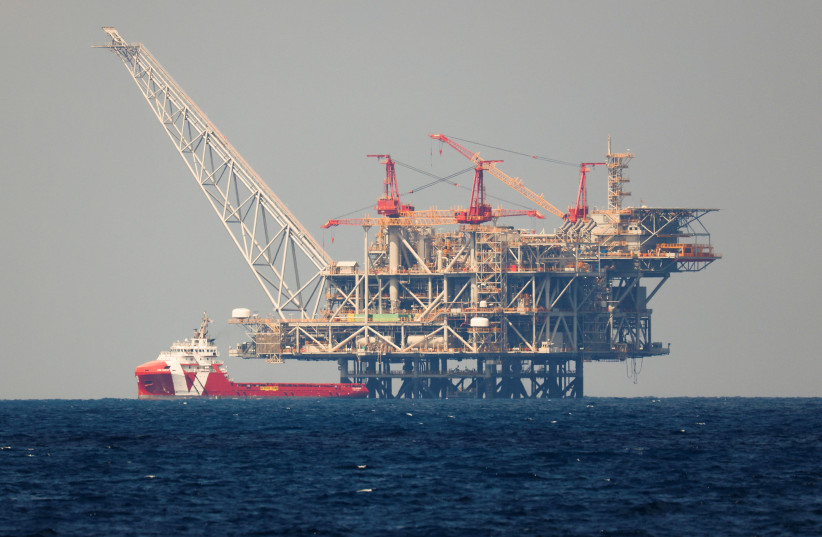
Today, much of Egypt’s imported pipeline gas comes from Israel’s Leviathan field, operated by the American energy company Chevron. In August 2025, the field’s partners signed a $35 billion agreement to supply Egypt through 2040, the largest gas export deal in Israel’s history.
The Israeli government delayed final approval until December 2025. Israeli Energy Minister Eli Cohen cited the need to protect domestic supplies and secure favorable prices for Israeli consumers.
Relations between Israel and Egypt have deteriorated since the Gaza war began in October 2023, according to Gina Cohen, an Israeli natural gas consultant interviewed by The Media Line. She attributed much of the deterioration to increasingly negative Egyptian public sentiment toward Israel.
Despite those tensions, she said, the gas trade gives both countries a powerful reason to maintain their economic relationship.
“It helps, because Israel is getting money and Egypt is getting gas,” she said.
That relationship also creates vulnerabilities. When the war with Iran began on February 28, Israeli authorities ordered Leviathan shut down for security reasons. Production stopped for 33 days, and Egypt’s imports of Israeli gas fell more than 80% in March to a record low, according to the Arabic-language energy platform Attaqa.
“The war showed that the price of gas tells only part of the story,” Fouad said. “When Israeli supplies stopped, we had to look for alternatives in a market where prices were rising, and competition for cargoes was fierce.”
Nevertheless, Egypt is preparing to increase its purchases from Israel. Al Arabiya Business reported in October that Cairo planned to raise imports by about 25% in November, to approximately 1.25 billion cubic feet a day. At that level, Israeli gas would cover roughly 17% of Egypt’s daily consumption, compared with about 13.8% previously.
The longer-term supply relationship is also expanding. In January, Chevron and its Leviathan partners approved a $2.36 billion expansion expected to increase production beginning in 2029. The second phase of the Egyptian export agreement, covering about 110 billion cubic meters, depends on that expansion and the construction of an additional pipeline through Nitzana, according to Israeli gas producer NewMed Energy.
Cyprus Offers Two Different Prospects
Cyprus could eventually provide Egypt with another significant gas source, but its two leading export projects serve different purposes.
The Cronos field, being developed by Italy’s Eni and France’s TotalEnergies, is expected to begin production in the first half of 2028. The partners approved the project in July and signed major construction and drilling contracts on October 26.
At peak capacity, Cronos could produce about 500 million cubic feet a day. Its gas will travel through Egypt’s Zohr processing facilities before being liquefied at Damietta, primarily for export to Europe.
Charles Ellinas, a Cypriot energy expert and former head of the Cyprus National Hydrocarbons Company, estimated that about 80% of Cronos production would leave Egypt as LNG, with only 20% remaining for domestic consumption. Gina Cohen gave the same estimate.
That would leave Egypt with approximately 100 million cubic feet a day at peak output, equivalent to less than 3% of its current domestic production.
Aphrodite, Cyprus’ other major project, is intended primarily to supply the Egyptian market rather than European buyers.
Discovered in 2011 by Noble Energy, which Chevron later acquired, Aphrodite holds an estimated 3.5 trillion cubic feet of gas. Fouad said it could eventually deliver about 700 million cubic feet a day.
Chevron operates the undeveloped field and holds a 35% stake. Shell owns another 35%, while Israel’s NewMed Energy holds the remaining 30%.
Egypt’s state gas company reached a preliminary agreement in April to purchase Aphrodite’s output, but a binding sales contract has yet to be concluded, according to the Cypriot newspaper Politis. Chevron and its partners have also not taken the final investment decision required to proceed with full development.
“The earliest timeline is 2031,” Cohen told The Media Line.
Egyptian Petroleum Minister Karim Badawi has repeatedly pressed Chevron to accelerate the project. Speaking in Athens on October 7, he said Egypt was “completing the arrangements needed to reach a final investment decision on the Aphrodite field.”
Israel-Cyprus maritime dispute delays Aphrodite gas development
Two major disputes remain unresolved.
The first concerns a gas reservoir that crosses the maritime boundary between Cyprus and Israel. About 90% of the Aphrodite reservoir lies in Cypriot waters, but part extends into Israel’s Ishai block, requiring an agreement over how the two sides will share its economic benefits.
Cyprus and Israel have missed several deadlines for settling the issue. In September, Cypriot Energy Minister Michalis Damianos said the governments hoped to conclude negotiations before the end of October. No agreement had been announced as of November 10.
Ellinas said Chevron has indicated it wants the cross-border reservoir dispute resolved before committing to the project. Cohen attributed the prolonged negotiations partly to disagreements over compensation demanded by the Israeli companies holding rights to the Ishai block.
Cyprus’ government has offered a more optimistic assessment. In an August interview with the energy publication MEES, Damianos described the negotiations with Israel as advanced and constructive. He maintained that the bilateral dispute was being handled separately from Aphrodite’s development and should not delay the final investment decision.
The second obstacle is a disagreement over the cost of transporting Aphrodite gas to Egypt.
According to MEES, the Aphrodite partners want to charge about $3 per million British thermal units (MMBtu) to use the Egyptian section of the proposed pipeline, compared with about $1 per MMBtu under the original plan.
Ellinas called the proposed increase exorbitant. He said Egypt was unlikely to accept a higher purchase price, leaving Cyprus to absorb much of the additional cost through reduced earnings. The Cypriot government has asked Chevron to reconsider the proposed tariff, he said.
“If Chevron comes back and says no, Cyprus cannot do much. Either it accepts or the project is delayed,” Ellinas said.
Chevron told MEES in October that Aphrodite development was making “steady progress,” with engineering and commercial negotiations continuing. The company declined to discuss specific commercial terms.
Ellinas said Chevron has limited commercial incentive to accelerate Aphrodite, especially while it expands Leviathan at a lower development cost per unit of gas.