
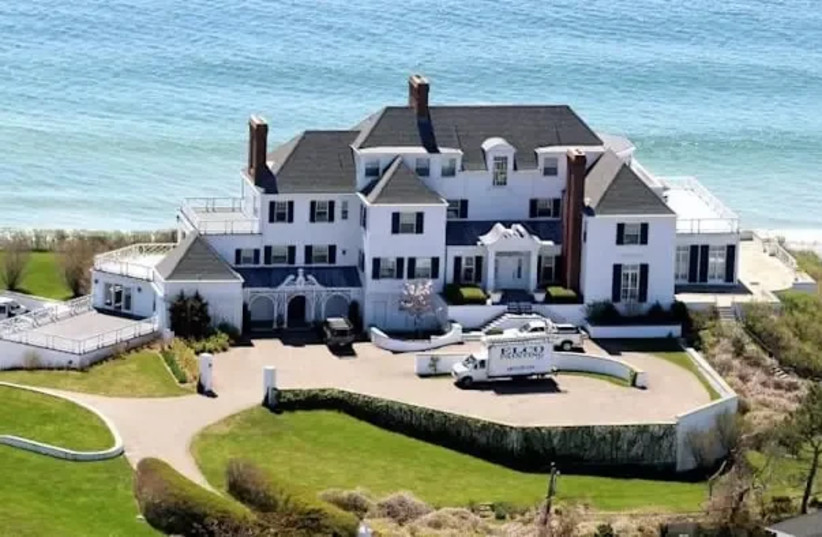
Rhode Island's new tax system on secondary residences received the pompous nickname "Taylor Swift tax", after the state's most famous non-resident. Yet behind the glamorous name lies a complex reality: The new levy is expected to burden not only billionaires, but also the owners of far more modest beach houses, which are far from reminiscent of the superstar's luxury mansion Holiday House.
The annual property tax regulation, which took effect yesterday, stipulates that the state will levy $5 for every $1,000 of the assessed property value of a vacation home, above the $1 million threshold. Rhode Island lawmakers approved the move last year, targeting non-residents in upscale coastal enclaves such as Newport and Little Compton, with the stated goal of raising revenue to build affordable housing.
For Swift herself, whose mansion in Watch Hill spans approximately 1,180 square meters and is currently valued at $28 million, this means an additional $136,000 on her tax bill.
That same 20-dunam waterfront estate, which Swift sang about on her 2020 album and which served to host massive parties attended by celebrities like Blake Lively and Selena Gomez, is making headlines once again. This comes alongside reports in media outlets, including The New York Times, that Swift and her fiancé, Kansas City Chiefs player Travis Kelce, are planning a star-studded event at Madison Square Garden later this week, rather than a wedding in Rhode Island as many had assumed.
Yet the loudest protests against the tax do not come from Swift, but rather from ordinary residents who hold family vacation properties passed down from generation to generation. While these homes are often small, their assessed value has skyrocketed due to the expensive coastal land value. Notices were recently sent to more than 8,000 property owners who may be subject to the law, and some are expected to see a surge of 50% or more in their property tax bills.
Ed Burke, an 83-year-old Boston resident who shares a roughly 176-square-meter cottage in Middletown with his brother's family, testifies that the situation could push them to a point of no return where they will be forced to sell the century-old property. Burke estimates that his family's property taxes will jump to approximately $34,000 a year, an increase of over 50% resulting from a combination of the "Swift tax" and a local rate that Middletown implemented in 2022. He fears he will be charged an additional $6,500, even though at least one family member resides in the house for most of the year. Local real estate agents confirm that for middle-class people who own a second home, this is a dramatic change.
Meanwhile, the legal system is gearing up for a battle. The law firm Hinckley Allen & Snyder is expected to file a constitutional lawsuit on behalf of the homeowners early this month. Rebecca Holt Payne, whose extended family owns a three-room cottage in Watch Hill purchased in the 1930s, is considering joining the effort. She explains that although homes rented out for most of the year are exempt from the tax, the family cottage cannot practically be rented for a significant part of the year due to a lack of heating and insulation systems. Now, based on a valuation of $6.4 million for half a dunam on the beach, the family will be forced to pay a "Swift tax" of approximately $27,000 a year, which creates an unfair "one-size-fits-all" approach.
On the political stage, the move signals a broader trend. Democratic leaders are embracing "tax the rich" policies as a response to voters' concerns over the cost of living and inequality. Rhode Island joined states like Massachusetts and Maine when it enacted a "millionaires tax" in June, while in California they will vote in November on a net worth tax. In New York as well, Mayor Zohran Mamdani passed a tax on secondary residences that took effect this week, after leading a high-profile public battle against Citadel founder Ken Griffin and his $238 million Manhattan penthouse.
Proponents of the tax in Rhode Island, including State Senator Meghan Kallman who sponsored the law, argue that the levy is necessary to offset federal cuts to programs like Medicaid and to fund a housing tax credit fund for low-income earners. This comes in a state where the median price of a single-family home has nearly doubled since 2019 to $493,500, and a third of households spend over a third of their income on housing. According to Kallman, if someone manages to own a second home affected by the policy, their financial situation allows them to bear it.
Nevertheless, the dry economic data shows that, at least for now, deep-pocketed buyers are continuing as usual. Sale prices of luxury homes in the Providence area rose by 6.3% year-over-year to $1.7 million in the three months ending in May – a surge higher than the national average, which stems largely from a limited supply of properties.
Despite this, there are initial signs of a slowdown on the ground: Huberman notes that a potential buyer from Texas has already canceled a search for a home valued at $10 to $20 million following the approval of the law. Furthermore, the immediate return to the state remains limited. Authorities expect the tax to yield $24.5 million in the coming fiscal year – a tiny fraction of a total state budget of $15.2 billion, while due to the complexity of the phrasing, it is estimated that high rates of non-compliance with the new law will initially be recorded.