
A few weeks ago, I, yes, by myself, took our two youngest children to Montenegro for four days. If you don’t know where it is, don’t worry. Most people I asked before the trip had heard of it but couldn’t find it on a map. It’s on the Adriatic Sea, as if that helps, across the sea from Italy. Montenegro is part of the former Yugoslavia.
While I was only there for four days as a tourist, it was pretty easy to see that the locals were not part of the “rat race.” Things were very laid back. It felt like no one worked. Keep in mind that Montenegro’s average salary is less than NIS 3,700 a month.
They actually have a concept called “Fjaka” where urgency vanishes, you lose track of time, and you feel entirely fulfilled doing absolutely nothing. Sounds like a recipe for success! I know many of you will say that this is a great philosophy, and that in the West we put too much emphasis on financial success and that we need to do better with work/life balance issues.
Well, that may be true, but ingenuity and creativity and striving to create and build are traits that help modern society. Being “fulfilled doing absolutely nothing” seems to me like more of a selfish approach, especially when you see that their birth rate is below the replacement level.
The country has a Total Fertility Rate of roughly 1.7 to 1.8 births per woman, which falls well short of the 2.1 children per woman needed to replace the population. This explains why even with an influx of refugees from Russia and Ukraine as a result of their war, the population has decreased over the last decade.
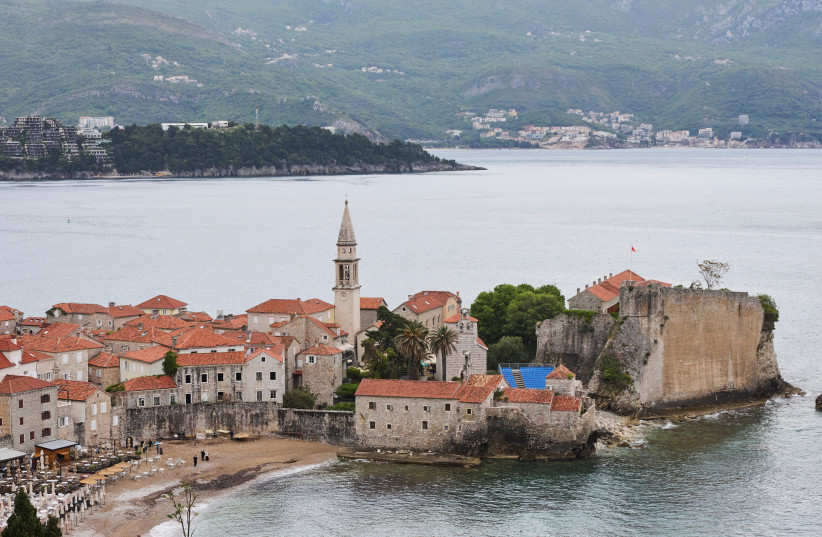
All that being said, it’s a beautiful country, and aside from one small antisemitic incident where my son and I were cursed at, we had a great time. It’s a great place to vacation.
The difference between fear and remembrance
We have started reading the 5th book of the Torah, Devarim. This book deals with getting ready to enter the land of Israel. Rabbi Elchanan Samet wrote, “Corresponding to the warning about forgetting God, both parashot contain a contrasting positive mitzvah: in parashat Va-etchanan (6:13) we are told, “You shall fear Hashem your God,” while in parashat Ekev (8:18) Moshe commands, “You shall remember Hashem your God.”
Samet continued, “It is not difficult to discern the basic general difference between the two parashot under discussion, a difference which in turn gives rise to all the more detailed differences: these two parashot describe two different stages in the encounter between Am Yisrael and their promised land.
“In parashat Va-etchanan we find a description of the initial encounter with the land, immediately following the conquest, when Israel inherits and possesses all the material assets that have been created in the land by the nations that had dwelled there until the conquest. Parashat Ekev, on the other hand, describes the encounter with the good land itself, with the natural qualities that provide the basis for successful agriculture (the growth of the seven species), building and economic growth, which come in the wake of conscientious hard work on the part of Bnei Yisrael who put the good of the land to good use.
“Although both parashot describe material abundance and the plentiful blessings that await the nation in their land, they are different types of abundance, from different sources, and given to Israel at different stages in the process of their settlement in the land. As a result, the danger of religious corruption that this abundance may cause, as warned by the Torah, is also different in each case, as is the prescribed precautionary commandment.”
It would seem that the worry in the week’s portion of Va-etchanan is that through the inheriting of the materialism left by past nations, there is a fear that they will also ‘inherit’ the religious culture of Canaan. In next week’s portion of Ekev, the worry is that through their hard work of the land they will think that they themselves created all their wealth and success and, in turn, will lose sight of the One who really provided the success, the Lord.
I have a client who is very wealthy. He had an exit over the last few years, and whenever I speak to him, he mentions how fortunate he is to have been blessed with all that he has. He worked like a dog for 15-20 years to build his company but never lost track of the fact that while he couldn’t sit back idly and hope his company would grow, he also understood that his hard work would pay off only if he merited it. He would point to many who were smarter, worked harder, but didn’t find the same level of success.
When it comes to building wealth, we need to do our share, and the rest will hopefully be taken care of. But you can’t just sit back, spend money you don’t have, live for today, neglect the future, and expect to be financially secure and independent.
Follow the process of living within your means, saving and investing, and being good stewards with whatever money you have merited, and you can achieve financial independence.
The information contained in this article reflects the opinion of the author and not necessarily the opinion of Portfolio Resources Group, Inc. or its affiliates.
Aaron Katsman is author of the book Retirement GPS: How to Navigate Your Way to A Secure Financial Future with Global Investing (McGraw-Hill), and is a licensed financial professional both in the United States and Israel, and helps people who open investment accounts in the United States. Securities are offered through Portfolio Resources Group, Inc. (www.prginc.net). Member FINRA, SIPC, MSRB, FSI. For more information, call (02) 624-0995, visit www.aaronkatsman.com, or email
aaron@lighthousecapital.co.il.