
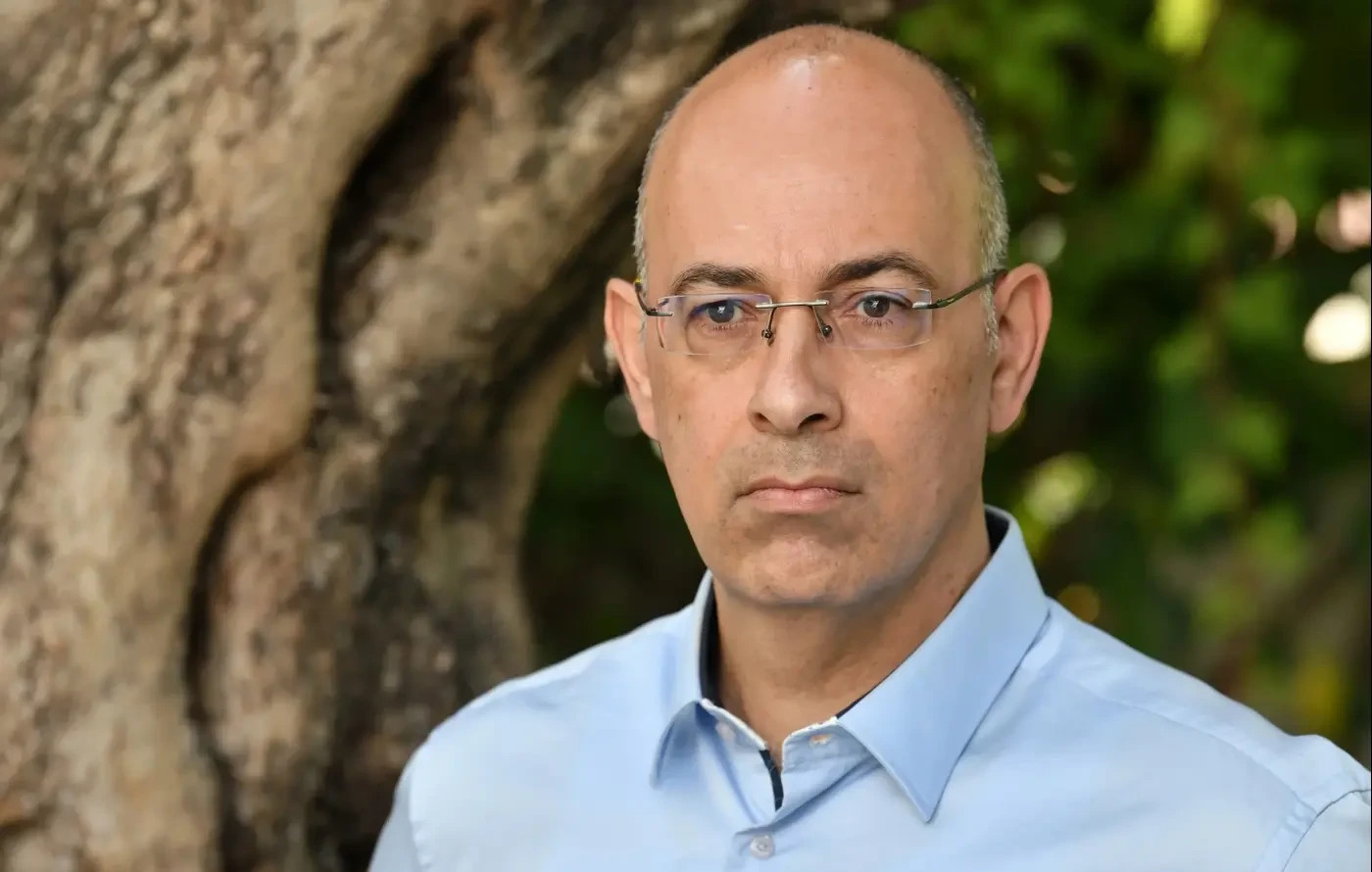
"A bookkeeper who works like a machine will be replaced by a machine. Within about two years, artificial intelligence agents will perform 90% of the work. And no, this is not a prophecy of doom – anyone who does not upgrade her skills, from a data entry typist to a supervisor of the machine that generates them, will simply be pushed out of the industry," – says CPA Yoram Shiffer, one of the pioneers of digital solutions in the Israeli accounting world and the founder of invoice4u – the first digital invoicing company established in Israel 21 years ago.
All the experts with whom we spoke agree that artificial intelligence is fundamentally changing and redefining the field: "It's true. Both the bookkeeping field and the auditing field will undergo significant streamlining," notes Prof. Yaron Zelekha, former accountant-general at the Finance Ministry, who serves as president of the Higher Academic Council and head of the School of Accounting, Economics and Financial Management at the Ono Academic College. According to him: "Other, more complex areas of accounting firms, including strategic planning, financial analyses, taxes, business planning and the like, will receive a significant upgrade that will allow them to reach more clients."
Around 80,000 bookkeepers currently operate in Israel, but the market is experiencing an acute shortage of manpower, which is particularly evident in representing firms. The direct result of this gap is a continuous rise in the salaries paid in the sector. Conversations with accounting firms reveal that a high-quality bookkeeper, who is proficient in handling limited companies, currently demands and receives a salary of NIS 15,000. "They start at NIS 40 per hour, and after about five years of experience, their salary easily jumps to NIS 12,000 net," describes a senior figure in the accounting sector. According to him, the compensation is also accompanied by flexible employment conditions: "Their working hours are very comfortable, and many of them finish at three in the afternoon."
Haim Molcho, CEO of Oketz Systems, which provides technological solutions for payroll, attendance, and pension management, reinforces these statements: "A high-quality bookkeeper, who has also been trained as a payroll comptroller and is skilled in handling this aspect, is a real asset. Firms recognize this and are willing to pay handsome amounts for her professionalism, and we see a distinct increase in the wages paid to them."
The bookkeeping sector is actually divided into two: A bookkeeper who handles authorized dealers in 'single-entry' is mainly engaged in receiving documents, classifying expenses, VAT reports, and advance payments. A bookkeeper in 'double-entry' is required for journal entries, bank and card reconciliations, understanding balance sheet items, and preparing the infrastructure for financial statements. This is a real skill gap.
And so, on the one hand, there is a crazy shortage that leads to a dramatic increase in the salaries paid to bookkeepers who are proficient in double-entry, but the picture is expected to change – the demand for single-entry bookkeepers who work like a machine will plunge dramatically because of artificial intelligence, which already today performs a significant part of their work. Anyone who does not acquire knowledge in double-entry accounting, as well as in implementing an orderly human audit methodology on the machine's outputs – will become less attractive.
Today, there are software programs on the market, such as AccountBox, which dramatically shorten the working time of bookkeepers and automatically perform a significant portion of the tasks. For example, until about a year ago, bookkeepers were required to collect documents at the end of the month, type each invoice manually, and classify it – Sisyphean work prone to errors, which created a heavy burden ahead of the reporting deadline to the authorities. Today, clients transfer documents continuously via email, WhatsApp, or an app. Recognition technology extracts the data from the photograph, and the system learns the classification patterns on its own.
The change is also noticeable in bank reconciliations. In the past, journal entries were recorded manually, and the comparison against bank statements was performed line by line, a long process in which any typing error required a new search. Today, a connection to open banking streams transactions directly into the reconciliations, while receiving immediate alerts about discrepancies instead of a manual check. The result is that a process that previously consumed an entire workday is now reduced to a brief check of the exceptions flagged by the system.
"This is not just another feature, not even a step up. This is a revolution that changes the profession from its foundations," explains CPA Shiffer. "Until recently, to ensure there were no errors in the books, the bookkeeper went through all the accounts manually and looked by eye for what did not add up. From now on, the check is continuous and automatic. The system identifies exceptions: An invoice that was entered twice, a supplier who has not yet been paid, a customer who paid and the payment was not registered in their name. A fixed expense that suddenly jumped from NIS 1,000 to NIS 5,000 generates an immediate alert. In the past, these anomalies only surfaced after months, during the audit. Today, the auditing of the books is done in real time."
The technological revolution solved the problem of manual labor, but it created a new demand: Professionals who know how to judge what the machine produces. And here, according to CPA Shiffer, lies the weakest link: "The professional training market is missing the revolution. Some of the classic bookkeeping tracks provide solid financial foundations, but do not provide solutions in terms of AI: Data analysis and anomaly identification. On the other side, the new automation courses mainly teach technique, how to operate the systems, and do not provide tools to judge if the product the software spat out makes sense from a business and accounting perspective. Educational institutions must pick up the gauntlet and provide students with an orderly methodology of human control over the machine's outputs. The market today requires a combination of deep financial understanding and the ability to audit data and take professional responsibility for what the algorithm produced."
Until educational institutions adapt themselves, the vacuum is being filled by the technology companies themselves. The AccountBox system from Invoice4u conducts dedicated training for bookkeepers, preparing them to work with the new generation of autonomous software.