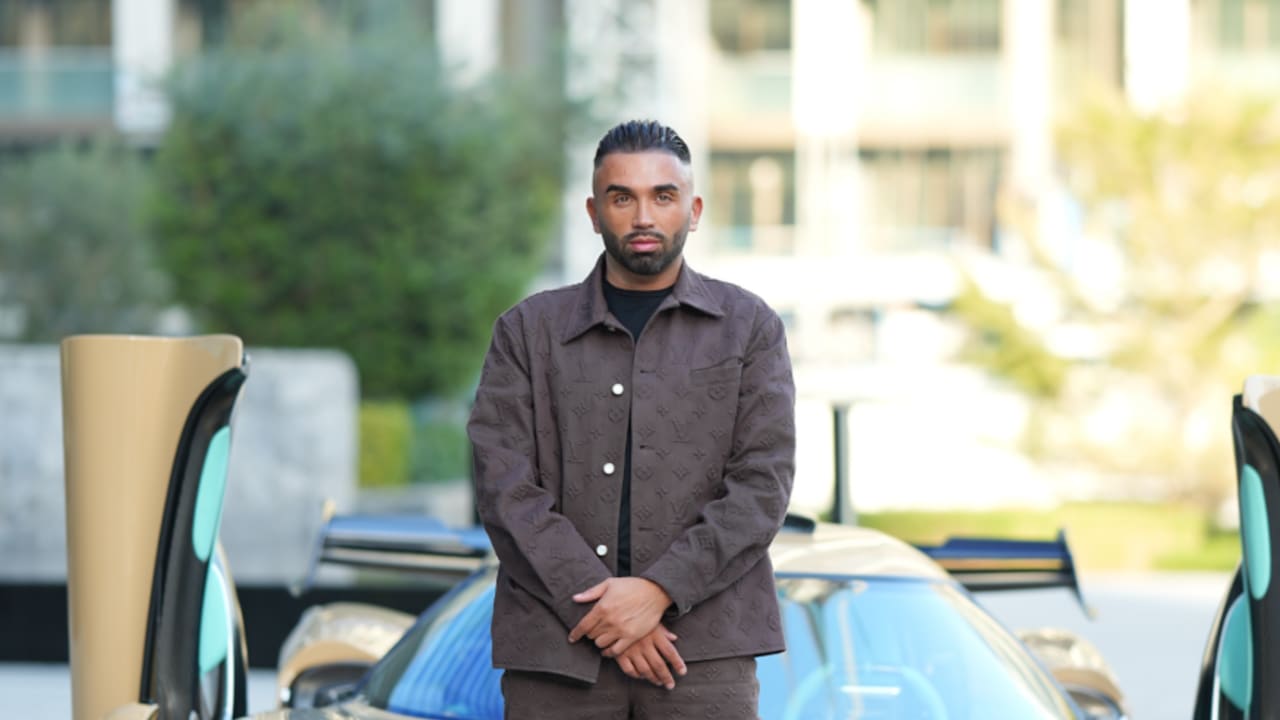
Owning a company entirely is common when the company is small. A founder starts a business, retains full equity, and makes every decision without consultation. The arrangement is natural at that stage. What is uncommon, rare, even, is maintaining complete ownership as a company scales to billions in revenue. The pressures to dilute are immense. The conventions of growth assume it. Gurhan Kiziloz ignored those pressures. Nexus International generated $1.2 billion in revenue in 2025, and he owns every share.
The implications of this structure extend far beyond wealth concentration. Complete ownership means complete authority. There is no board of directors whose approval Kiziloz must seek before making strategic decisions. There are no institutional investors whose preferences must be weighed against operational logic. There are no quarterly earnings calls requiring management to justify performance to external stakeholders. The company answers to its founder because its founder is its only shareholder.
This authority translates into speed. Decisions at Nexus move at the pace Kiziloz sets, not at the pace governance structures permit. When an opportunity emerges, evaluation and action can occur in hours rather than weeks. When market conditions shift, adaptation follows immediately. The bureaucratic friction that accumulates in companies with distributed ownership does not exist. The path from decision to execution is direct because no one stands between Kiziloz and implementation.
The trade-off is concentration of responsibility. When there are no outside shareholders, there is no one to share blame when things go wrong. Every misstep belongs to the founder. Every strategic error reflects his judgment alone. The same authority that enables speed also eliminates the cushion that shared governance provides. Kiziloz accepted this trade-off deliberately. He has spoken about preferring accountability to consensus, about valuing clarity over the diffusion of responsibility that comes with external investors.
The financial arithmetic of complete ownership is straightforward but striking. When a company generates $1.2 billion in revenue and its founder holds one hundred percent of the equity, the valuation flows entirely to one person. Kiziloz's net worth of $1.7 billion reflects this concentration. Founders who raise venture capital typically own fractions of their companies by the time significant scale is reached, ten percent, fifteen percent, sometimes less. The wealth that accrues to them represents their diminished share of the total value created. Kiziloz kept everything.
This outcome was not inevitable. It required funding growth from internal resources rather than external capital. It required operational discipline sufficient to generate the margins that funded expansion. It required resisting the fundraising path even when that path would have accelerated growth. Each year of self-funded progress was a year where dilution could have occurred and did not. The complete ownership Kiziloz maintains today is the accumulated result of those choices.
The structure also shapes culture. Companies with outside investors often develop internal dynamics oriented around stakeholder management. Executives learn to present information in ways that satisfy boards. Strategy incorporates considerations beyond pure operational logic. The organisation develops reflexes shaped by the need to maintain external confidence. Nexus operates differently. The culture reflects Kiziloz's priorities directly because there are no competing priorities to accommodate. What he values, the organisation values. What he expects, the organisation delivers.
Spartans.com and Megaposta, the platforms within Nexus, were built under this structure. The decisions that shaped them, how to compete, where to invest, what to prioritise, were made without external input. The products reflect one vision executed consistently rather than a compromise among competing stakeholders. Users experience platforms built with unity of purpose because the organisation behind them operates with that same unity.
The rarity of this arrangement at Nexus's scale makes it notable. Companies generating over a billion dollars in revenue typically have complex ownership structures, multiple investor classes, and governance frameworks designed to balance competing interests. Kiziloz has none of this. The simplicity of his ownership structure mirrors the simplicity he has imposed on the company's operations. Both are deliberate. Both are unusual. Both have produced results.
Complete ownership at scale is not a path available to every founder. It requires resources, discipline, and circumstances that do not always align. For Gurhan Kiziloz, they aligned perfectly.
This article was written in cooperation with Nexus International