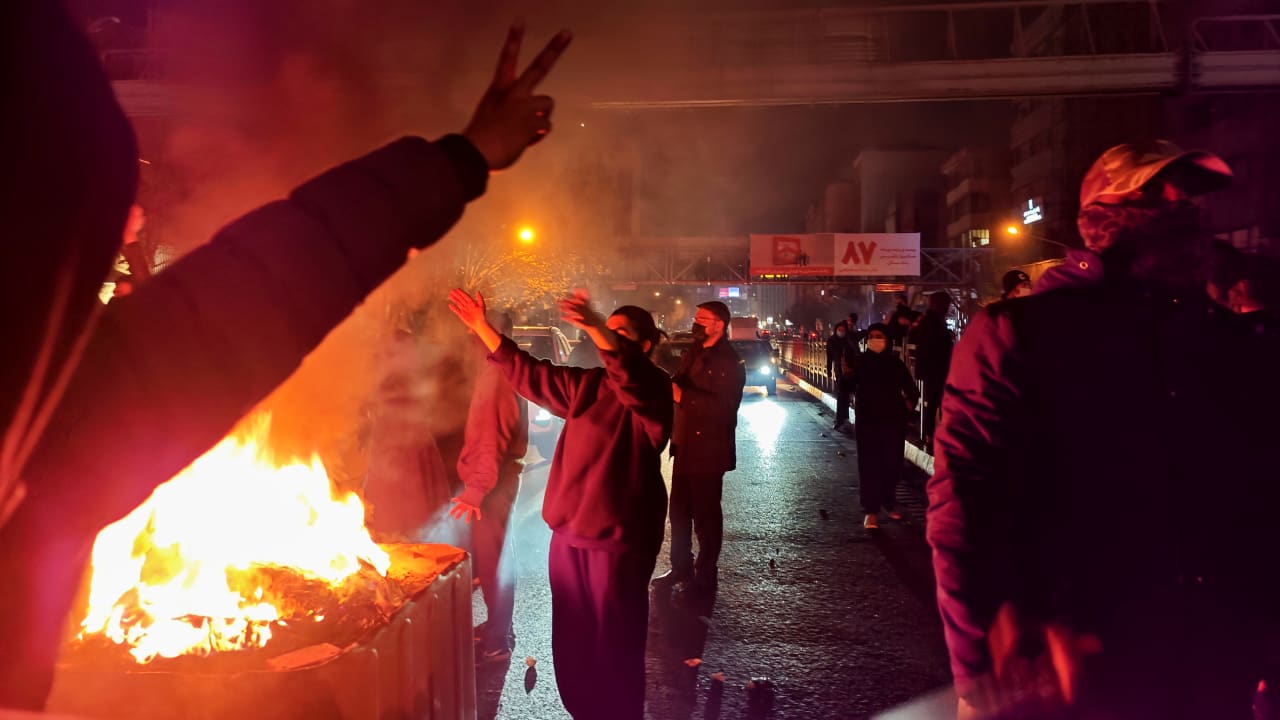
As protests in Iran are entering their fourth week, nationwide unrest is exerting political strain and societal pressure on the Islamic Republic. The nation’s current escalation reflects a level of sustained mobilization comparable to Iranian demonstrations that erupted in 2022 following the death of Mahsa Amini.
While the outcome of these developments remains uncertain, ongoing unrest in Iran is more likely to impact Central Asia’s existing energy, transit, and security dynamics, rather than alter the broader regional landscape. This moment nonetheless offers the United States and its partners a strategic opportunity to advance long-term objectives in Central Asia while supporting regional resilience at a time when geopolitical alignments are rapidly shifting.
Combined with ongoing disruptions caused by Russia’s War in Ukraine, the recent protests in Iran may create a heightened sense of uncertainty or risk perceptions in global energy markets. In particular, the current Iranian unrest may raise concerns regarding potential oil supply disruptions and broader geopolitical tensions.
For neighboring producers like Kazakhstan, which maintains an oil-dependent economy, this elevated volatility could translate into higher revenues from existing exports. Increased fiscal flexibility from rising oil revenues may therefore provide Astana with the opportunity to expand its scope for economic cooperation with Western partners. The United States, which maintains long-standing bilateral energy ties with Kazakhstan, could draw on these existing partnerships to deepen its bilateral energy and technical ties.
Beyond its impact on energy markets, ongoing instability in Iran may also affect regional connectivity initiatives. For example, disruptions could emerge along the International North-South Transport Corridor (INSTC), a multimodal network connecting India, Iran, and Russia, with branches that involve the Caspian and Central Asia. Although the Kazakhstan-Turkmenistan-Iran railway sits along this route and facilitates the transport of energy resources and critical minerals across the region, the corridor currently plays a more limited role in regional transit across Central Asia.
This route nonetheless remains of interest to Central Asia because it offers the region an opportunity to enhance long-term economic diversification through access to new markets in the Persian Gulf. Minor disruptions could therefore underscore the corridor’s growing geopolitical value as a connector for trade and energy transport across multiple countries and regions.

Iran instability offers US leverage in Central Asia
This context creates a strategic opening for the United States and its partners to contribute to the region’s long-term trade and connectivity landscape. By supporting Central Asian nations in reducing reliance on Iranian transit, the United States can accelerate investment in alternative routes like the Middle Corridor that bypass both Russia and Iran.
During an investors’ forum in Tashkent late last year, Europe announced it would increase its investment in the Middle Corridor. However, the US continues to remain on the periphery of this project.
By collaborating with European partners to enhance infrastructure along this route during a critical time, the United States can help Central Asian nations position the Middle Corridor as the region’s most resilient and viable alternative for trade and exports. This would ultimately advance shared interests by enhancing Central Asia’s connectivity and facilitating greater US access to trade and critical minerals across the region.
Finally, any long-term instability in Iran raises security concerns, such as border insecurity, refugee crises, or a potential rise of violent extremism that could strain Central Asian governments, the majority of which are committed to secular governance and internal stability.
In response, the US and its partners can deepen and extend cooperation in the region through the development of technical capacity building and information sharing.
In this case, following Kazakhstan’s ascension, the Abraham Accords could serve as a framework through which Israel’s expertise in emergency preparedness can be applied to support Central Asian partners in addressing shared transnational threats. By leveraging multilateral support, Central Asian nations can strengthen their resilience against potential effects resulting from Iranian unrest.
Growing instability in Iran presents an opportunity for the United States and its partners to deepen partnerships with Central Asian nations. Enhanced collaboration in the energy, transit, and security sectors can help reinforce regional stability during a volatile time. This moment also offers the United States an opening to encourage greater regional cooperation with established partners such as Israel, under the auspices of the Abraham Accords. Through broader multilateral coordination, these partnerships can prevent destabilizing effects from taking hold in Central Asia, while promoting the region’s accelerating growth.
The writer is a member of Israel's Forum Dvorah: Women in Foreign Policy and National Security. Based in Israel, she specializes in US-Israel-Central Asia relations and regional interreligious affairs. She has an MA in Religion from Yale Divinity School and a BA in International Studies from American University.