The German government has placed orders for loitering munitions (LMs) and suicide drones, worth 4.3 billion euros, from German start-ups Helsing and Stark Defense, despite field setbacks for both companies.
The contracts, outlined in documents seen by the Der Spiegel, Financial Times, and Reuters, are initially intended to support Germany's 45th Tank Brigade, which is deployed in Lithuania.
According to FT, the Munich-based Helsing will supply HX-2 LMs to the Bundeswehr, the German Armed Forces, in an initial deal worth an initial 269 million euros with an option to buy more platforms for a total contract value worth another 1.46 billion euro.
First unveiled in December 2024, the HX-2 is an electrically propelled x-wing LM, designed to strike targets at ranges of up to 100 kilometers with its multi-mission payload. It weighs 12 kilograms and has a maximum speed of 220km/hour. Helsing says that the platform was designed for swarm operations and is resistant to jamming and EW.

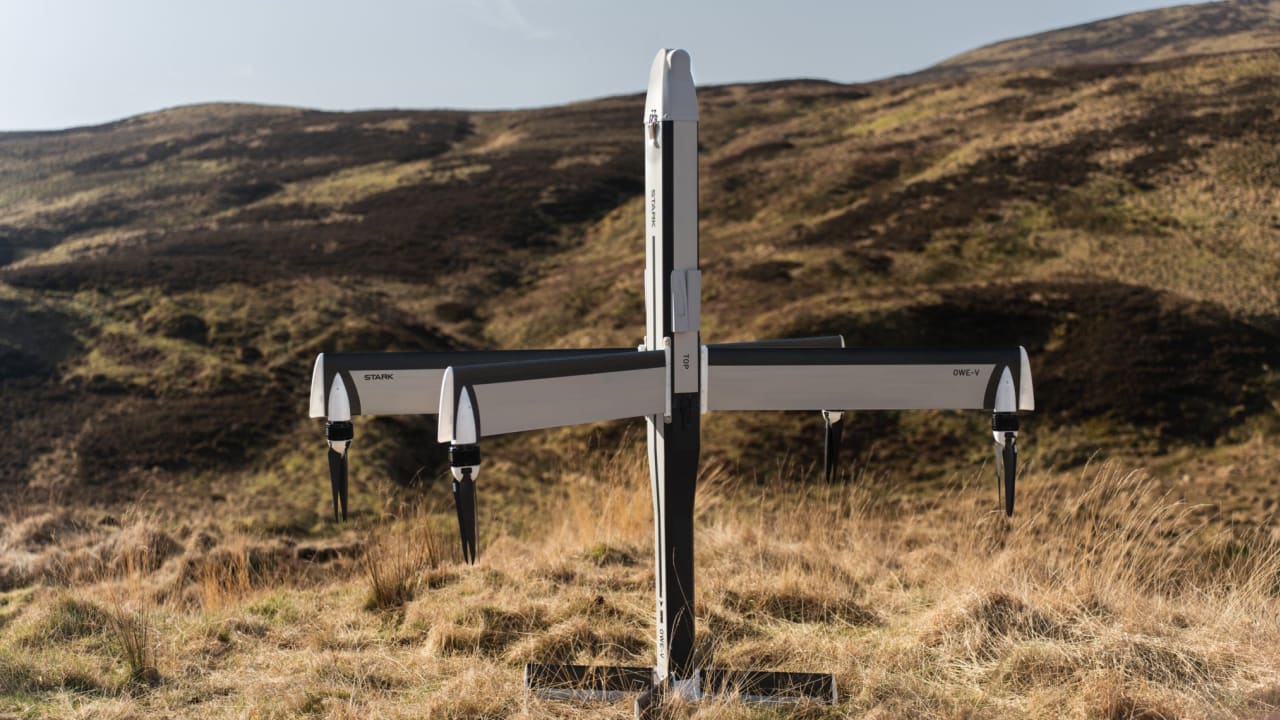
Berlin-based Stark will supply its Virtus suicide drone in a contract worth an initial €269 million with the potential to increase to a total of €2.86 billion.
The Virtus LM has a vertical takeoff and landing (VTOL) capability, and can strike targets up to 100 km. away with a maximum speed of 250 km/hour. The drone has AI integrated into its guidance system and can carry a payload of up to 5 kg. If no target is detected by the drone, it can return to its operator, offering cost-effective operations.
Field failures
The contract awards come despite setbacks for both companies.
In November, Stark drew scrutiny after its Virtus loitering munition failed in back-to-back live-fire trials observed by British and German evaluators.
During the multi-day Haraka Storm exercise at a British Army base in Kenya, Virtus missed both strike attempts, with one aircraft igniting on impact after a battery malfunction. Insiders told Handelsblatt the company left the range early because the tests went so poorly.
Only days earlier, Virtus had failed twice during a Bundeswehr evaluation in Germany. Three people who watched that trial told FT that a drone veered off course, its battery caught fire, and the wreckage fell into a wooded area, leading one observer to call the outing “a disaster for Stark.”
Helsing has also faced heavy criticism over the performance of its drones. According to a report in Politico, the company’s drones hit their target just five out of 14 times in field deployments in Ukraine’s Donbas region.
That led to Kyiv cancelling additional purchases of the company’s HX-2 LMs, Bloomberg reported in January.
According to the report, the drones experienced takeoff problems and lacked several AI-based features of the company’s autonomous navigation package. It also reportedly had communication problems due to electronic warfare interference-which raised concern about how they might perform in contested environments.
Despite the setbacks for the companies, they beat out German arms giant Rheinmetall which had been trying to secure a contract worth 300 million euro.
In November, Rheinmetall won a contract with a NATO customer to supply several hundred HERO LMs. Deliveries of the system will begin in the first quarter of 2026 and are expected to be completed by the end of next year. They will be produced by RWM Italia with the support of the company’s Israeli partner UVision Air Ltd. The ordered HERO systems will be equipped with the latest generation of high performance anti-tank warheads developed by Rheinmetall.
In recent years, drones and loitering munitions have become increasingly important in modern warfare, especially in Ukraine where they are critical platforms.