The war against Iran has reached a critical juncture where the traditional metrics of military success, territory held, or hardware lost no longer tell the full story. For those within the Defense-Tech industry, the true center of gravity in this theater is the invisible, seamless web of Intelligence, Surveillance, and Reconnaissance (ISR). We are witnessing the maturity of a system of systems (SoS) that represents perhaps the most potent military and industrial joint venture in human history.
The ultimate proving ground for a unique industrial and military handshake is the fusion of the Start-Up Nation, serving as the world’s most advanced laboratory, with the unparalleled industrial might and global reach of the United States.
In the defense-tech sector, we often speak of the “Valley of Death,” the gap where disruptive technologies fail to move from prototype to mass production. The current conflict is bridging that gap through sheer necessity. We are seeing agile, software-defined solutions, refined in the high-pressure crucible of real-time operations, integrated into large-scale hardware architectures. This synergy allows for the rapid materialization of innovation as the speed of a start-up-driven ecosystem meets the power and scale of a global industrial base. It is a defining pillar of modern deterrence.
The move toward persistent convergence is the driver of successful coalition operations. By integrating space-based sensors, high-altitude platforms, maritime assets, and land-based systems into a unified mesh, the coalition has created a live digital twin of the battlespace.
When a high-value mobile asset is detected, it is no longer tracked by one agency; it is handed off across domains: space, air, land, and sea. This interoperability ensures that if one sensor node is compromised or obscured, the network automatically self-heals, shifting the task to an alternative spectral band or orbital layer.
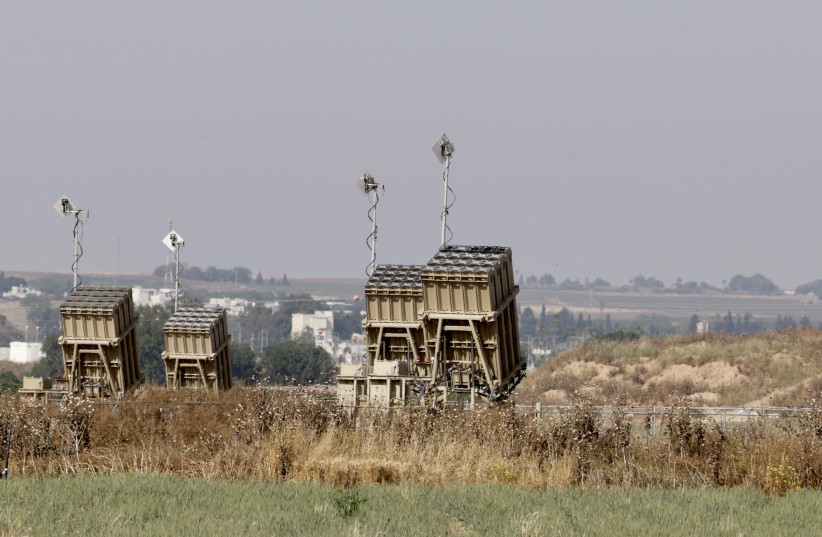
We aren't just out-maneuvering the enemy; we are out-connecting it.
In this theater, readiness is no longer measured solely by the number of mission-capable airframes. A vital new metric is the Detection-to-Decision (D2D) cycle, which has been compressed into seconds, thanks to edge processing. Modern ISR platforms now use onboard intelligence to sift the noise at the source, identifying specific threat signatures and transmitting only actionable data. This eliminates bandwidth bottlenecks and ensures that by the time an adversary prepares a move, it is already prioritized within the Unified Decision Grid. This speed is the hallmark of a ready force: the ability to act before the enemy has even completed its decision cycle.
The “secret sauce” of the Iran conflict has been the radical expansion of public-private partnership in the current threat landscape, where traditional procurement cycles are often too slow.
We are seeing a new model, with private tech firms embedded directly with joint forces, allowing for software updates and algorithmic refinements to be pushed to the front lines in real-time DevOps cycles. This collaboration is the final nail in the coffin for the Valley of Death.
By involving private capital and disruptive minds early, the coalition is ensuring that the next wave of defense technology, from autonomous swarming ISR to cognitive electronic warfare, is being crafted in the heat of battle.
We are not fighting for territory. We are fighting for global national security and the preservation of a stable international order.
The end of active hostilities will not be a signal to slow down; it will be the momentum required to turn these emergency joint ventures into scaled procurement cycles.
The lessons learned today must be codified into the permanent structures of our defense architecture. By leveraging the combined genius of disruptive minds and American scale, we are ensuring that the future of security is defined not by those with the most munitions but by those who possess the most integrated, agile, and intelligent SoS.
While I cannot disclose the specific ways in which new Israeli defense technologies are shaping the battleground minute-by-minute, I am immensely proud of the brilliant entrepreneurs and the teams behind them. They are not just building companies, they are architecting the future of freedom.
The writer is a former senior official at Israel’s Defense Ministry and Intelligence Community. He is currently managing partner at Caveret Ventures.