
On April 24, US Secretary of Defense Pete Hegseth said the quiet part out loud. Speaking about NATO allies who had refused to support Operation Epic Fury, he warned that Washington "will remember."
Hegseth called for a "NATO 3.0" focused on warfighting, accused European partners of an "unconscionable" response to the US-Israel campaign against Iran, and pointedly declined to reaffirm America's Article 5 commitment.
It was the bluntest public rebuke of European allies by a sitting US defense secretary in living memory. And it was earned.
When the United States and Israel launched Epic Fury on February 28, the response from the capitals that lecture Israel most loudly was instructive. Spain closed its airspace to US aircraft involved in the operation and prohibited the use of Rota and Moron – two of the most strategically important joint bases in NATO.
Spanish Prime Minister Pedro Sánchez called the war "illegal." France refused overflight rights for US aircraft carrying military supplies to Israel. Italy denied landing rights to US bombers at Sigonella in Sicily.

Portugal joined the wall. A US B-1B Lancer returning from a strike mission over Iran was forced to detour around French, Spanish, and Portuguese airspace on its way home to RAF Fairford- burning fuel and tanker capacity to avoid the sovereign territory of NATO allies.
The UK didn't close its airspace, but its Prime Minister Keir Starmer's initial framing was that Epic Fury was "not our war," and Britain would not be "drawn into" American or Israeli operations.
Let that sentence sit for a moment. “Not our war.” The most consequential nuclear non-proliferation operation since the end of the Cold War, and the United Kingdom's first instinct was to stand off the field.
The defense shows go on as if nothing happened
Now consider the calendar. Eurosatory in Paris this June. The Paris Air Show in 2027. DSEI in London in 2027. Over 30 Israeli defense firms- Elbit, Rafael, IAI, and the next tier of mid-cap and stealth-stage companies- attended the French exhibitions.
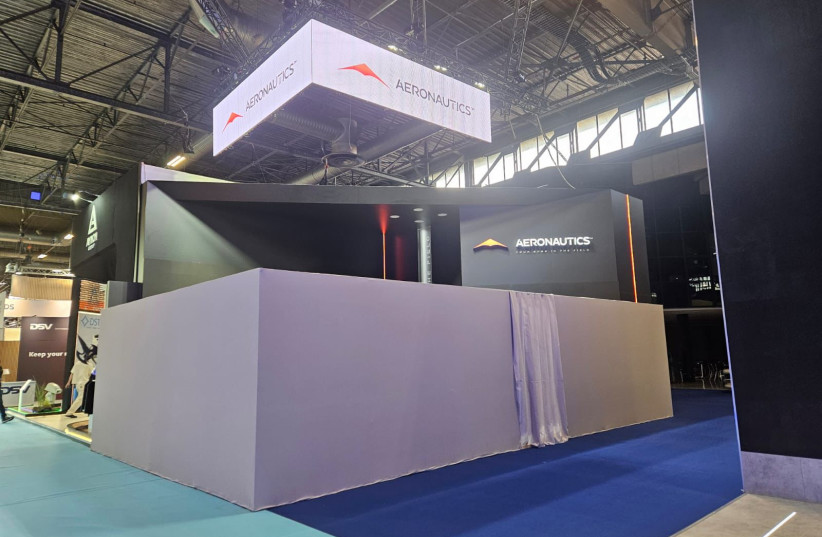
This is the same Eurosatory that banned Israeli exhibitors in 2024 until a French court ruled the exclusion discriminatory. The same Paris that boarded up Israeli pavilions at the 2025 Air Show because companies refused to remove displays of weapons used in regional conflicts.
The same London where the UK government withheld official invitations to Israeli government and military delegations at DSEI 2025.
These are the venues. These are the hosts. And the Israeli industry continues to spend millions of dollars and thousands of hours preparing booth designs, demo videos, and product one-pagers for procurement officials who, just weeks ago, told the United States they would not lift a finger to stop a nuclear Iran.
I find it difficult to understand what we are doing there.
What the customer is actually buying
A defense exhibition exists to serve buyers. The buyers at Eurosatory and DSEI are, primarily, European procurement officials and the foreign delegations they invite. So it is worth asking what these buyers are actually qualified to evaluate and what they're qualified to deliver in return.
The countries hosting these shows have not fought a peer war in roughly half a century. The UK's last serious conventional fight was the Falklands in 1982. France's most recent combat operations were counter-terror campaigns in Mali and the Sahel against jihadists in pickup trucks.
Iraq 2003 was an invasion of a sanctions-rotted military whose air force never flew a single combat sortie. Helmand was twenty years of grinding counter-insurgency against the Taliban. None of those adversaries had a real air force. None had a serious missile inventory. None could meaningfully threaten the homeland of the country fighting them.
Israel just fought a different kind of war. Seven fronts simultaneously – Gaza, Lebanon, Syria, Iraq, Yemen, the West Bank, and Iran itself- against a state-level adversary equipped with Russian S-300 air defenses, Chinese-derived ballistic missiles, and an Iranian drone industry now exporting to Russia for use against Ukraine.
During Epic Fury alone, Iran launched over 500 ballistic missiles and 2,000 drones in 67 days. Israeli systems absorbed it and kept fighting.
The procurement officer in Paris evaluating an Israeli loitering munition or air defense radar has, at most, watched that capability on PowerPoint. The Israeli engineer demonstrating it has just spent two years iterating against an adversary actively trying to defeat it. Who is the student here, and who is the teacher?
The Hegseth doctrine
Hegseth's "we will remember" was not a tantrum. It was a policy signal. An internal Pentagon memo reported by Reuters in late April outlined options including suspending Spain from key NATO positions and reviewing Washington's stance on the UK's Falklands claim.
US Secretary of State Marco Rubio publicly questioned whether the alliance has become a "one-way street." The administration's position is clear: countries that denied basing and overflight during Epic Fury will be remembered when the time comes to award contracts, share technology, and underwrite security guarantees.
Israel, by contrast, will be remembered for the opposite reason. The US-Israel defense relationship has not been this operationally tight since the Gulf War. The next decade of American defense procurement, joint development, and capital flows will reflect that.
So I will ask the question Israeli CEOs should be asking in their next board meeting: why are we routing our flagship platforms, our limited demo budgets, and our senior leadership time through capitals that have explicitly told the United States they will not stand with us in a war?
Hegseth said the United States will remember. Israeli defense companies should remember too.
The booths in Paris will be built. The badges in London will be printed. The receptions at Lancaster House will be polite. And one day, perhaps soon, an Israeli CEO will walk through the front door of Eurosatory, look around a hall full of procurement officers from countries that locked the door on America during a live shooting war, and ask the only question that matters:
What, exactly, are we doing here?