
The debate in Washington regarding the relationship between the United States and Israel has long been binary: Is Israel a strategic asset or a liability?
Since the regional upheaval following October 7, 2023, this question has shifted from the theoretical to the urgent. As America recalibrates its global posture to prioritize partners rather than friends who required US protection, Israel serves as the ultimate "model ally," in the words of the Pentagon’s National Defense Strategy. In fact, Israel is the only partner that delivers a 400% return on investment with no American "boots on the ground," and provides a definitive ROI that bolsters US national security, economic interests, and technological supremacy.
As the current 10-year memorandum of understanding (MoU) nears its 2028 expiration, the time has come to transition our bilateral tie from a model of security assistance to a deep strategic partnership, built upon the unique characteristics and strengths of the Israeli model. The era of 20th-century “foreign aid” is over. We are moving toward a 21st-century strategic merger.
The security dividend
The military-to-military relationship is often characterized as a one-way street of American generosity. The reality, though, is a rapid cycle of mutual benefit. Israeli innovations and battle-proven technologies are force multipliers for the US military, allowing the Pentagon to skip costly R&D cycles and adapt to modern warfare in real-time.
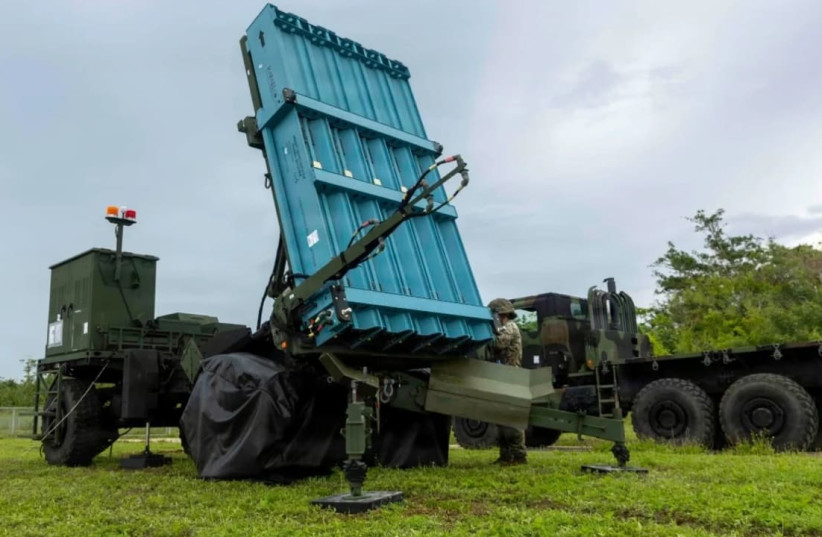
Joint developments – most notably in multi-layered air defense – serve as the blueprint for protecting US forces globally. Israel acts as a “battlefield incubator” for US power: Every time Israeli forces deploy battle-proven technologies – be it F-35 fighter jets or an Arrow missile defense system – the feedback loop to the Pentagon is immediate.

This allows the United States to skip costly research and development cycles and adapt to modern warfare in real time. This synergy saves American lives and assets, and the flow of Israeli intelligence provides a "silent" shield without requiring a permanent US troop presence on Israeli soil.
The historic synergy witnessed during Operations Roaring Lion and Epic Fury has only cemented this view. US Secretary of Defense Pete Hegseth recently lauded this cooperation, noting that the tactical and intelligence integration between Washington and Jerusalem during the campaign against Iran reached unprecedented levels, saving American lives and proving that Israel is an indispensable node in the Western defense architecture.
The economic case for cooperation
The economic dimension of this partnership is equally vital. Approximately 90% of US security assistance to Israel is immediately reinvested into the American defense industrial base, supporting hi-tech jobs from California to Alabama. Far from a one-way street, US security assistance to Israel acts as a massive stimulus for the American defense industry, returning approximately $15 billion annually to the US economy, according to a study we have conducted in MIND Israel. Joint programs such as the F-35 and Iron Dome illustrate how Israeli operational feedback improved system reliability and reduced development costs for the United States.
The potential for further joint research and development (R&D) is best exemplified by bi-national funds like BIRD and BARD. These programs illustrate a "small input, large return" model where seed funding for collaborative ventures translates into global market dominance. While the absolute sums invested in civilian cooperation are relatively modest, their return on investment points to enormous economic and technological potential for expanding the partnership between the two countries.
This can be a significant booster for the US-Israel relationship as technology is increasingly likely to determine both winners and losers in international politics. In the global race, the fusion of Israeli agility and American scale is an indispensable weapon.
A triple ecosystem for the 21st century
As the current MoU nears its 2028 expiration, we propose a new 10-year "bridge" that evolves the relationship into a triple-layered ecosystem. A sudden cut in support would send a dangerous signal of retreat to our common enemies; instead, we must use this decade to guarantee that Israel emerges as a fully self-reliant partner – a permanent, hi-tech fortress for our joint interests.
The proposed framework rests on three pillars:
- The Industrial Defense Ecosystem
Maintain the current $3.3 billion baseline alongside $500 million for air defense, but with a new focus: building the "Golden Dome" together. By the end of the decade, the entire aid model must transition into a partnership model that realizes President Trump’s vision for a Golden Dome, ensuring the skies of both the United States and Israel remain protected. This Joint Security Fund would focus on missile defense and shared industrial capacity. Under this pillar, Israel would serve as a rapid innovation sandbox for US defense, integrating into the American Defense Industrial Base (DIB) to accelerate procurement for both nations. Israel should also commit to increasing independent, non-aid procurement from American firms.
- The tech ecosystem for AI supremacy
The US and Israel should dedicate a combined investment of around $10 billion dollars over a decade specifically for AI and emerging technologies: quantum computing, energy, semiconductors, and rare materials. This AI supremacy alliance" would operate under a trusted ecosystem, with Israel ensuring its tech sector remains resilient according to US standards, while the US provides Israeli researchers with access to national laboratories and the National Science Foundation (NSF).
- The Regional Ecosystem
Leveraging the spirit of the Abraham Accords, Israel and the US can deepen regional ties. By connecting Gulf infrastructure with Israeli brainpower and American power, we can create a pro-American innovation bloc and promote normalization. In fact, technology can serve as an accelerator for normalization, enabling the creation of solutions for the challenges facing all people in the Middle East: food security, water, and energy. This architecture, rooted in the spirit of the Abraham Accords, allows Washington to shape the Middle East as a winner, further pushing Russian and Chinese influence to the margins.
Conclusion: future-proofing the alliance
The innovation in this proposed model lies in its resilience. Unlike previous frameworks, this strategic merger is designed to be immune to the shifting winds of domestic politics. It is not about managing Israeli dependence; it is about cementing a high-value partnership that secures the future for both nations.
By the end of this 10-year bridge, the transition from "aid recipient" to "strategic partner" will be complete. Securing AI supremacy together, building the Golden Dome together, and leading the Middle East together is the very definition of a win-win partnership. It will ensure that Israel remains a power-multiplier for the United States for decades to come.