The Foreign Ministry is in direct contact with, and assisting, Israelis in Kazakhstan, but is also advising against non-essential visits to the Central Asian country following days of civil unrest, the MFA said in two statements on Friday and Thursday.
"The Israeli Ministry of Foreign Affairs is closely following developments in Kazakhstan and hopes to see calm and order restored," tweeted Foreign Ministry spokesperson Lior Haiat on Friday morning. "The Israeli Embassy in Nur-Sultan, along with the Foreign Ministry headquarters in Jerusalem, are in direct contact with Israeli citizens who are in the country in order to assist them during these times."
On Thursday, the MFA said in a statement from its consular affairs division that "Israeli citizens considering coming to the country are advised to exercise extra caution and avoid non-essential visits to the country. Further, Israeli citizens residing in the country are advised to refrain from attending mass gatherings, restrict movements and travel, including moving from work from home if possible, and follow government guidelines."
The statement was coupled with a submission form for Israelis in Kazakhstan to provide their details to the Israeli embassy in Kazakhstan.
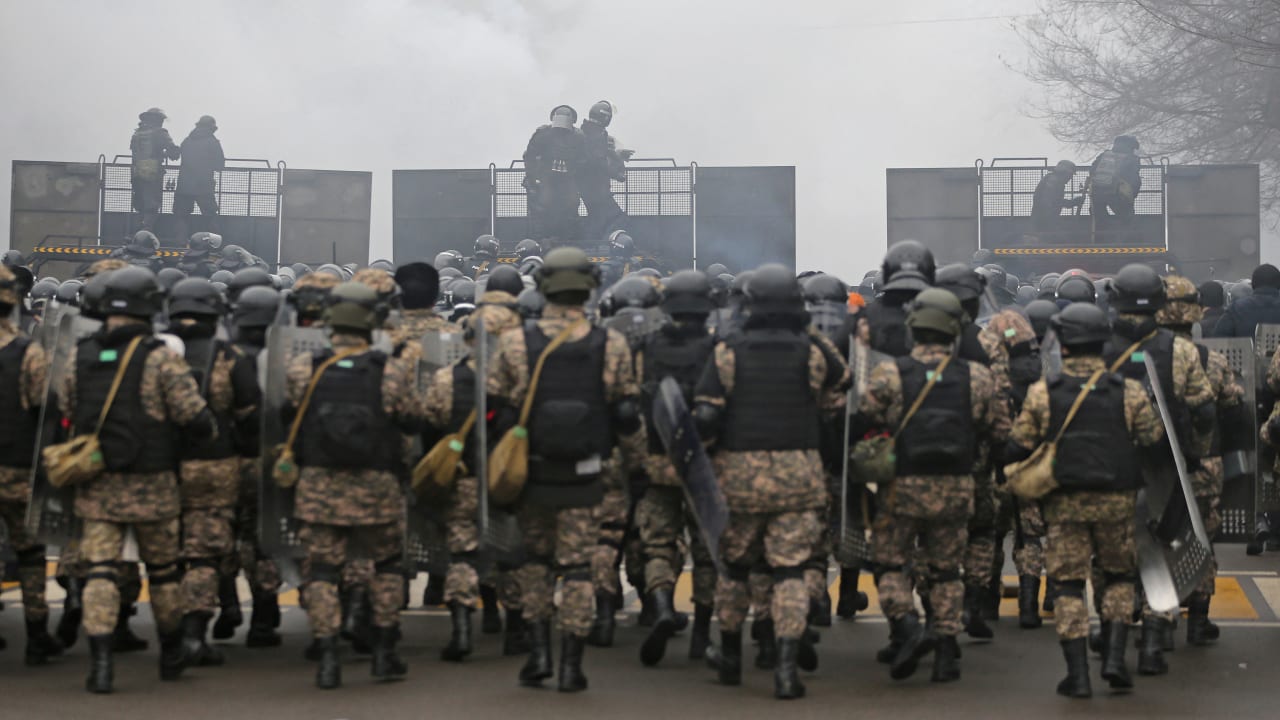
Kazakhstan has been in a state of civil unrest since January 3, in response to price caps being removed from butane and propane on January 1. The reforms added to unhappiness over COVID-19 restrictions, in systemic economic issues such as income inequality and corruption.
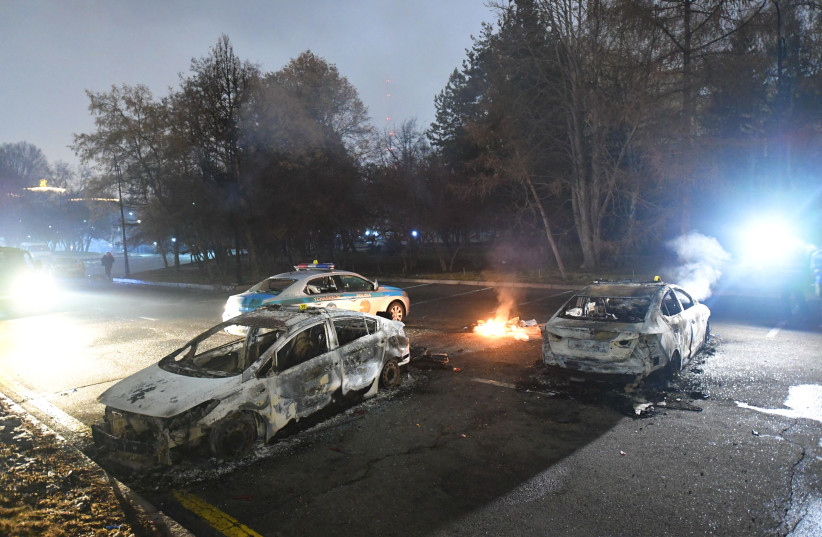
Protestors and rioters sacked and seized key public buildings, including an airport. Violence gripped Almaty, Nur-Sultan and Aktau. At least 26 Kazakhstani citizens and 18 police and national guard service members were killed in the unrest, according to the Interior Ministry. Around 3000 have been detained. The Israeli MFA reported that since January 5 Kazakhstan has been in a state of emergency and a curfew has been imposed in a number of hotspots, restricting activity to 7:00 am and 11:00 pm.
On Thursday, Russian military forces were deployed to aid in restoring order at the request of Kazakhstan's government. On Friday morning, it was reported by Reuters that unrest had largely been quelled, but reports of sporadic gunfire have also persisted. Later in the day, Kassym-Jomart Tokayev said that he had given orders "to kill the rioters," and that "those who do not surrender -- will be eliminated."
"The good and strong relationship between the State of Israel and the Republic of Kazakhstan is based on the warm relations between the peoples and the fruitful cooperation between the governments," Haiat also said in Friday's statement. "As a key country in Central Asia and the founder of the CICA Forum for Peace, Security and Regional Stability, we look forward to the restoration of stability and calm in Kazakhstan soon."
In 2017, former Israeli ambassador to Kazakhstan Michael Brodsky said that the Muslim majority nation is one of Israel’s major friends, and emphasized the cooperation between the states in health, security and agricultural fields.
Israel has developed strong diplomatic and economic ties with Kazakhstan -- which is a regional economic and energy powerhouse as the world's top producer of uranium, ninth-biggest oil exporter, 10th largest producer of coal, and second-largest miner of bitcoin.
In December 2016, then prime minister Benjamin Netanyahu visited Kazakhstan when Nursultan Nazarbayev was still president. While Nazarbayev has since stepped down, he is reportedly seen as being the true political power behind the current president, Tokayev.
Kazakhstan has around 10,000 Jews in the country -- and according to Brodsky's 2016 statements, many Israeli companies operate there -- but it is not currently public how many Israelis are in Kazakhstan, and what their current status is.
Udi Shaham and Reuters contributed to this story.