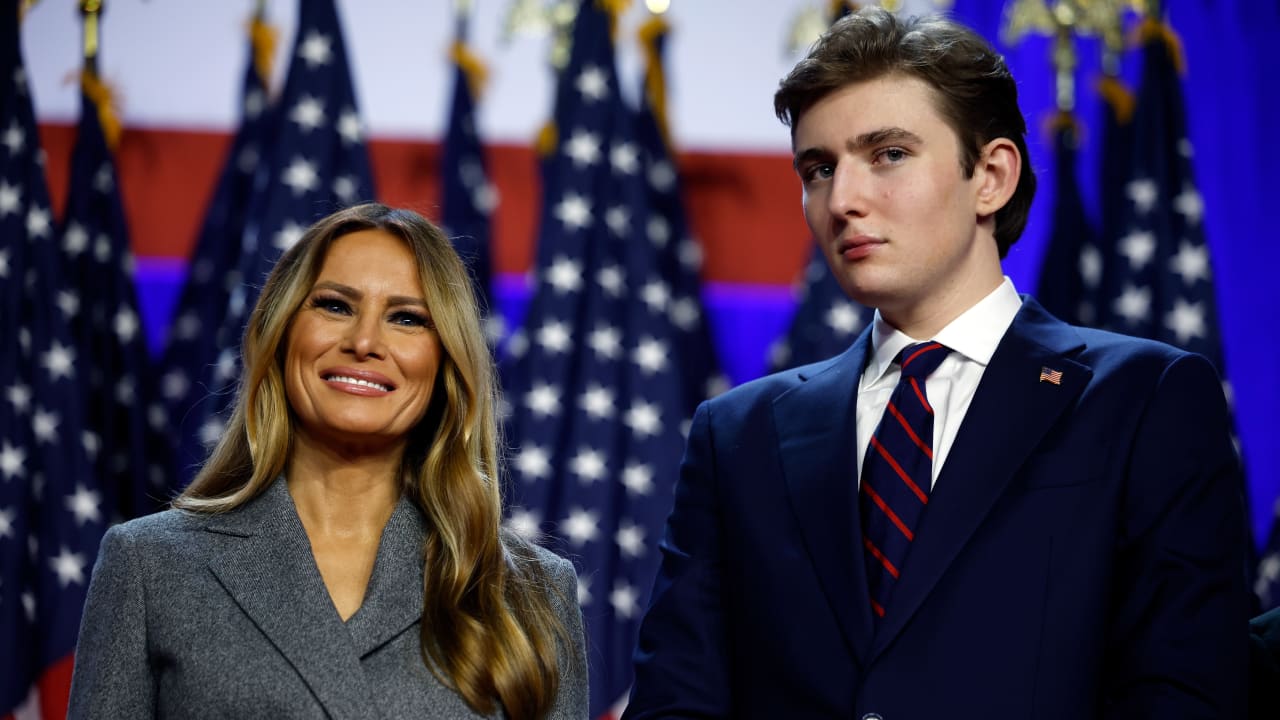
The FBI tracked US First Lady Melania Trump and her son Barron as part of preparations for the 2022 search of President Donald Trump's Mar-a-Lago estate, and later monitored the phone activity of Susie Wiles, now the White House chief of staff, for months, according to documents released by the White House transparency team early Tuesday.
According to the documents, the surveillance of members of the Trump family was intended, among other things, to help the bureau determine the right time the search the former president's Palm Beach estate as part of the investigation into classified documents he retained after leaving office following his first term. The investigation carried the code name "Plasmic Echo."
Correspondence between FBI agents from late May 2022 listed among the tasks ahead of the search a requirement to complete a picture of the travel plans of Trump, his wife and his minor son, including the type of aircraft they used and their precise schedules.
Another document explicitly stated that search warrants would be executed only after the former president had left Mar-a-Lago. The FBI ultimately carried out the search on August 8, 2022. As part of the operation, agents searched Trump's office as well as the couple's bedrooms.
According to the released documents, then-Attorney General Merrick Garland approved the investigative steps after a recommendation from then-FBI Director Christopher Wray.

Wray warned Trump investigation could affect democratic process before election
In a May 2022 memorandum, Wray warned that the investigation was sensitive and could involve senior officials from Trump's first administration, and that if it became public before an election it "could be disruptive to the democratic process."
At the bottom of the memorandum, Wray wrote to Garland by hand: "Merrick, I recommend you approve. CW."
One month before the search, an unidentified special agent raised doubts about the FBI's legal authority to search the office and bedroom of a former president and even suggested holding additional discussions with Trump's attorneys.
Wiles surveillance included calls with Trump, lawyers, advisers and journalists
The documents also reveal that between February and May 2023, FBI personnel monitored the call records of Wiles, who at the time was running Trump's political operation ahead of the 2024 election.
According to the records, the FBI tracked her calls with nearly two dozen attorneys connected to Trump, as well as campaign staffers, political advisers and journalists.
The identities in the documents were almost entirely redacted, with the exception of Kash Patel, who now serves as FBI director and at the time held no government position.
The records also include calls between Wiles and Trump himself. One entry dated May 19, 2023, states that a phone number identified as the "FPOTUS Vanity Number," belonging to the former president, called Wiles at 2:05 p.m. The call lasted 16 minutes and 11 seconds.
On one day in March 2023, the documents show Wiles made or received 39 calls. The records include precise call times and the duration of each call.
Another internal email noted that an ABC News reporter called Wiles for a two-minute, 36-second conversation. Other records also listed calls with reporters from The Washington Post and Politico.
After FBI agents questioned Wiles in Florida in April 2023, investigators also examined her phone activity before and after the interview.
Special counsel Jack Smith probe focused on possible obstruction, classified documents
At the time, special counsel Jack Smith was already focusing on suspicions of obstruction of the investigation and on whether Trump had wrongly claimed that all classified documents had been returned to the National Archives.
A federal judge dismissed the case against Trump in July 2024, ruling that Garland's appointment of Smith was unlawful.
The White House sharply criticized the investigative actions. White House spokeswoman Lauren Bies told the New York Post that "Jack Smith's surveillance operation was a disgraceful abuse of government power," adding that "Spying on political opponents is the politicization of law enforcement. Those responsible must be held accountable."