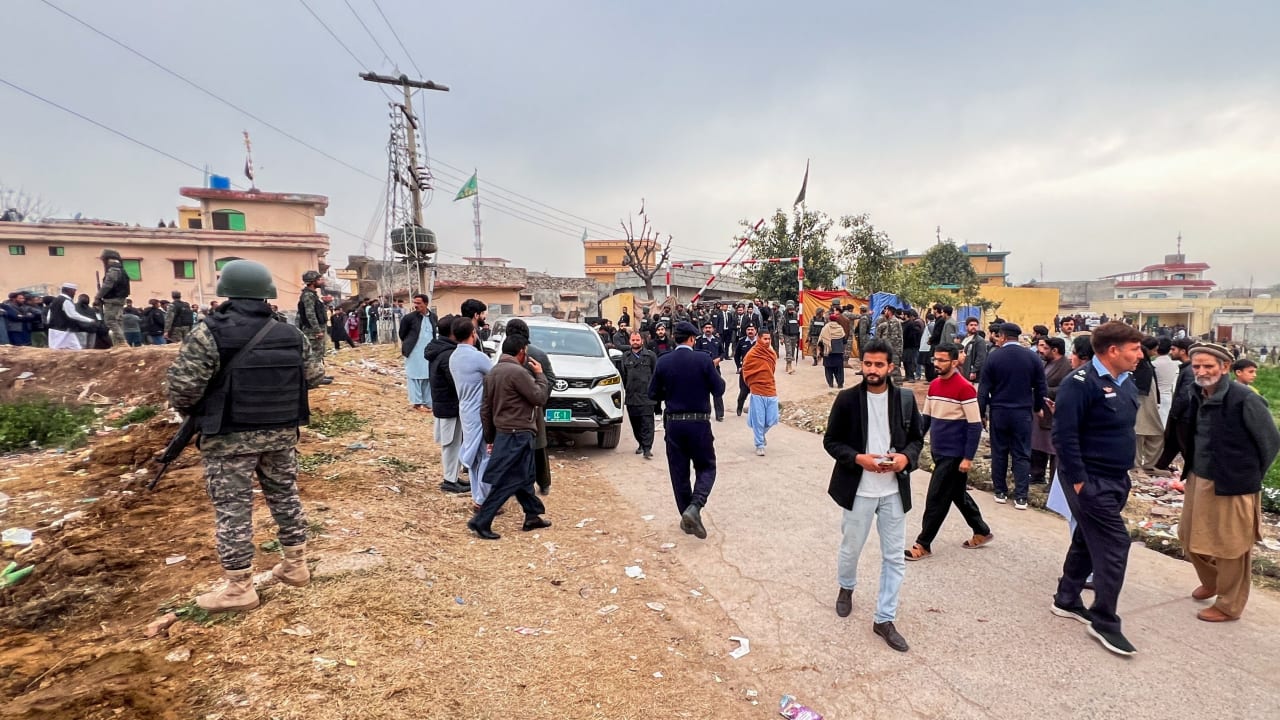
An attacker opened fire at the gates of a Shi'ite Muslim mosque in Islamabad on Friday before setting off a suicide bomb and killing at least 31 people in the deadliest attack of its kind in Pakistan's capital in more than a decade.
The Islamic State claimed responsibility for the attack in a statement on its Telegram channel. The terrorist group also released an image that it said showed the attacker holding a gun, his face covered and eyes blurred. Reuters could not immediately verify the photo.
More than 170 others were wounded in the explosion, detonated after guards challenged the attacker as he made his way into the Khadija Tul Kubra Imambargah compound on the outskirts of the city, officials said.
Images from the site showed bloodied bodies lying on the carpeted mosque floor surrounded by shards of glass, debris, and panicked worshippers. Dozens more wounded were lying in the gardens of the compound as people called for help.
Survivors said they heard gunshots and seconds later, the blast, soon after the prayers began.

The man blew "himself up in the last row of worshippers," Defence Minister Khawaja Asif wrote on X.
He said the bomber had a history of traveling to Afghanistan and blamed neighboring India for sponsoring the assault, without providing evidence.
India's foreign office condemned the attack and dismissed Pakistan's statement as "baseless."
"It is unfortunate that, instead of seriously addressing the problems plaguing its social fabric, Pakistan should choose to delude itself by blaming others for its home-grown ills," it said in a statement.
China condemns Islamabad mosque attack
China condemned an attack on a Shi'ite mosque in Islamabad, pledging support on Sunday for the Pakistan government's efforts to "maintain national security and stability."
China is "deeply shocked" by Friday's attack, the foreign ministry said in a statement.
'Blood everywhere'
Sarfraz Shah, 46, said he had gone to the mosque with his younger brother Manzar, 39, as he did every Friday.
"I heard the gunshots and I was just trying to make sense of what had happened when there was a massive explosion," Shah said at the Pakistan Institute of Medical Sciences hospital.
"It threw people here and there. There was smoke. No one knew what had happened. Then there was blood everywhere."
He added through tears that there was no sign of his brother anywhere, but when he came to the hospital, he discovered that Manzar was among those killed.
Police witnessed a 'nightmare'
Shahid Malik, a police official who was involved in shifting the injured people and dead bodies to the hospital, said what he had witnessed was a nightmare.
"I have seen many crime scenes. But this was horrible, very horrible," he said, adding there were between 600 and 700 people at the mosque.
Shi'ites, who are a minority in the predominantly Sunni Muslim nation of 241 million, have been targeted in sectarian violence in the past, including by the Islamic State and the Sunni Islamist group Tehreek-e-Taliban Pakistan (TTP).
Bombings are rare in the heavily guarded capital, although Pakistan has been hit by a rising wave of militancy in the past few years, particularly along the border with Afghanistan.
Afghanistan's Foreign Ministry condemned the attack. Kabul has repeatedly denied charges that it provides a safe haven to militants carrying out attacks in Pakistan.
"A total of 31 people have lost their lives. The number of wounded brought to hospitals has risen to 169," Islamabad's Deputy Commissioner, Irfan Memon, said in a statement.
The capital was already on high alert on Friday for the visiting president of Uzbekistan, Shavkat Mirziyoyev, with roads around the capital blocked by checkpoints and security forces posted across the city.