
The Wagner Group has been primarily responsible for recruiting young people to carry out sabotage attacks on behalf of the Kremlin in Europe, the Financial Times reported on Sunday, citing Western security officials.
The Russian mercenary group has been tasked with recruiting young, economically challenged Europeans to carry out violent acts within NATO territory.
Notably, the Wagner Group has faded from international awareness since the supposed assassination of its leader, Yevgeny Prigozhin, in a 2023 plane crash. Prigozhin notably led an attempted mutiny against Russia’s military in the summer of that same year.
But now, Russia’s intelligence agency, the GRU, is using the talent it has available to it,” one Western intelligence official told the FT.
Russia has expanded its campaign of sabotage across Europe since the outbreak of the war in Ukraine, in an attempt to cause social unrest and weaken Western support for Kyiv.
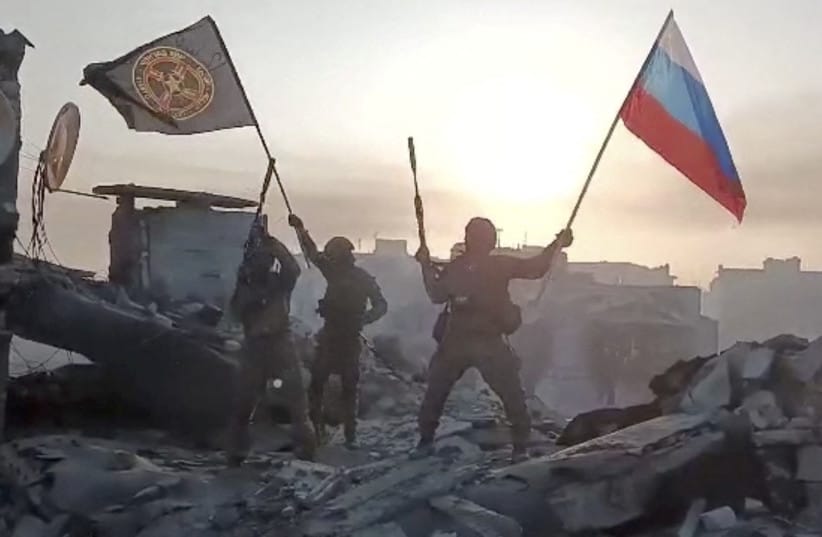
Because of a few rounds of diplomatic expulsions from EU countries, Moscow has turned to proxies to do its dirty work.
Wagner Group has become 'effective, if crude' tool for Moscow
European officials told the FT that the Wagner Group has become an effective, if crude, tool for doing so.
Operatives have tasked impoverished young people from across Europe with a range of sabotage attacks, from setting warehouses containing aid for Ukraine on fire to posing as Nazi propagandists.
As The Jerusalem Post has previously reported, the individuals recruited are usually young, marginalized people lacking direction.
The Wagner Group has a team of experienced recruiters who know how to “speak their language,” one official said.
Russian intelligence agencies typically seek to have two layers between official government channels and the agents they use to sow chaos.
“They want some degree of deniability always . . . And Wagner and the individuals that were part of it . . . have a long and close relationship working for the GRU in this way.”
While Russia’s domestic intelligence agency, the FSB, has tried to recruit criminals and dissidents from abroad, Wagner-associated networks are more effective at recruiting en masse.
Wagner’s Telegram channels have also portrayed themselves in ways that are surprisingly adept, the officials said.
“They know their audience,” a second European official said.
One example is the two young British men sentenced in October 2025 for acting on behalf of the Wagner Group.
Dylan Earl, 20, and Jake Reeves, 23, were sentenced under the UK’s National Security Act for activity linked to a foreign state.
They were caught committing arson at a warehouse in East London, which held humanitarian aid and Starlink satellite equipment for Ukraine.
Earl carried out the arson attack after connecting with the Wagner Group on Telegram and asking to take on missions.
After this, Reeves recruited three others to attack the warehouse, though they did not know they were working for the Wagner Group.
“The hidden hand of the internet delivered results because anonymous recruiter proxies operating through internet chat rooms, usually on encrypted platforms, found within the United Kingdom, young men who were prepared to undergo a form of radicalisation and betray their country for what seemed easy money,” said Justice Bobbie Cheema-Grubb in her sentencing remarks.