Israel is heading toward a green energy revolution, and it turns out that the Bedouin community could play a starring role.
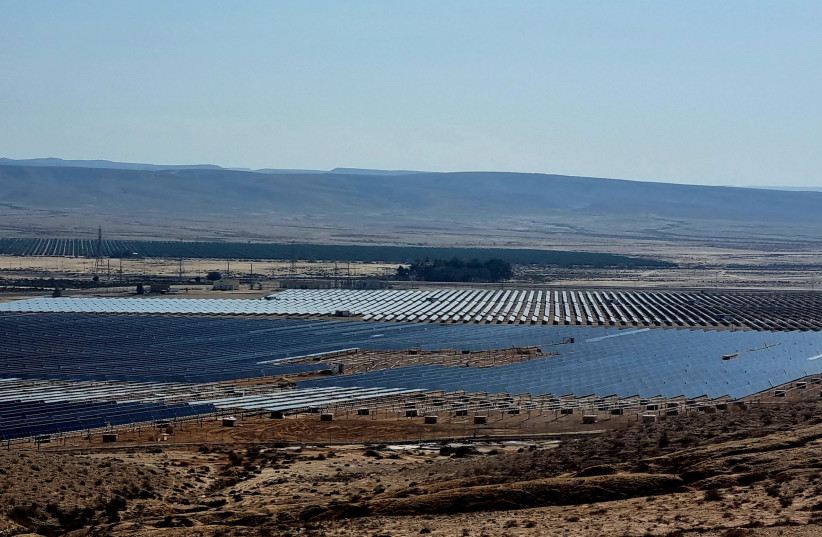
Marom Energy, a small company run by the Gandyr Foundation of Judith Recanati, is going to build Israel’s first solar power plant on privately held Bedouin land. Construction, which is set to begin in southern Israel's Negev Desert next year, will see solar plants established on 150 acres of land owned by several Bedouin families.
“We specifically decided to support those Bedouins and make them direct stakeholders – actually almost direct partners – on their lands,” Amir Alshech, deputy CEO of Marom Energy, told The Media Line. “They’re involved in the development, construction, and operation [of the project]. They’re also landlords so they’re receiving yearly rent.”
For more stories from The Media Line go to themedialine.org
The Bedouins are tribal nomadic Muslim Arabs who live throughout the Middle East and North Africa. More than 250,000 reside in Israel, with the majority staying in the southern city of Rahat and in villages across the Negev Desert.
Headquartered in the coastal city of Herzliya, Marom Energy said that the Bedouins are expected to be the primary beneficiaries of the historic project and their homes will be powered with the solar energy that is produced there during the day.
“It gives them a significant economic incentive because it is much more stable and profitable than agriculture,” Alshech said.
Projects like this are advancing diplomacy
Aside from its project on Bedouin land, Marom Energy also recently gained attention for purchasing a 30% stake in Moroccan company Gaia Energy. The deal is aimed at boosting Gaia’s various green energy initiatives in the North African kingdom.
“Right after the signing of the Abraham Accords we took a plane directly to Morocco,” Alshech said of the move. “The connection between Israelis and Moroccans goes a long way back. There’s a large population here that came originally from Morocco.”
Although only a small portion of Israel’s power now comes from renewable sources, earlier this year the government announced that it was aiming to double the country’s solar power capacity by 2025. Overall, Israel hopes that 30-40% of its electricity will come from renewable sources by 2030.
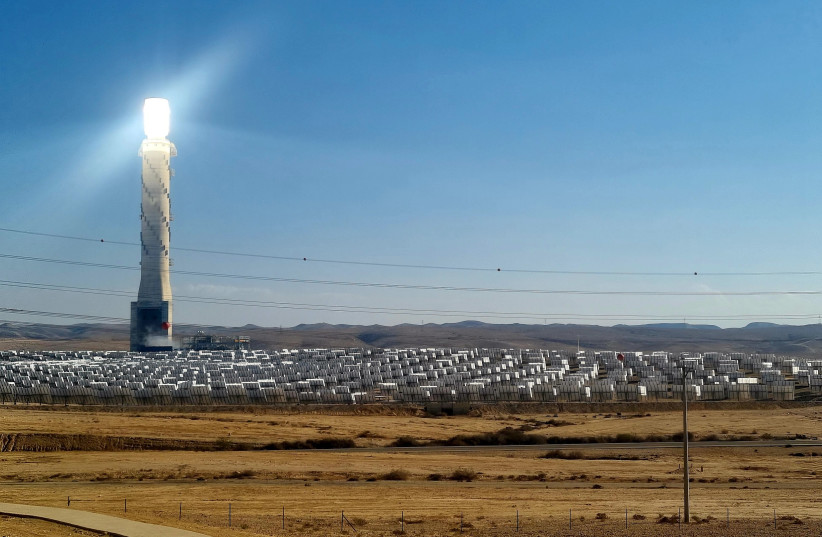
Israel’s largest existing solar power plant is currently the Ashalim Power Station in the Negev Desert, made up of three separate plots that rely on solar thermal, photovoltaic, and natural gas, respectively. More than 50,000 mirrors surround the Ashalim tower, which is visible from miles away and runs on solar thermal energy. Solar thermal energy harnesses the power of the sun using mirrors or lenses to generate heat.