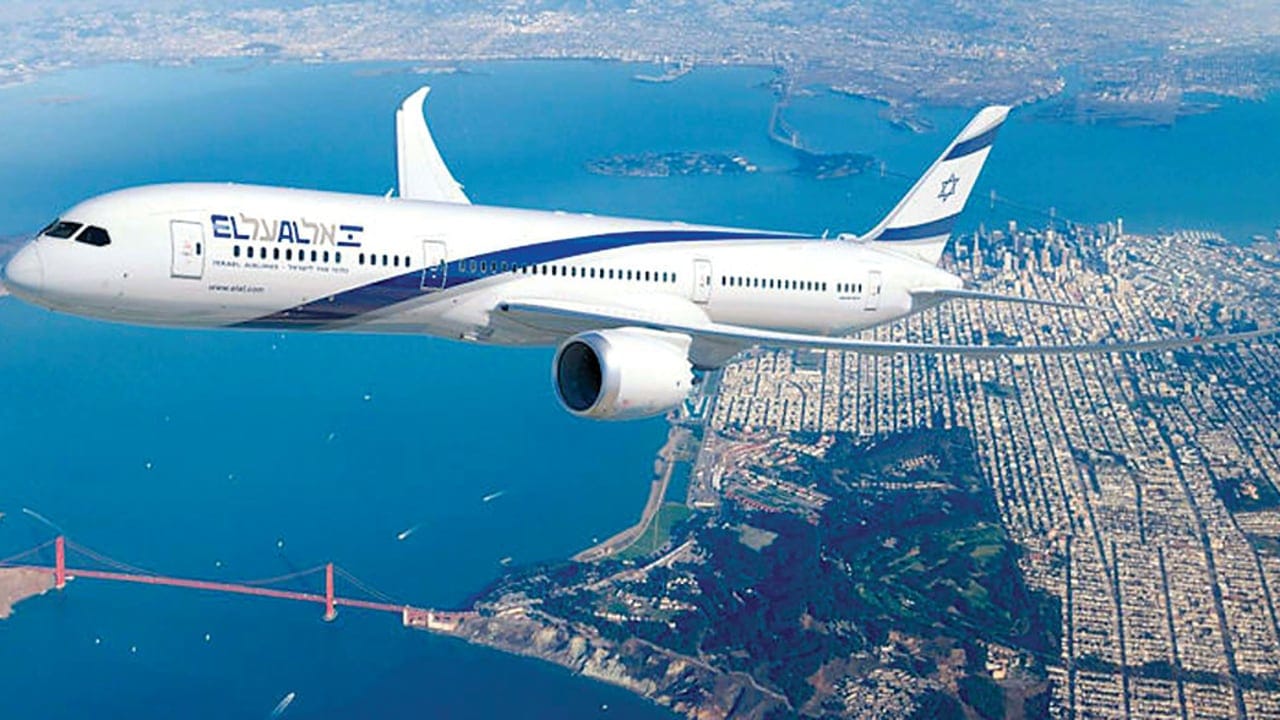
Israel’s Transportation Ministry is preparing a controlled reopening of Ben-Gurion Airport on Thursday aimed at returning thousands of Israelis stranded overseas during Operation Roaring Lion, according to officials involved in the plan. On Tuesday, two days before the planned reopening, the ministry outlined an extraction model in which aircraft will arrive carrying passengers but depart Israel with no passengers onboard, reducing exposure time on the tarmac.
Thousands of Israelis have been left stuck in major cities abroad in recent days as flight activity was disrupted, while Israeli carriers organize an air bridge that may include routing through Egypt. El Al and other carriers have said they are preparing rescue rotations once approvals are received, as Israel has relied on evacuation flights from Europe in past closures. Aircrews have also been drilling emergency scenarios, including procedures for sirens and incoming fire during approach, landing, and takeoff.
A controlled reopening built around “operational sterility”
Transportation Minister Miri Regev and the ministry were expected to present additional details Tuesday evening at 7 p.m., with the approach described as “operational sterility,” a framework designed to keep aircraft ground time to a minimum.
Under the outline, Israeli airlines, including El Al, Israir, and Arkia, would consolidate passengers at key hubs such as Athens, Larnaca, Paris, and New York, then operate rescue rotations into Israel. The plan also relies on Israeli carriers as the primary operators, citing their experience and coordination channels with Israeli security authorities.

A central component is an Egyptian routing option, with some rescue flights staging through Sharm el-Sheikh and, in certain cases, Taba, allowing short “hops” to Israel if airspace access changes at short notice. The ministry’s outline also calls for aircraft to take off from Ben-Gurion with no passengers, avoiding check-in, security screening, and baggage loading at Terminal 3, and enabling turnarounds measured in minutes.
What happens if a missile is launched while a plane is airborne
According to the procedures described, civilian aircraft communications are tied into military control in real time, and if a threat is detected during cruise, flights can be directed to alternate routing over the sea or instructed to hold in a defined safe area.
The most sensitive moment is the landing phase: if an alert is triggered during final approach, pilots would carry out an immediate go-around, applying maximum power and climbing away from the airport to reach safer altitude and distance. During takeoff, the protocol differentiates between an aircraft still on the runway, where an emergency stop may be possible, and an aircraft already airborne, where crews would seek to reach airspace over the Mediterranean as quickly as conditions allow.
“Protected taxiway” procedure and sheltering on the ground
One operational change described in the outline is the establishment of dedicated shelters along taxi and takeoff routes at Ben-Gurion. If a verified alert occurs while an aircraft is on the ground, whether after landing or before takeoff, crews would stop at the nearest shelter point and evacuate passengers quickly so they can take cover.
Under the procedure, baggage would remain in the aircraft hold to save critical time, and passengers would re-board only after authorization from Home Front Command to resume activity. Passengers inside terminal areas during an alert would be directed by ground staff to protected spaces within the building, with an emphasis on limiting time in exposed outdoor zones.
Main extraction hubs and airline readiness
El Al has already indicated that the rescue effort would be anchored by long-haul flights from destinations including New York, Miami, Los Angeles, and Bangkok, alongside frequent shuttle rotations from European points such as Athens, Rome, Paris, London, Prague, and Zurich.
The reliance on Israeli airlines is also linked to aircraft protection systems on some planes, including “Magen Raki’a,” described as a capability intended to disrupt certain shoulder-fired missile threats in extreme scenarios.
Arkia has already been operating a shuttle to Sharm el-Sheikh and Taba, including a Paris to Sharm route using wide-body Airbus A330 aircraft, according to the report. Israir has been running a no-cost extraction arrangement for its customers via Taba, including ground-team escort from arrival through to onward transport in Israel.
The outline also limits the number of landings per hour to the minimum required, intended to prevent aircraft from stacking in holding patterns if sirens sound near the airport.